UN Report: On-Time Air Quality Targets Can Cut Delhi PM2.5 Exposure by 20% by 2040
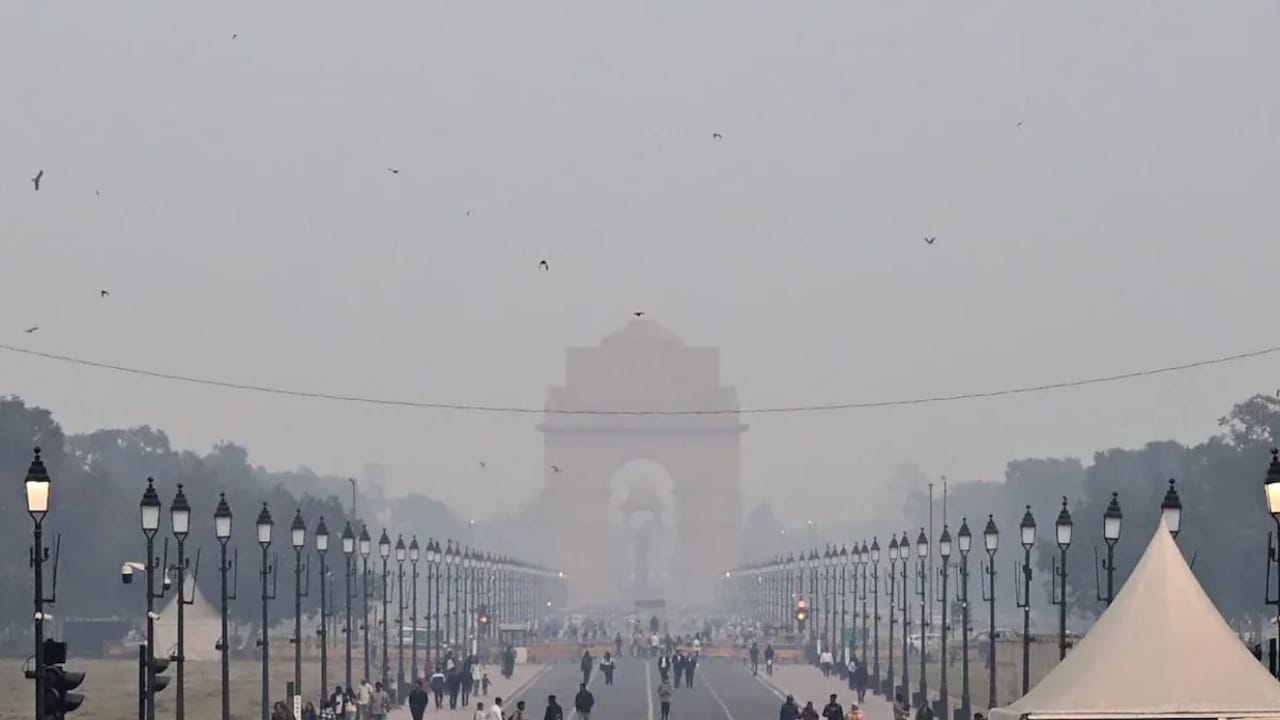
Delhi's residents breathe some of the most polluted air in the world, especially during winter when a thick smog envelops the city. Now, a new UN report offers a tangible path forward. It says that if Delhi achieves current national air quality standards on schedule, starting in 2026, the city could reduce its PM2.5 exposure burden by 20 per cent by 2040. However, any substantial delay in implementation would sharply diminish these gains.
The report, titled ‘Hidden Assets: The Economic and Health Case for Climate and Clean Air Action’, was released on Monday by the UN Environment Programme (UNEP) and the Climate and Clean Air Coalition (CCAC). It is described as the first comprehensive global economic assessment of integrated climate and clean-air action, bringing together evidence on how measures to reduce greenhouse gases and short-lived climate pollutants can also improve public health and economies.
The report's Delhi-specific analysis points to a clear timeline. If the national air quality standards are achieved on the planned schedule, PM2.5 exposure burden would drop by 20 per cent by 2040. But if there is a delay of about eight years — the expected global average implementation delay — the reduction would be only 10 per cent. That difference would translate into far greater health impacts over the 2025–2050 period, with many more people exposed to dangerously high levels of fine particulate matter.
PM2.5 refers to microscopic particles, less than 2.5 micrometres in diameter, that can penetrate deep into the lungs and enter the bloodstream. Prolonged exposure is linked to respiratory infections, heart disease, lung cancer, and premature death. In a city like Delhi, where such pollution levels frequently spike, reducing the exposure burden is a critical public health priority. The report's findings give a measurable target to work towards.
The report identifies 25 solutions that can tackle both climate change and air pollution simultaneously. These include expanding renewable power and improving energy efficiency, deploying clean cooking and heating technologies, and enforcing stricter vehicle emission and efficiency standards. According to the analysis, these measures are already feasible and can be implemented with existing technologies and policy frameworks.
The economic case for these actions is equally compelling. The report calculates that implementing the 25 solutions would produce annual economic benefits equivalent to 2.8 per cent of global GDP in 2035, 4.5 per cent by 2050, and 11.4 per cent by 2100. Each year of delay, it warns, would forfeit more than 0.5 per cent of global GDP in combined market and non-market value — more than USD 1.5 trillion every year.
The report also highlights the role of enabling conditions — economic, social, technological, and institutional. It states that strengthening these conditions could bring all 25 solutions fully into place up to a decade sooner, substantially boosting reductions in PM2.5 and ozone precursors between 2025 and 2050. Faster, better-coordinated action would not only improve air quality but also slow down climate change, creating a double dividend.
Globally, implementation delays are expected to average between 7.5 and 8 years, the report says. Institutional barriers are the single largest contributor, accounting for roughly 2.4 years within a notional 15-year implementation window. A delay of this scale, the report notes, would roughly halve the emissions reductions achievable by 2035.
For Delhi, the message is unambiguous. Meeting national air quality standards on schedule is not just an environmental target; it is a development imperative. A 20 per cent reduction in PM2.5 exposure burden by 2040 would mean fewer premature deaths, fewer hospital admissions, and better quality of life for millions. The report offers a roadmap, but it requires political will, institutional capacity, and sustained public support to follow through without delay.