Uddhav Thackeray asserts sole leadership of Shiv Sena in response to Amit Shah's remarks
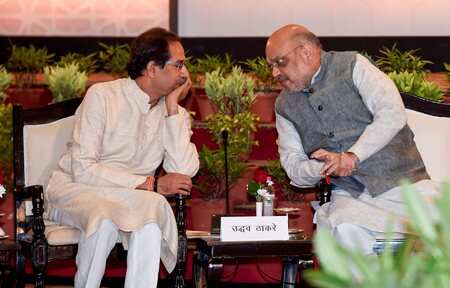
Mumbai: Former Chief Minister Uddhav Thackeray on Tuesday declared that there is only one Shiv Sena and that he is its leader, directly countering recent statements by Union Home Minister Amit Shah. The remarks come amid an ongoing political battle between Thackeray's faction and the breakaway group led by Maharashtra Chief Minister Eknath Shinde, which has allied with the Bharatiya Janata Party (BJP).
Speaking to party workers in Mumbai, Thackeray said, "There is only one Shiv Sena, and it is led by me. The party's ideology and history belong to us. No one can claim to be the real Shiv Sena without respecting the vision of Balasaheb Thackeray." He did not name Shinde or Shah directly but made clear his position in response to earlier statements by Amit Shah that suggested the Shinde faction represents the true Shiv Sena.
Amit Shah, during a recent public event in Maharashtra, had praised Shinde's leadership and implied that the original Shiv Sena is now with Shinde. Thackeray's rejoinder appears to be an effort to reclaim the party's legacy and counter the BJP's political narrative.
The dispute over the party's name and symbol is currently before the Election Commission of India, which has yet to deliver its verdict. Both factions have submitted claims and evidence. Thackeray's faction continues to assert that it holds the majority of party workers and has the backing of the late Balasaheb Thackeray's family.
Political analysts view this as a continuation of the ideological and organizational rift that began last year when Eknath Shinde led a rebellion, citing differences with Thackeray's alliance with the Nationalist Congress Party and Congress. Thackeray subsequently lost the chief minister's post as Shinde formed a government with BJP support.
In his address, Thackeray also criticized the current state government's performance, alleging corruption and mismanagement. He urged party workers to remain united and prepare for future electoral challenges.