BJD Opposes Proposed Nuclear Plant in Odisha, Warns of Mass Agitation
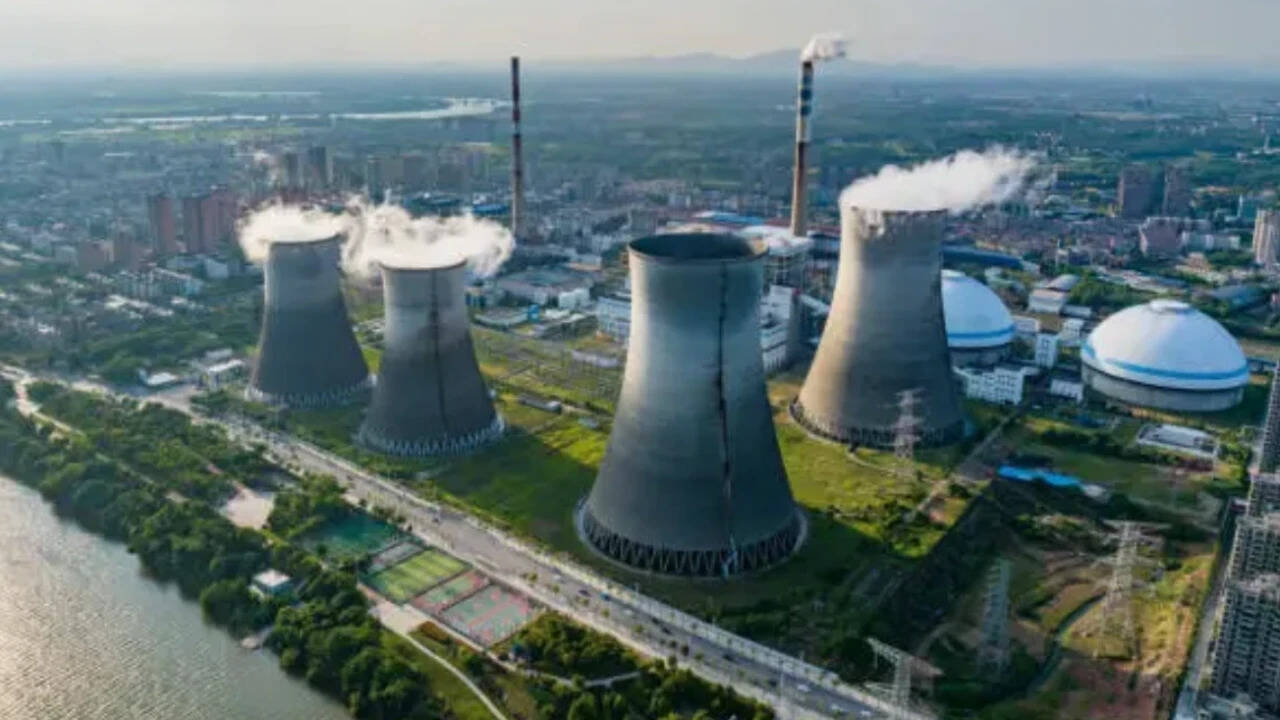
The Biju Janata Dal (BJD) on Wednesday opposed the proposed establishment of a nuclear power plant in Odisha, alleging that the state and central governments were compromising public safety to benefit private companies. The party warned of statewide agitation if the project proceeds.
The opposition party's statement came days after a representative of a private company met Deputy Chief Minister KV Singh Deo, who holds the energy portfolio, to propose a 3,000 MW nuclear power plant. According to the BJD, the proposal is being considered under revised central rules that allow greater private participation in the nuclear sector.
Addressing a press conference in Bhubaneswar, BJD senior general secretary Lekhashree Samantsinghar said a nuclear plant would pose a serious threat to the health and safety of people in the state. She accused the BJP's "double-engine government" – a term used for the BJP ruling both at the Centre and in the state – of prioritising corporate interests over public welfare.
Samantsinghar cited historical nuclear disasters, including the 1945 bombings of Hiroshima and Nagasaki, the 1986 Chernobyl explosion, and the 2011 Fukushima accident, to underline the risks. "In 1945, the nuclear bombings reduced the Japanese cities of Hiroshima and Nagasaki to ruins. In 1986, the Chernobyl Nuclear Power Plant suffered a catastrophic explosion, and in 2011, a similar disaster occurred at the Fukushima Nuclear Power Plant," she said. She added that the consequences of those disasters are still being felt.
The BJD leader argued that nuclear energy has traditionally remained under government control in most countries because of its strategic importance. However, she alleged, the BJP government is changing this approach by opening the sector to private companies. "For its own interests, the BJP government is showing complete disregard for the lives and safety of the people of Odisha," she claimed.
Samantsinghar also questioned the central government's decision to amend rules governing the nuclear sector. She said Parliament passed legislation in December 2025 allowing greater private participation, following which private companies began exploring projects in Odisha. According to her, India currently has about 8.8 GW of government-owned nuclear power capacity, and increasing it to 100 GW by involving private players would be unsafe. She maintained that sectors linked to national security should remain under government control.
The opposition party also alleged that the Odisha government was functioning under directions from the Centre and was unable to take independent decisions. "Since the formation of the BJP government in Odisha, the state government has been functioning under the directions of the Centre and is unable to take any independent decisions without instructions from Delhi. Acting on the directions of the central government, the state is determined to establish a nuclear power plant in Odisha by compromising the interests of the people," she said.
The BJD urged the state government to abandon the proposal, warning that it would launch a mass movement if the project went ahead. "Otherwise, the Biju Janata Dal would launch a mass agitation to safeguard the interests of the people of the State," Samantsinghar told reporters.
At the time of filing this report, the Odisha government had not responded to the allegations. The central government has also not commented on the BJD's statements.
Nuclear power currently accounts for a small fraction of India's electricity generation, and the government has set ambitious targets to expand its capacity to meet clean energy goals. To achieve this, it has proposed reforms to allow private investment in the sector, a move that has sparked debate about safety and regulation. The BJD's opposition reflects broader concerns among some sections about the implications of such reforms for safety and public accountability.