TMC Leader Abhishek Banerjee Seeks Disqualification of 20 Rebel MPs in Meeting with Lok Sabha Speaker
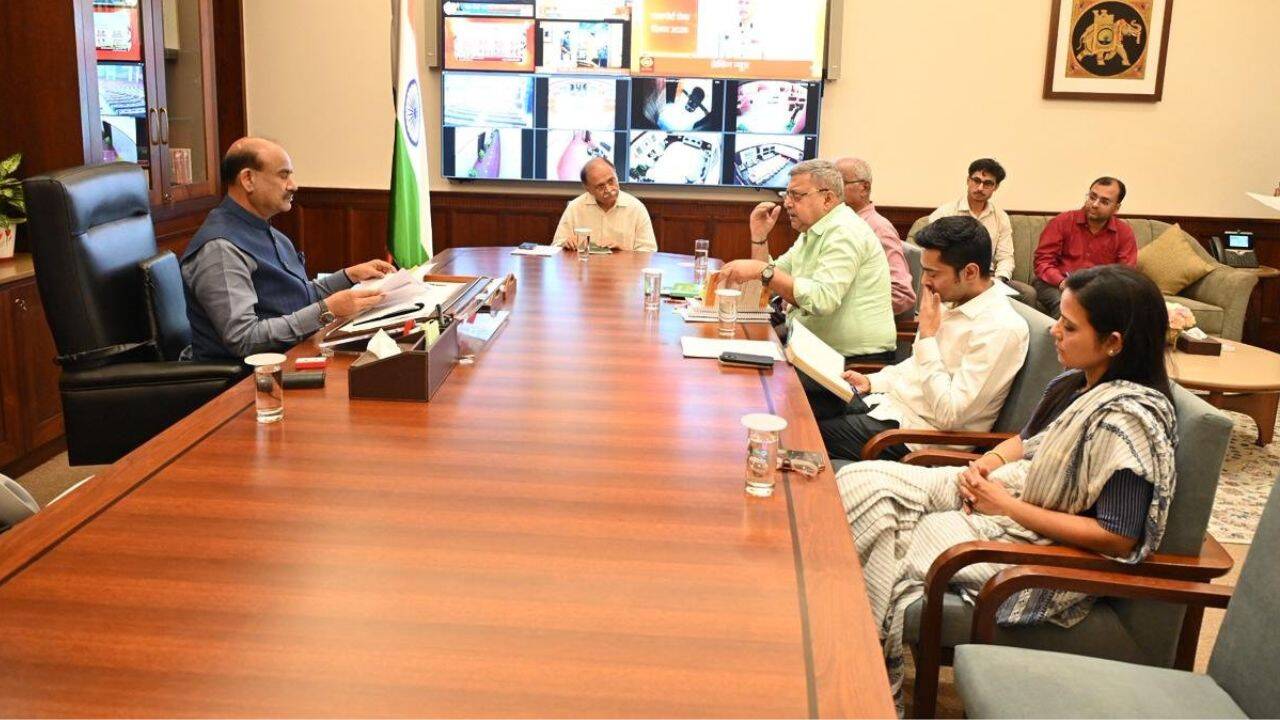
Trinamool Congress (TMC) leader Abhishek Banerjee on Wednesday met Lok Sabha Speaker Om Birla to demand the disqualification of 20 party MPs who had merged with the Bharatiya Janata Party (BJP) last month. The meeting lasted about 30 minutes, during which Banerjee submitted a formal petition arguing that the merger was invalid under the anti-defection law.
According to Banerjee, the merger of the 20 TMC MPs with the BJP does not meet the constitutional requirement of support from two-thirds of the party's total membership. Citing the Tenth Schedule of the Constitution, he stated that a merger of a political party's legislature party is valid only if at least two-thirds of the party's MPs agree to it. The TMC has 23 MPs in the Lok Sabha, and the 20 rebels represent a majority of the party's parliamentary strength, but Banerjee argued that the law requires two-thirds of the entire party's membership, not just its MPs.
“The merger is not valid as per the Constitution. It requires two-thirds of the political party's total members, not just the MPs who are in the Lok Sabha,” Banerjee told reporters after the meeting. He further claimed that the rebel MPs had not consulted the party's grassroots workers or state-level leaders before making the decision.
The 20 TMC MPs had merged with the BJP on June 14, citing dissatisfaction with the party's leadership and a desire to align with the ruling party at the Centre. The move was seen as a major setback for the TMC in West Bengal, where the BJP has been making inroads. However, Banerjee's petition to the Speaker seeks to nullify the merger and disqualify the MPs, which would trigger by-elections in their constituencies.
Speaker Om Birla is expected to examine the petition and seek a response from the concerned MPs before making a decision. The anti-defection law, enacted in 1985, allows for disqualification of legislators who voluntarily give up membership of their party or vote against party directives, unless the defection is part of a merger that has the support of at least two-thirds of the party's legislators.
Political analysts note that the outcome of this case could set a precedent for how mergers are interpreted under the anti-defection law. The Speaker's decision, which is subject to judicial review, will be closely watched by other parties facing similar defections.