The Silent Vitamin Crisis in India
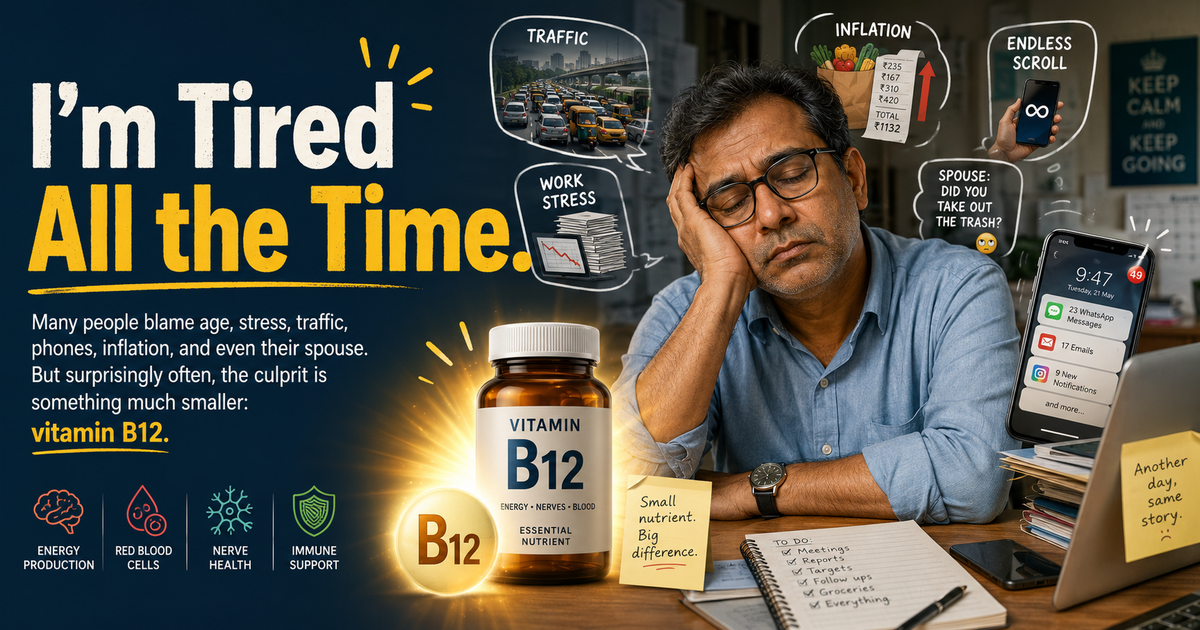
"I'm Tired All the Time."
If there were an Indian national anthem for middle age, that sentence would probably be the first line. Many people blame age, work stress, traffic, mobile phones, inflation, politicians, and occasionally their spouse. But surprisingly often, the culprit is something much smaller: a vitamin called B12.
Vitamin B12 deficiency is becoming so common in India that some doctors call it a silent epidemic. The scary part? You can be deficient for years before realising something is wrong.
What Exactly Is Vitamin B12?
Vitamin B12 is a nutrient that helps your body:
Produce healthy red blood cells
Maintain nerve function
Support brain health
Create DNA
Generate energy from food
Think of B12 as the electrician of the human body. Without it, the wiring starts malfunctioning. The result?
Constant tiredness
Brain fog and poor memory
Tingling in hands and feet
Mood swings and depression
Weakness and dizziness
In severe cases, long-term deficiency can damage nerves permanently. Not exactly the sort of thing you want to ignore.
Why Are Indians So Deficient?
The answer lies in a combination of culture, diet, and biology.
Vitamin B12 is naturally found almost exclusively in animal-based foods:
Eggs
Fish and chicken
Meat
Dairy products
India has one of the world's largest vegetarian populations. While a vegetarian diet can be extremely healthy, plants contain virtually no reliable B12. Your grandmother may insist that everything can be solved with more ghee. Unfortunately, B12 isn't one of those things.
Even people who eat animal products can become deficient. As we age, the stomach produces less acid, making B12 harder to absorb. Certain medications also interfere, including:
Acid reflux medicines and antacids
Some diabetes medications such as metformin
You may be eating enough B12 but not absorbing enough. It's like paying your electricity bill — but the money never reaches the power company.
Gut conditions that reduce absorption include:
Chronic gastritis
Celiac disease
Crohn's disease
Intestinal inflammation
A healthy gut doesn't just help digestion. It determines how much nutrition actually reaches your bloodstream.
Many people survive on tea, biscuits, processed snacks, fast food, and sugary drinks. Convenient? Yes. Nutritious? Not exactly. A body cannot run optimally on chai and optimism alone.
What About Sunlight?
This is where many people get confused. Sunlight helps produce Vitamin D — not Vitamin B12.
India has another major epidemic running in parallel: Vitamin D deficiency. Ironically, we are a tropical country blessed with sunshine, yet millions spend their days indoors. Sunlight won't fix B12, but it remains essential for:
Bone health and immunity
Muscle function
Mood regulation
Think of Vitamin D and B12 as cousins. Different jobs, same family of health problems.
The Science Behind the Symptoms
One reason B12 deficiency is often missed is because the symptoms look completely ordinary.
Feeling tired? Could be stress. Poor memory? Could be age. Low mood? Could be life.
But B12 plays a crucial role in producing red blood cells that carry oxygen throughout the body. When B12 is low, your body starts running like a smartphone stuck at 10% battery — everything works, just not very well.
B12 is also essential for maintaining myelin — the protective sheath around nerves. Without enough B12, nerve signals slow down or become damaged. That's why some people experience numbness, tingling, or burning sensations in their hands and feet.
How Can You Prevent Deficiency?
The good news: prevention is usually straightforward.
Eat B12-Rich Foods
If you consume animal products, regularly include eggs, milk, yogurt, cheese, fish, and chicken. Even modest amounts help maintain healthy levels.
Vegetarians Need Extra Attention
Strict vegetarians and vegans should consider:
Fortified cereals and nutritional products
B12 supplements after consulting a doctor
Many experts recommend that long-term vegetarians periodically check their B12 levels.
Exercise Matters Too
Exercise doesn't create B12 — but regular physical activity improves circulation, metabolic health, energy levels, and overall well-being. Sometimes the solution involves both a blood test and a pair of walking shoes.
Get Regular Health Checkups
A simple blood test can reveal your B12 levels, Vitamin D status, iron, blood sugar, and cholesterol — all at once. Finding a deficiency early is far easier than treating complications later.
Who Should Definitely Get Tested?
Consider testing if you:
Are over 40
Follow a vegetarian or vegan diet
Have diabetes and take metformin
Take antacids regularly
Feel unusually tired or have brain fog
Experience tingling in hands or feet
Struggle with unexplained depression or memory problems
Many people spend years treating symptoms without ever identifying the root cause.
The Bottom Line
India is facing a growing Vitamin B12 deficiency problem. The reasons are straightforward — vegetarian diets, poor absorption, digestive issues, and modern lifestyles. So is the solution:
Eat a balanced, nutrient-aware diet
Get regular exercise
Spend time outdoors for Vitamin D
Check your B12 levels periodically
Supplement when necessary, under medical guidance
Not every problem can be blamed on age. Sometimes your body isn't asking for a vacation.
It's asking for Vitamin B12. And thankfully, that's much cheaper.