Supreme Court Stays HC Proceedings Against Rahul Gandhi in Assets Case, Cites Natural Justice

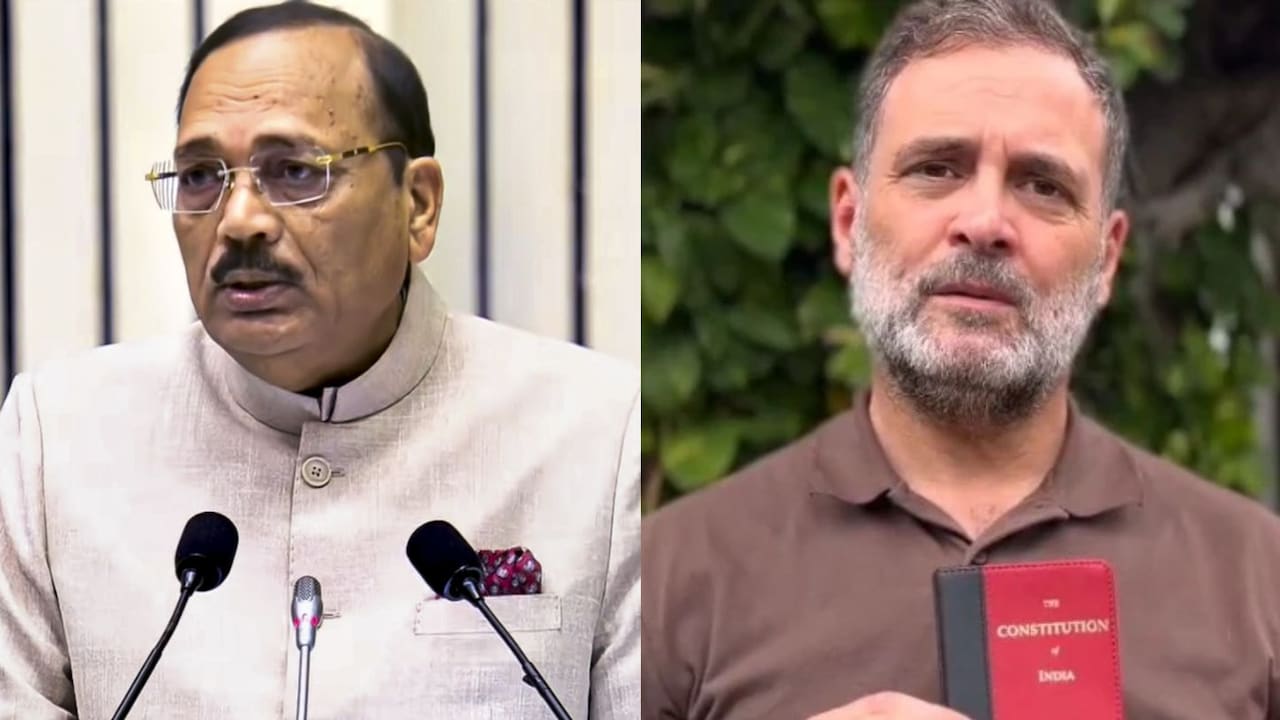
The Supreme Court on Monday ordered an immediate stay on the disproportionate assets proceedings initiated by the Allahabad High Court against Leader of Opposition Rahul Gandhi, observing that courts must adhere to the principles of natural justice before issuing directions for inquiry or investigation.
A three-judge Bench headed by Chief Justice of India Surya Kant was hearing a plea by Mr. Gandhi challenging the High Court's May and July orders directing the Central Bureau of Investigation (CBI) and the Directorate of Enforcement (ED) to probe allegations of disproportionate assets made by complainant S. Vignesh Shishir.
Senior advocate Kapil Sibal, appearing for Mr. Gandhi, argued that the High Court proceedings were conducted in-chamber, with records kept in sealed covers, and that Mr. Gandhi was not given an opportunity to be heard. He described the actions as a "witch-hunt".
Chief Justice Kant, addressing Additional Solicitor General S.V. Raju, who appeared for the CBI and ED, said: "According to our understanding of the law, the police or an investigating authority can register a case on a complaint. They do not require permission of the accused to do that. But the courts are different. If the courts want to issue directions [for inquiry/investigation], the courts are expected to fulfill the principles of natural justice."
Mr. Raju argued that the allegations were "very serious" and could not be dismissed as frivolous. He maintained that if the facts were correct, it was a gross case of disproportionate assets. However, Justice Joymalya Bagchi questioned why the agencies had not acted on their own. "If they [allegations against Mr. Gandhi] were so serious, why did your agency keep quiet all this while? Did you require an impetus from the court? You could have used your own statutory powers to start an inquiry…", he observed.
Noting that the CBI had admittedly not taken suo motu cognisance, the court said it was bound to examine the correctness of the High Court's order. The Bench also asked Mr. Gandhi's counsel to share the case paperbook with Mr. Shishir, who appeared on caveat.
Mr. Gandhi had earlier termed the High Court's directions as one of the rarest instances of a Constitutional court acting contrary to several first principles of law. He submitted that the proceedings were marked by unjustified secrecy, with documents and pleadings kept in sealed cover, and that the orders did not provide reasons for directing a "roving inquiry".
He also challenged the locus standi of Mr. Shishir, stating that the complainant is a member of the Rashtriya Swayam Sevak Sangh (RSS) who has filed multiple complaints and public interest litigations against him in the past. Additionally, Mr. Gandhi noted that the High Court had ordered an ED investigation under the Prevention of Money Laundering Act even without a predicate offence being registered.
The Supreme Court's intervention underscores the importance of procedural fairness in judicial proceedings. While courts have the power to direct investigations, such power must be exercised transparently and with due regard to the rights of the accused. The High Court was scheduled to hear the case on August 20; the stay will remain in effect until the Supreme Court reaches a final decision.
The case is now listed for further hearing, with the court expected to examine whether the High Court's order met the requirements of natural justice.