Subhash Chandra questions NCLT's power to form 5-member bench in insolvency case

On Wednesday, Essel Group Chairman Subhash Chandra opposed the formation of a five-member bench by the National Company Law Tribunal (NCLT) to hear his personal insolvency case, arguing that the tribunal lacks the legal authority to constitute such a bench. The submission was made before the National Company Law Appellate Tribunal (NCLAT), which is hearing an appeal arising from the proceedings.
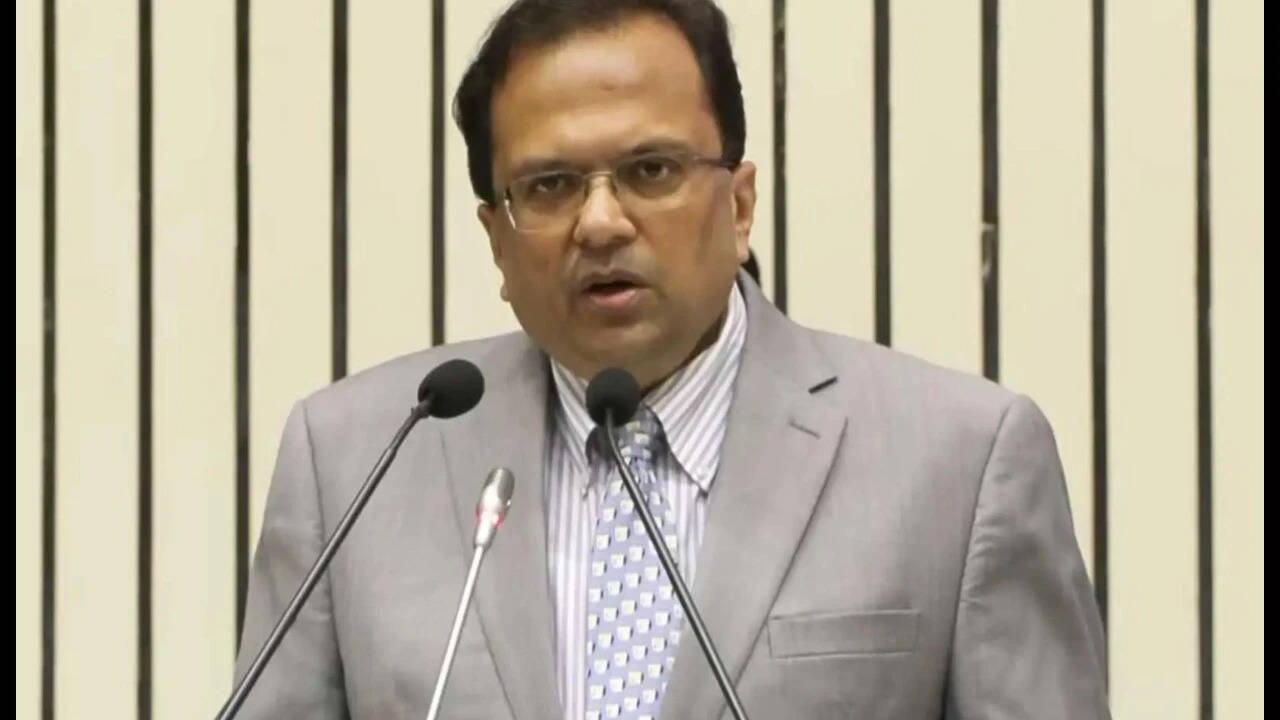
Senior Advocate Sasmit Patra, appearing for Mr. Chandra, termed the NCLT order constituting the five-member bench as "faulty and wrong" and asserted that the tribunal "is not empowered" to do so. He questioned the basis on which the bench was formed and the manner in which it operated.
The case stems from a personal insolvency petition filed against Mr. Chandra over claims from personal guarantees on group borrowings. Creditors, including LIC Housing Finance, Canara Bank and Union Bank, have claimed roughly ₹22,006 crore. On August 31, a division bench of the NCLT delivered a split verdict on the matter. Following this, Nilesh Sharma, Member (Judicial), was brought in as the third member to break the tie.
On September 1, the five-member NCLT bench barred Mr. Chandra from alienating his assets and stayed an order that had allowed him to settle the claims for about ₹6.5 crore. The bench was constituted a day earlier and issued notice to all parties, scheduling the next hearing for September 23.
Mr. Patra argued before the NCLAT that the five-member bench had no jurisdiction to pass such an order. "Under which power was it stayed? When did this five-member bench sit together? What proceedings were conducted that led to this bench taking only one order?" he asked. He further contended that two earlier orders — by Ashok Kumar Bhardwaj, Member (Judicial), and Nilesh Sharma — were aligned on repayment and eligibility issues. "Both are on the same page as far as Section 79 is concerned on eligibility. Therefore, to say all these issues have to be re-litigated is completely wrong," he submitted.
Citing Section 419 of the Companies Act, 2013, Mr. Patra argued that the provision allows a differing view to be referred to another member or members, but does not empower the NCLT to form a five-member bench. "It does not give power to the NCLT under the IPC or company law to form a five-member bench. Under which authority, which power, is there a five-member bench?" he questioned.
Solicitor General Tushar Mehta, representing the dissenting creditors, submitted that the appeal against the third member's order could be "disposed of with liberty to revive" since some respondents might challenge the reference itself. He described the case as involving "very peculiar circumstances" that had produced "three views" that were "divergent to each other," making it suitable for a larger bench to examine.
Mr. Patra opposed this plea, saying that the scope of the provision for referring a matter to a larger bench is very limited. He also objected to the suggestion of withdrawing the appeal before the NCLAT.
The NCLAT bench, headed by officiating Chairperson Justice Yogesh Khanna, observed that the constitution of the five-member bench was not a question before it for challenge. Mr. Mehta then suggested that Mr. Chandra's side be allowed to challenge that order separately while his appeal remained pending, saying he had no difficulty with that course. The NCLAT bench declined to permit this.
During the proceedings, Mr. Patra also noted that Mr. Chandra has been "vilified across the country" in connection with the case, without providing further details. The matter remains pending before the NCLAT, which will hear the appeal on a future date.