Spain deploys troops to Ceuta after thousands enter from Morocco
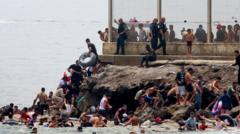
Spain has deployed military personnel to reinforce security in Ceuta, its autonomous city on the northern coast of Africa, after thousands of people entered the territory from neighbouring Morocco. The Spanish defence ministry announced the deployment on Thursday, stating that the armed forces would support the Civil Guard in its duties and any other measures required to maintain public order in the city.
In a later statement, the ministry said it was coordinating with Moroccan authorities to facilitate the return of all individuals who crossed into Spanish territory 'as soon as possible'. The exact number of arrivals has not been officially disclosed, but local officials have described the movement as involving several thousand people, many of them young migrants.
Ceuta lies on the Mediterranean coast, separated from mainland Spain by the Strait of Gibraltar. It has long been a primary gateway for migrants attempting to reach Europe from Africa. Together with the larger enclave of Melilla, it forms the European Union's only land borders with the African continent. Spain administers both cities as autonomous entities, with the same status as its mainland regions.
People attempting to reach Europe have used these routes for years, often risking injury while crossing the border fences that surround the enclaves. The Spanish government says it maintains a policy of orderly migration and border security.
The latest crossings continued overnight into Friday, according to local authorities. Clashes between migrants and security forces were reported near border installations. Videos shared on social media purported to show projectiles being thrown across the gates and hundreds of young migrants sleeping on streets and in public squares. The authenticity of these images could not be independently verified.
In Melilla, local officials said an estimated 300 to 400 people also entered from Morocco during the same period. The dual influx has renewed scrutiny on migration routes across the Mediterranean, which have seen periodic surges in recent years.
The Spanish government has not attributed the sudden increase to any specific cause. Morocco has not issued a formal response. The Spanish ministry said both countries are working together to ensure an orderly return of the migrants, and that the process is expected to conclude as soon as possible.
The status of Ceuta and Melilla has long been a source of friction in Spanish-Moroccan relations. Morocco asserts that both territories are occupied and claims sovereignty over them, while Spain regards them as integral parts of its territory. Previous incidents of mass crossings have led to diplomatic outcry and temporary border closures.