SC asks Bihar for records on minister's appointment, MLC nomination
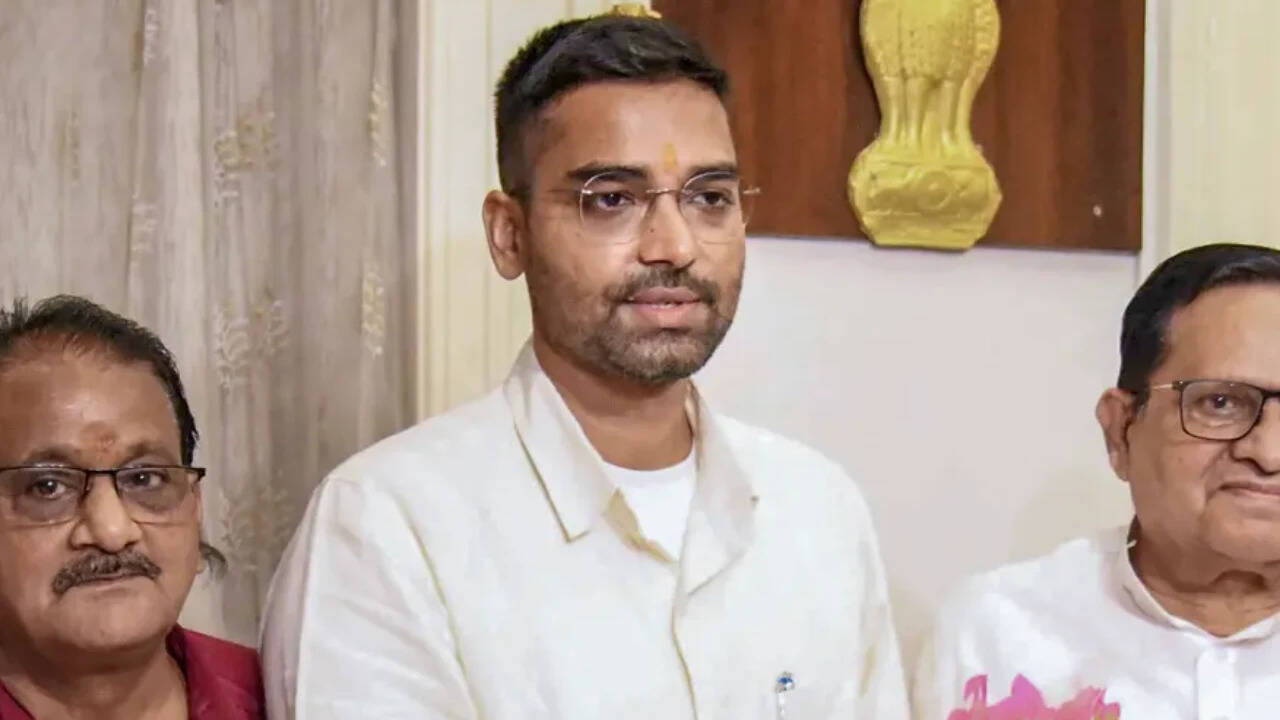
The Supreme Court on Friday sought records from the Bihar government concerning the appointment of Deepak Prakash as a minister, his re-induction into the cabinet, and his subsequent nomination as a Member of the Legislative Council (MLC). Prakash is not an elected member of the state legislature.
A public interest litigation (PIL) has challenged his continuance as a minister beyond the six-month period permitted by Article 164(4) of the Constitution. This provision allows a person who is not a member of the state legislature to hold a ministerial post for six months without being elected to either house.
According to the petitioner, Prakash was appointed as a minister in November last year. His six-month term as a non-legislator expired on May 20. However, after Chief Minister Nitish Kumar resigned on April 15, the council of ministers was dissolved. A new council, led by Samrat Choudhary, was constituted on May 7, and Prakash was included in it. The petitioner argues that this re-induction does not reset the six-month clock and that his continued presence in the cabinet after the deadline violates constitutional norms.
Solicitor General Tushar Mehta, representing the Bihar government, told the bench of Chief Justice Surya Kant and Justices Joymalya Bagchi and V. Mohana that Prakash has since been nominated as an MLC by the governor. Therefore, his continuance as minister is now constitutionally valid, he argued.
However, the petitioner cited the Supreme Court's 2001 judgment in the S.R. Chaudhari case. In that ruling, a three-judge bench held that the six-month deadline is non-negotiable. The court observed that permitting a non-legislator to be re-appointed as a minister without getting elected within the prescribed period would "amount to ignoring the electorate in having its say as to who should represent it – a position which is wholly unacceptable."
The 2001 judgment also warned against "the seductive temptations to cling to office regardless of constitutional restraint." It stated that the will of the people cannot be subordinated to the political expediency of a chief minister or prime minister who might wish to keep a non-legislator in the cabinet indefinitely through repeated re-appointments.
The Supreme Court bench directed the Bihar government to place on record all documents related to Prakash's initial appointment, his re-induction into the council of ministers, and his recent nomination as an MLC. The court has not yet delivered a ruling on the matter.
The case raises important questions about the limits of executive power and the importance of legislative accountability. Article 164(4) is designed to be a temporary arrangement, not a means to bypass electoral mandates. The Supreme Court's scrutiny underscores the constitutional requirement that ministers, even those appointed from outside the legislature, must ultimately seek and obtain the approval of the electorate.
Legal experts note that the nomination of a person to the legislative council by the governor is a constitutionally valid process, but it cannot be used retrospectively to validate a period during which a minister held office without being a member of the legislature. The court's decision will clarify the interplay between Article 164(4) and the power of nomination under Article 171.
The next hearing will take place after the government submits the requested records.