RSS chief Bhagwat lauds Gen Z as honest, says protesters not anti-national
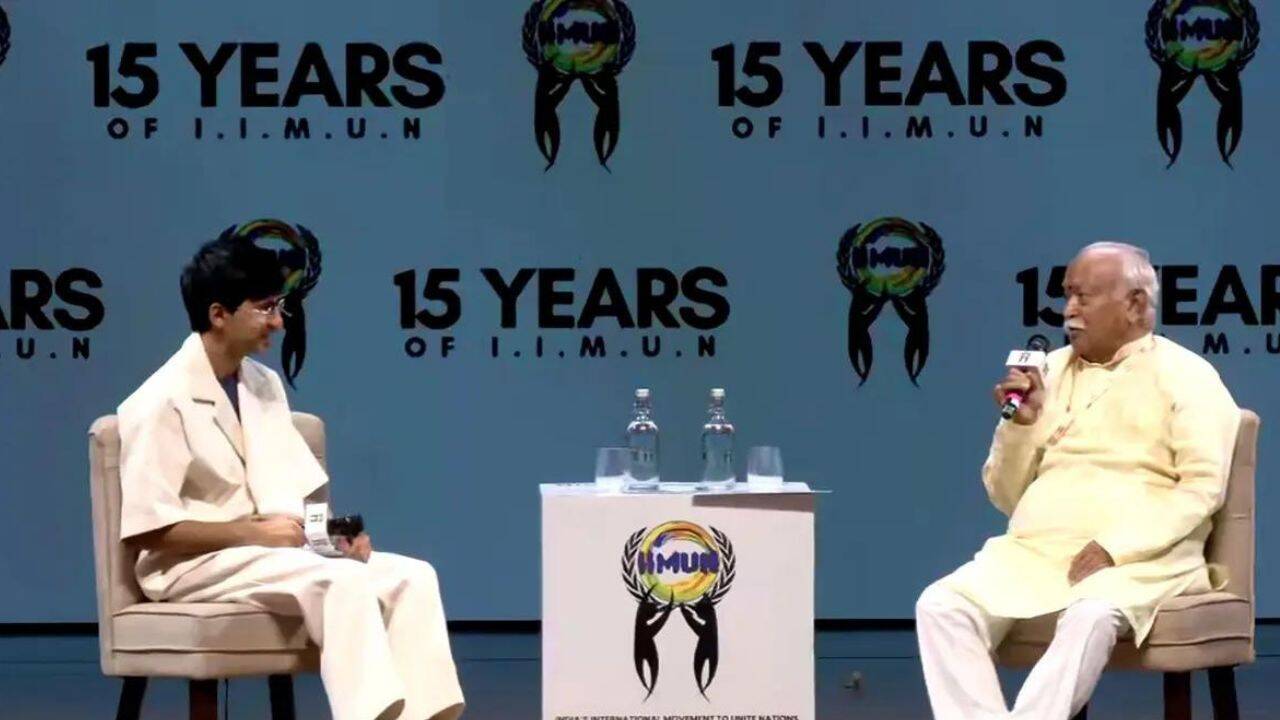
In a significant departure from the usual discourse surrounding youth activism, Rashtriya Swayamsevak Sangh (RSS) chief Mohan Bhagwat on Thursday described the younger generation, often referred to as Gen Z, as more honest and straightforward. He also stated that those participating in protests should not be automatically labelled anti-national.
Bhagwat made these remarks while addressing an event in Nagpur, the headquarters of the RSS. His comments come at a time when the country has witnessed several student-led protests on issues ranging from unemployment to environmental concerns, and when the term 'anti-national' has been frequently used in public debates to describe dissenters.
The RSS chief's observation that Gen Z is 'more honest' is being seen as a notable shift in the organisation's approach towards a demographic that is often perceived as critical of traditional institutions. He acknowledged that the younger generation asks direct questions and seeks transparency, traits that he suggested should be appreciated rather than dismissed.
On the issue of protesters, Bhagwat said, "Those who raise their voice against any injustice are not necessarily anti-national. The country is for everyone, and every citizen has the right to express dissent within the framework of the Constitution." He emphasised that the RSS has always stood for the unity and integrity of the nation, but that does not mean silencing legitimate concerns.
Political analysts note that Bhagwat's statements could be aimed at bridging the gap between the RSS and the youth, particularly in the context of rising criticism of the government's policies. The RSS has traditionally been seen as a conservative organisation, and its leadership has often been cautious in its public utterances. This latest remark, however, signals a possible recalibration in its messaging.
The response to Bhagwat's comments has been mixed. While some social media users welcomed the statement as a positive step towards recognising the role of youth in a democracy, others questioned the timing and intent. The Congress party, in a brief statement, said that the RSS chief's words should be followed by concrete actions. "If the RSS genuinely believes that protesters are not anti-national, then it should stop supporting policies that stifle dissent," a party spokesperson said.
Bharatiya Janata Party (BJP) leaders, meanwhile, refrained from commenting directly on Bhagwat's remarks. However, a senior party functionary, speaking on condition of anonymity, said that the RSS chief's views reflect the organisation's deep commitment to democratic values.
The RSS, founded in 1925, has often been accused by its critics of promoting a majoritarian agenda. Its chief's recent comments may be viewed as an attempt to counter that narrative. Bhagwat has, in the past, spoken about the need for a harmonious society and the importance of dialogue.
Observers of the RSS point out that the organisation has been making efforts to reach out to the youth through various programmes, including its annual 'Swayamsevak' training camps. The emphasis on honesty and the acceptance of dissent could be part of a broader strategy to attract younger recruits who might otherwise be swayed by alternative narratives.
As the country moves towards the next general election, such statements from influential figures like Bhagwat are likely to be scrutinised closely. Whether they translate into a shift in political discourse remains to be seen, but they have certainly opened a new conversation about the relationship between nationalism, dissent, and the younger generation.