Polish PM: Missile That Left Crater in Poland 'Probably Russian'
Polish Prime Minister Donald Tusk has stated that a missile which created a large crater in eastern Poland early Thursday morning was likely a Russian weapon, though he emphasised the need for further verification.
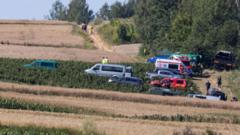
The unidentified object, which caused a 10-metre-wide crater near the village of Tarnawa Kolonia—approximately 100 kilometres from the Ukrainian border—was discovered after a Russian attack on the city of Lviv, Ukraine. Tusk told reporters during a specially convened meeting in nearby Lublin: 'All the indications are that it was a Russian Kh-101 ballistic missile, but we want to be 100 percent certain about the type of missile and who launched it.'
Ukraine's acting Foreign Minister Andriy Sybiha earlier asserted that a Russian Kh-101 cruise missile had crossed into Polish airspace as part of a massive Russian strike against Ukraine, potentially violating NATO airspace. Poland, a NATO member, has seen several incursions by Russian drones and unarmed missiles since the full-scale war in Ukraine began in February 2022.
Defence Minister Wladyslaw Kosiniak-Kamysz noted that about 20 objects were detected near Polish airspace overnight. Pyrotechnical analysis is underway to confirm the object's origin and type. Poland's military detected the object at approximately 3:40 a.m. local time and dispatched an F-16 fighter jet to intercept it, but the object disappeared from radar shortly after.
Residents of Tarnawa Kolonia reported hearing a loud bang around 4:00 a.m., and police located the crash site about an hour later. Tusk confirmed there were no casualties, but the incident is being treated seriously. The incident occurred as Tusk had met Ukrainian President Volodymyr Zelensky in Lublin the previous evening, after Zelensky's talks with US President Donald Trump.
The incident highlights ongoing risks to NATO territories from stray missiles and drones amid the Russia-Ukraine war, though no official attribution has been made pending further investigation.