PM Modi Urges Identifying 'Intellectual Naxals' to Protect Youth in I-Day Speech
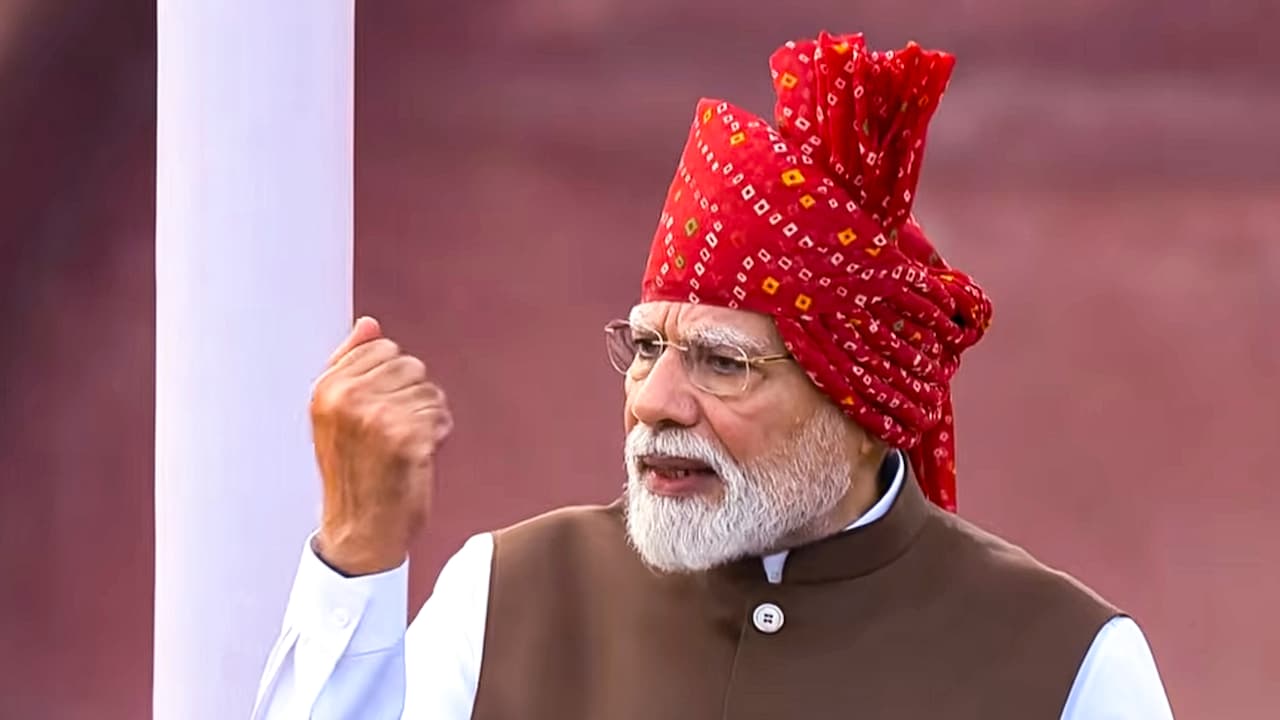
Prime Minister Narendra Modi, addressing the nation from the Red Fort on the 78th Independence Day, called for identifying and isolating what he termed 'dimaagi Naxals' (intellectual Naxals), whom he described as a threat to the country's youth and development.
Speaking on Saturday, Modi distinguished between armed Naxals, who he said have been largely neutralised in jungle operations, and those with a 'Naxal mentality' who may operate in urban centres, government committees, or advisory roles. He urged society to identify such individuals and isolate them so that youth can be brought into the mainstream.
'For years, those with Naxal mentality had their place in the power corridors. They were in government committees as advisors. Maoist thinking impacted policies. We have succeeded in getting rid of armed Naxals in the jungles, but these intellectual Naxals are looking for opportunities to create violence and unrest,' Modi said.
The Prime Minister highlighted the human cost of Left-wing extremism, noting that more than 3,500 security personnel had been killed in operations to protect civilians. He said this number exceeds casualties in conventional wars and underscored the prolonged challenge posed by Naxalism.
'When we came to power in 2014, we swore to rid the country of Naxals. I am happy that Maoist violence is taking its last breath,' he said, adding that several regions once affected by Naxal violence are now witnessing development.
Modi also said that remote areas, previously difficult to reach due to Naxal influence, are now seeing infrastructure and public welfare projects. 'The flag of development flies high in those areas now,' he stated.
The remarks come amid a continuing security offensive against Naxal groups in central and eastern India. Government data indicates a decline in violent incidents in recent years, although some districts remain affected. Analysts note that the term 'intellectual Naxal' has been used previously by political leaders to refer to activists, academics, and journalists critical of government policies, and its usage often sparks debate over freedom of expression.
The Independence Day speech also touched on other national priorities, including economic growth, youth employment, and women's empowerment. The Prime Minister's reference to 'intellectual Naxals' was one of the notable moments of his address, drawing reactions from across the political spectrum.