PM Modi at ET Forum: Reform Express Full Speed, Country-Specific Policies
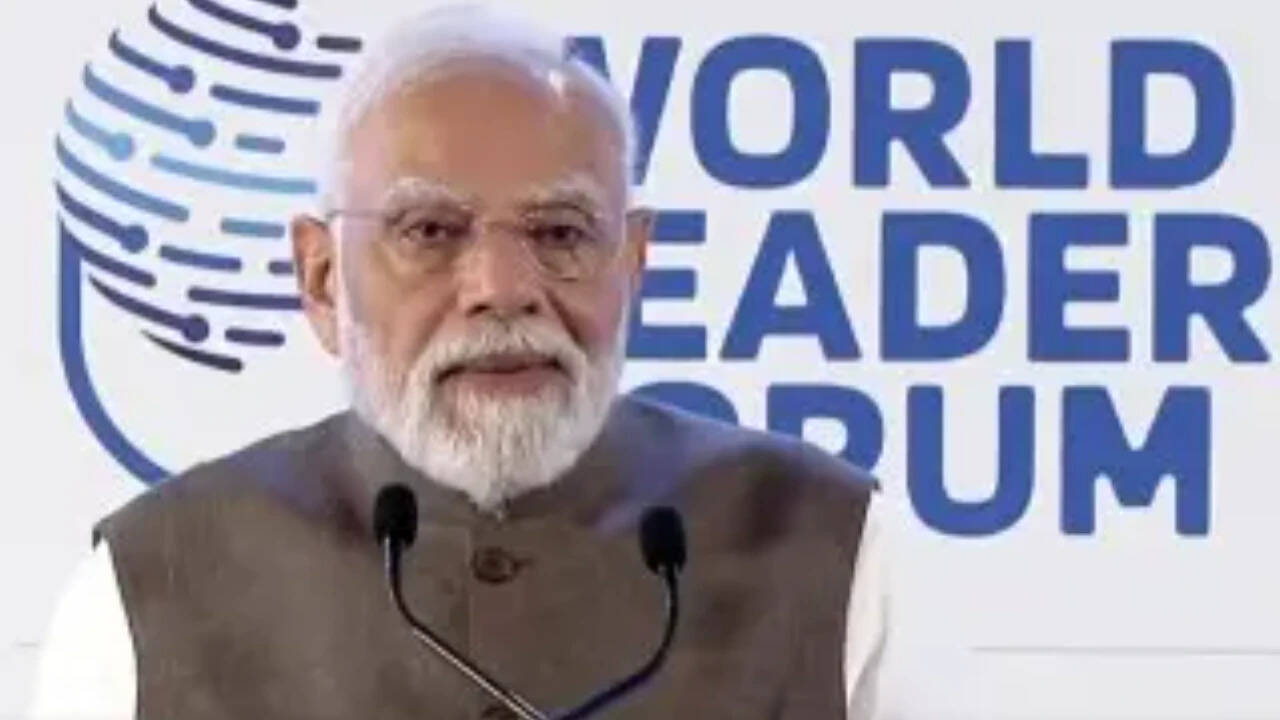
Prime Minister Narendra Modi addressed the Economic Times World Leaders Forum on Tuesday, delivering a strong defence of his government's reform agenda. Asserting that the reform process is moving at "full speed," he stressed that economic policies must be shaped according to the country's unique needs rather than forcing the nation into preconceived policy templates.
"Policies should be tailored for the country, not the country for policies," the Prime Minister said, encapsulating his administration's approach to economic governance. He cited the Production Linked Incentive (PLI) scheme and other structural measures as examples of this principle in action.
The PM's comments come at a time when India is navigating a complex global economic environment. The PLI scheme, introduced to boost domestic manufacturing, is a key pillar of the government's strategy to make India a competitive manufacturing hub. The policy has been extended to multiple sectors, including electronics, textiles, and automobiles, attracting significant investment.
Modi also highlighted the broader reform trajectory, noting that the government has undertaken numerous initiatives to simplify regulations, digitise processes, and improve ease of doing business. These efforts, he indicated, are integral to achieving the vision of a self-reliant India.
The address underscored the government's conviction that economic transformation must be rooted in national conditions. In his remarks, the PM rejected a one-size-fits-all approach, arguing that India's development path must be unique, reflecting its scale, diversity, and aspirations.
The Economic Times World Leaders Forum is a prestigious gathering where policymakers and industry leaders discuss pressing economic issues. This year's forum has focused on India's growth trajectory and the global implications of its policies. Modi's address served as a reaffirmation of the government's commitment to aggressive, yet context-sensitive, reform.
Political observers noted that the PM's statement carries significance in the lead-up to national elections. By showcasing the reform record, he aims to establish credibility on economic management. However, the government has also faced criticism over certain policy decisions, such as agricultural reforms and handling of inflation. The opposition has argued that some reforms have been introduced without adequate consultation, affecting farmers and workers.
Nevertheless, the government maintains that its policies are designed with the public interest in mind and are adapted to Indian realities. The PM's idiom, "reform express," suggests a forward momentum that his administration intends to sustain.
In the broader context, India's economy remains one of the fastest-growing among major economies, despite global headwinds. The government's focus on infrastructure, digitalisation, and manufacturing is aimed at creating jobs and boosting exports. The PLI scheme, in particular, is expected to enhance India's integration into global value chains.
As the reform process continues, the Prime Minister's message is clear: India's policies will be guided by the nation's needs, not by external pressures. This approach, he believes, will ensure sustainable growth and inclusive development.
The event also saw the PM engage with leaders from various sectors, addressing questions about fiscal policy, technology adoption, and social welfare. The discussions highlighted the government's priorities and the challenges ahead.