'Playing With Our Health': Rail Neer Water Sample Fails Quality Check in Bhopal Division
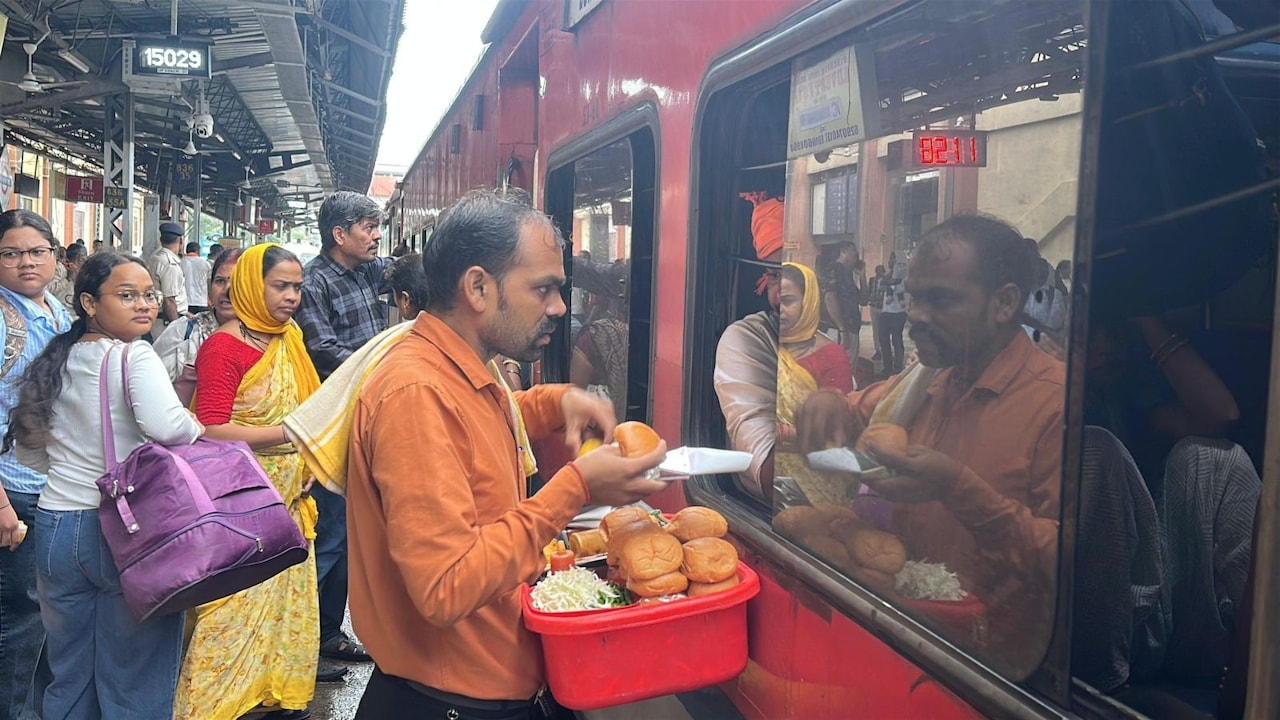
For a passenger on a brief station halt, buying a bottle of water or a packet of food is an act of trust. There is rarely time to check the label, the seal or the date before the whistle blows and the train moves on.
That trust has come under scrutiny in the Bhopal Railway Division after a sample of Rail Neer — the packaged drinking water supplied through the Indian Railway Catering and Tourism Corporation (IRCTC) — was reported to be substandard in a routine quality check. A sample of loose gram flour used in food preparation is also reported to have failed the prescribed quality parameters. The sample was collected in July, and officials of the division said it did not conform to the standards laid down for packaged drinking water.
For passengers, these are not abstract laboratory results. They concern two of the most basic things a traveller consumes on a journey: the water they drink and the food they eat.
The findings matter because of the scale of the railway's daily operations. In 2025-26, the Bhopal Railway Division handled roughly 1.14 lakh passenger journeys every day. Bhopal Junction alone sees more than 150 train halts a day, with an estimated daily footfall of about 70,000 passengers.
For many of them, buying food and water on a platform is not a choice. Long journeys, children and elderly co-passengers, summer heat and short halts mean travellers often have to rely on whatever is available at railway stalls.
Karnail Singh, a passenger from Punjab whose train halted at Bhopal, said he was unhappy with what he bought at the station. "Our train stopped at Bhopal and we bought food and water here. The water was not good and the food items were also not good. This is playing with the health of passengers," he said.
Another passenger, Dinesh Chandra Pandey, said the answer lay in constant monitoring rather than occasional checks. "The effort should be to provide passengers with good food and water and ensure cleanliness. Checks should be conducted regularly so that vendors remain alert and stale food is not sold," he said.
Rail Neer is meant to offer a standardised, reliable option within this system. It is supplied through IRCTC plants across the country. About 5,000 Rail Neer bottles are sent every day from Mandideep to stations in the Bhopal division, including Bhopal, Rani Kamalapati, Narmadapuram, Itarsi, Vidisha and Ganj Basoda. At Rs 14 for a one-litre bottle, that supply alone accounts for retail sales of roughly Rs 70,000 a day, or about Rs 2.55 crore over a year if the entire daily supply is sold.
Concerns over railway catering are not limited to packaged water. On July 19, 2026, a joint team of the Railway Protection Force, Food Safety and Drug Administration, revenue officials and city police carried out surprise inspections at base kitchens supplying food to railway passengers in Itarsi. Officials checked bread, spices, samosas, vegetables, rice, used cooking oil and other ingredients. Expired and poor-quality material was seized and destroyed, samples were collected for testing, and one base kitchen was sealed after serious irregularities were found.
Railway officials said the water issue is being investigated. Saurabh Kataria, Senior Divisional Commercial Manager of the Bhopal Division, said Rail Neer is tested regularly, and that after one sample raised concerns, more bottles from the same batch were collected for examination. "We regularly check Rail Neer. During one check, some bottles from a batch were found to be below standard. We got samples from the same batch from Mandideep, Maneri and Ballarshah. To ensure that the testing is correct, the samples were sent to Jabalpur," he said. He added that IRCTC officials visited the spot after the matter came to notice.
The division has said the matter remains under investigation. For travellers, the larger question is one of assurance: whether the water and food sold at stations meet the standards they are promised, and whether checks are frequent enough to keep them that way.