Passport Not Proof of Citizenship: Government Clarifies, But What Is?
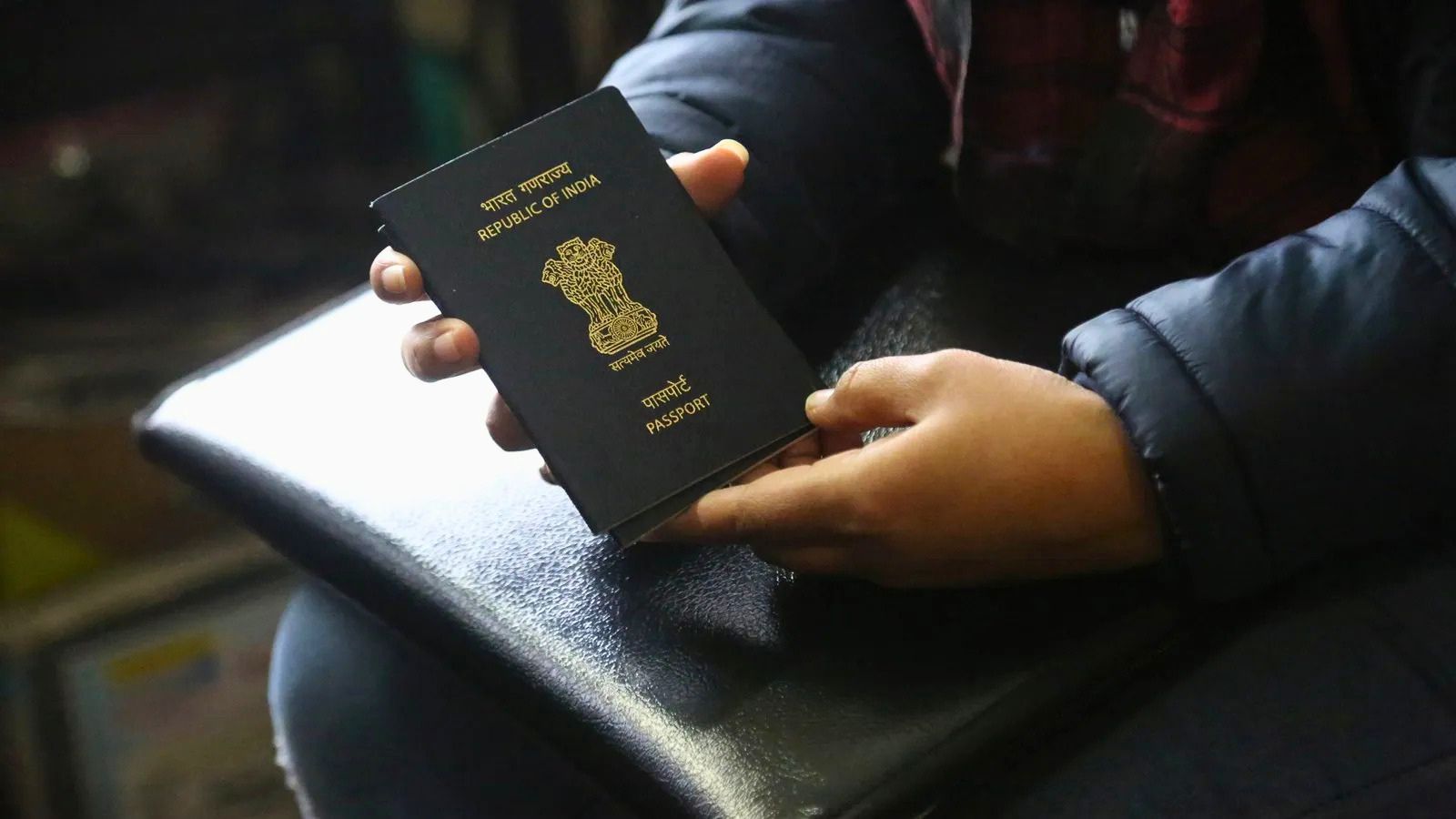
The Ministry of External Affairs (MEA) has clarified that a passport is not proof of citizenship, but merely a travel document. This statement, while legally accurate, raises a fundamental question: in the absence of a standard citizenship card, how can Indians prove their nationality?
The issue stems from a recent Supreme Court judgment in the Bihar Special Intensive Revision (SIR) case, which held that a passport is conclusive proof of citizenship. However, the MEA's clarification contradicts this, creating confusion. Historically, Indian courts have taken varying positions. In the 1951 case of Shabbir Hussain, the Supreme Court refused to treat a person with a temporary permit as a Pakistani national. In Abdul Khader (1960), the court did not consider a Pakistani passport as conclusive proof of foreign nationality. But in Izhar Ahmad Khan (1962), possession of a Pakistani passport was deemed conclusive. By 2008, in Razia Begum, even an Indian passport was held insufficient to prove citizenship.
The Citizenship Act of 1955, enacted under Article 11 of the Constitution, originally granted citizenship based on birth in India (jus soli). However, amendments in 1986 and 2003 progressively restricted this, incorporating conditions based on parentage, moving towards jus sanguinis (citizenship by blood). The Citizenship Amendment Act (CAA) of 2019 further complicated matters by providing a path to citizenship for non-Muslim immigrants from neighbouring countries, sparking nationwide debates.
The National Register of Citizens (NRC) update in Assam, concluded in 2019, excluded 19 lakh individuals from the final list, despite many possessing multiple documents. Of these, a majority were Hindus. The government has not issued citizenship certificates to those included in the NRC, leaving a gap in documentation. Similarly, the upcoming Special Intensive Revision in Bihar and other states has renewed concerns about proving citizenship.
Legal experts argue that the MEA's clarification aligns with the law: a passport is primarily a travel document, not a proof of citizenship. However, without a universal citizenship card, many Indians may struggle to prove their nationality, especially in regions with porous borders and large-scale migration. The government has not indicated any plan to introduce a citizenship card, leading to calls for a standardised document to avoid confusion and legal battles.
In summary, while the MEA's statement is legally correct, it highlights a systemic gap. Until a clear, universally accepted proof of citizenship is established, millions of Indians may face uncertainty.