Parliamentary Panel Flags Deep Flaws in NTA; Congress Seeks Government Action

The Congress said on Sunday (October 11, 2026) that a Parliamentary Standing Committee report has documented what it described as grave incompetence and malpractice at the National Testing Agency (NTA) and the Ministry of Education, and urged the government to take its findings seriously.
The report, titled “Reforms and Strengthening of the National Testing Agency (NTA)”, was submitted to the Chairman, Rajya Sabha. It was prepared by the Parliamentary Standing Committee on Education, chaired by Rajya Sabha MP Mukul Wasnik.
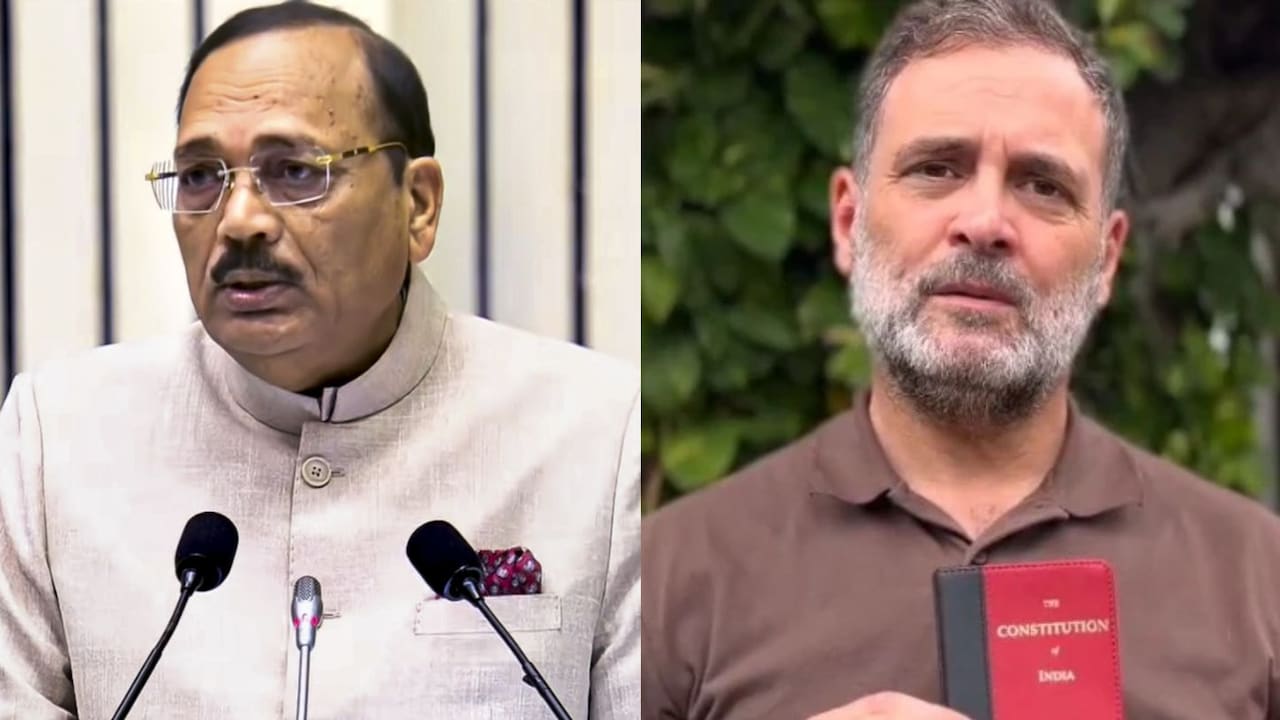
In a statement, Jairam Ramesh, Congress general secretary in charge of communications, said the committee “catalogues the grave incompetence and malpractice in the NTA and the Ministry of Education”.
The National Testing Agency, set up in 2017, is registered as a society under the Societies Registration Act, 1860. It is not a statutory body created by an Act of Parliament — a point Mr. Ramesh said limits parliamentary oversight and accountability. The agency conducts entrance and eligibility examinations including NEET-UG for medical admissions, the Joint Entrance Examination and UGC-NET.
According to the Congress leader, the Ministry of Education told the committee that no paper leak had occurred in any examination conducted by the NTA between its formation in 2017 and 2025 — a claim he called “blatantly false and audacious”. Mr. Ramesh said at least nine paper leaks and irregularities in NTA-conducted examinations are known. “What hope is there for a fair investigation or accountability when the Ministry even refuses to acknowledge what went wrong in the first place?” he asked.
The statement said the panel found that the NTA is structured in a way that leaves key responsibilities with private contractors. The agency has only 39 sanctioned posts, of which 23 are currently filled — a vacancy of 41%. All 39 permanent posts are filled through deputation, with officers serving two to three-year tenures, which Mr. Ramesh said prevents institutional expertise from developing. He cited the panel's emphasis, echoing earlier recommendations of the K. Radhakrishnan Committee, on building the agency's own staff strength.
Mr. Ramesh also said there is no nationwide blacklist of firms with a record of failure in examination-related services such as paper setting, printing, logistics and administration, and that firms blacklisted in one State routinely win contracts in others.
On transparency, he said the NTA does not publish NEET-UG results in a publicly accessible manner, unlike the Union Public Service Commission, and that the absence of test-centre-wise data makes it harder to detect unusual patterns in the performance of candidates or centres.
Between the NEET paper leaks of 2024 and 2026, the post of Director General of the NTA was held by officers as an additional charge, Mr. Ramesh said, arguing that the government failed to appoint a full-time head at a time when the agency was dealing with multiple leaks and was expected to implement the Radhakrishnan Committee's reforms.
He also said the NTA has become a financially profitable body, with a revenue surplus of ₹590 crore that was invested in fixed deposits.
The Congress's remarks come against the backdrop of the NEET-UG 2024 paper leak, which triggered nationwide protests by students and led to arrests, a Supreme Court-monitored investigation and the cancellation of results in some cases. Referring to the controversy currently in the news, Mr. Ramesh said that while “GyaneshGate” was dominating headlines now, three months earlier it was “NTAgate” that had launched the youth protest movement.
The Congress statement did not include a response from the Ministry of Education or from the NTA. This report is based on the Congress statement and the findings it cited from the panel's report, which has been submitted to the Chairman, Rajya Sabha.