Pakistan Emerges as Key Mediator in US-Iran Peace Talks, Boosts Global Stature
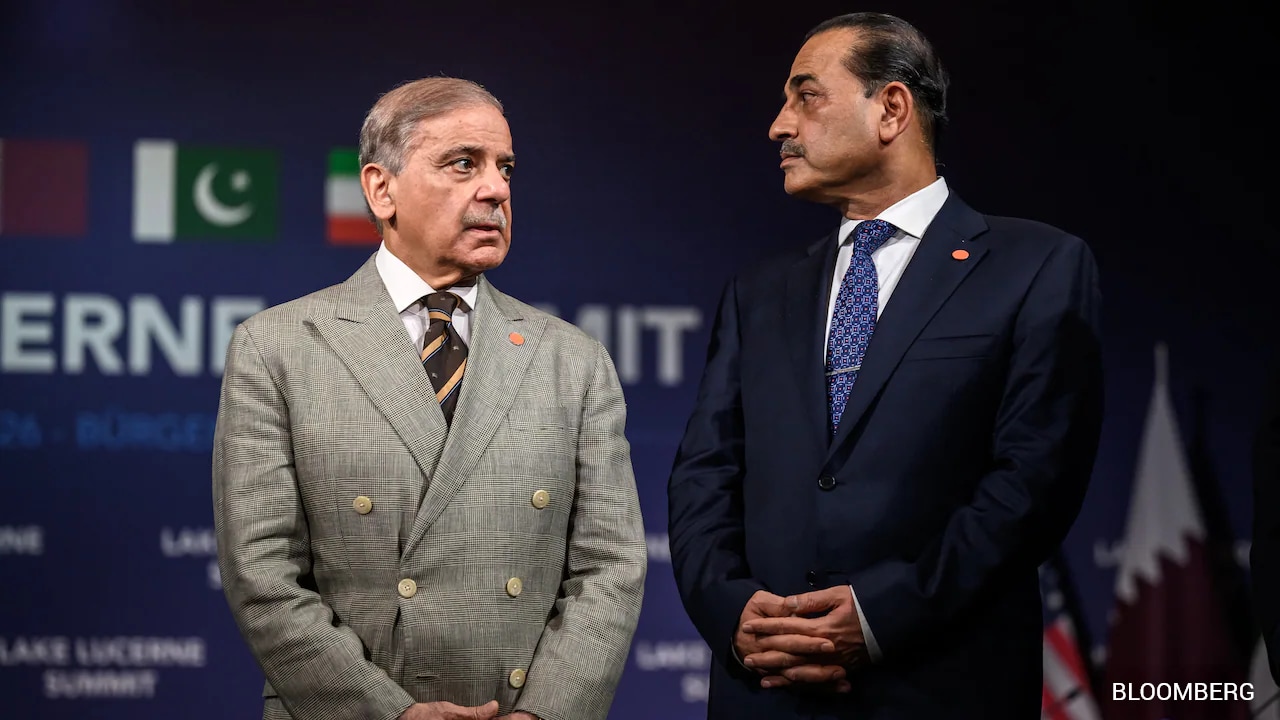
Pakistan has taken on a central role in facilitating peace talks between the United States and Iran, a development that has significantly enhanced its diplomatic standing on the global stage. The negotiations, which began in the Swiss resort of Burgenstock, culminated in a truce known as the 'Islamabad Memorandum of Understanding.' US Vice President JD Vance praised Pakistan's Prime Minister Shehbaz Sharif and Army Chief Field Marshal Asim Munir for their efforts in brokering the agreement.
Vance referred to Sharif as a 'dear friend' of President Donald Trump and commended his negotiation skills. He also acknowledged Munir's role, stating that the army chief had shown himself to be a 'great diplomat.' The talks, which took place over nearly four months, involved complex back-channel communications, with Pakistan acting as an intermediary between the two nations.
Pakistan's involvement in the peace process marks a significant shift from its previous position of limited influence in the Middle East. Christopher Clary, associate professor of political science at the University at Albany, noted that 'Pakistan went from having virtually no influence in the Middle East in early 2025 to being a diplomatic and military player of consequence in the region today.' Although Qatar also played a role in finalizing the interim deal, Clary emphasized that Pakistan's stature has seen a relative upgrade.
The peace-making role is expected to yield several benefits for Pakistan. It strengthens Islamabad's ties not only with Washington but also with Gulf states and China, all of whom have publicly supported Pakistan's actions. Jay Truesdale, former chief of staff at the US Embassy in Islamabad, stated that 'a Pakistan that can pick up the phone and call its partners in parallel - whether Tehran, Washington, Riyadh or Beijing - is a Pakistan that has created strategic flexibility and the means to generate momentum around high-value international initiatives.'
Pakistan's path to becoming a central mediator began after its own four-day conflict with India. Trump claimed credit for brokering that truce, a claim that Sharif and Munir embraced, even backing him for a Nobel Peace Prize. This led to increased praise from Trump and multiple meetings at the White House. In the past year, the Trump administration has sought to steer new business investment to Pakistan in areas such as cryptocurrency and critical minerals, though most deals remain at the memorandum of understanding stage.
The closer ties represent a reversal from previous years when Pakistan was largely isolated from Washington. Relations soured after the US raid that killed Osama bin Laden in 2011, and former President Joe Biden once described Pakistan as 'maybe one of the most dangerous nations in the world' due to its nuclear arsenal. However, the current development signals a new chapter in US-Pakistan relations.