Over 2,500 Detained in Delhi as Anti-CEC Marches Blocked From Jantar Mantar

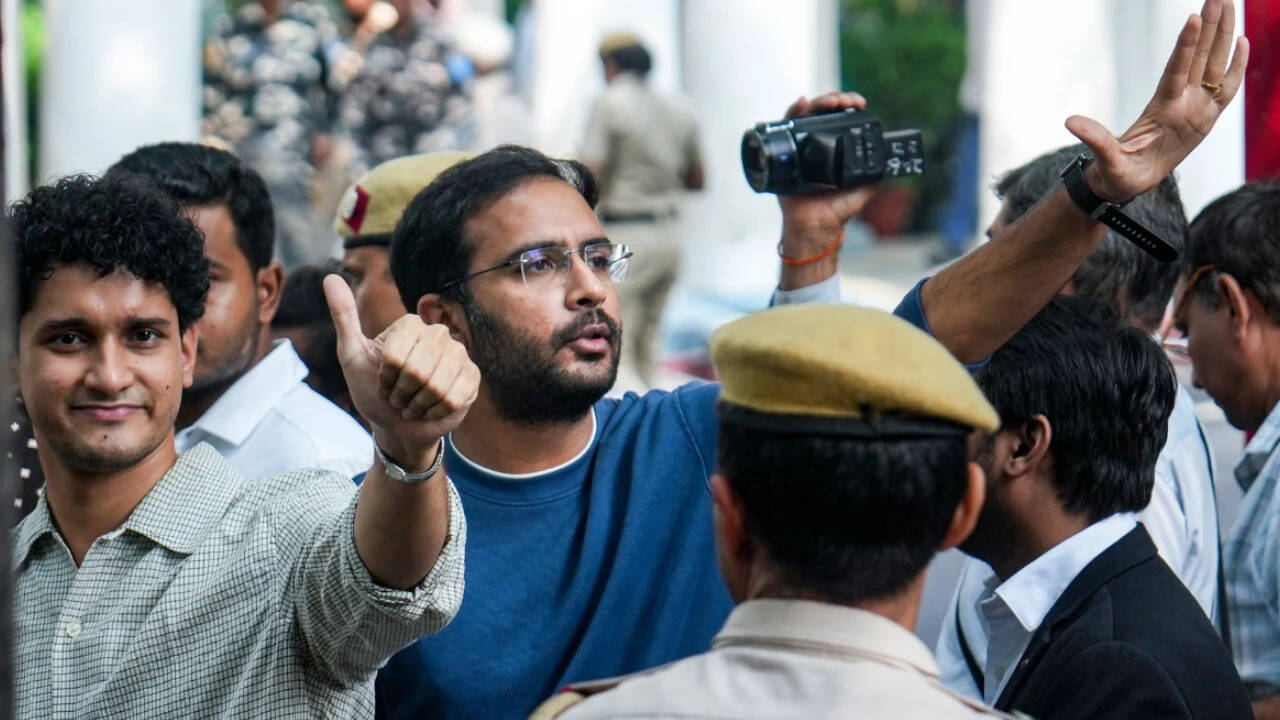
Delhi Police detained close to 2,500 protesters across the national capital on Saturday (October 10, 2026) as demonstrators demanding the resignation of Chief Election Commissioner Gyanesh Kumar tried to march to Jantar Mantar in central Delhi. Police sources said all those detained were released by late evening.
The protests were called by Left organisations, the CJP and civil society groups, and were led on the ground largely by students' and youth bodies. The demand centred on allegations of irregularities in the conduct of elections, which the organisers say warrant the CEC's resignation.
Access to the area was tightly controlled. More than 20,000 personnel from the Delhi Police and the Central Armed Police Forces were deployed, every road leading to Jantar Mantar was barricaded, and loudspeakers warned of legal action against anyone defying police instructions. Section 163 of the Bharatiya Nagarik Suraksha Sanhita (BNSS), which empowers authorities to prohibit assemblies in a specified area, remained in force in the New Delhi district.
Forty-five Metro stations were shut, more than 200 trains arriving in Delhi were cancelled, schools and colleges suspended classes, and marketplaces across central Delhi closed for the day. Connaught Place, one of the city's busiest commercial hubs, wore a deserted look. Many protesters walked several miles to reach the area, and a large number were stopped and detained at the capital's borders, where incoming vehicles were checked.
Among those detained were CJP leaders Abhijeet Dipke, Ashutosh Ranka and Saurav Das, who were taken into custody shortly after their flight from Mumbai landed at Delhi airport. The three had announced the visit on social media and urged supporters to gather at Jantar Mantar at 10 a.m. under the slogan "Final Call to Save Democracy".
INDIA bloc leaders, including four former Chief Ministers — Mamata Banerjee, Pinarayi Vijayan, Manik Sarkar and Arvind Kejriwal — were also detained. A group of lawyers who had been picked up was released after an intervention by Chief Justice of India Surya Kant. A small number of journalists were detained as well, according to police sources.
The flashpoint of the day was the Safdarjung flyover, where All India Students Association president Neha attempted to enter the New Delhi district to march towards Jantar Mantar. She and several of her associates were detained.
Police said the detentions on Saturday were in addition to about 1,000 people picked up in preventive operations across Delhi overnight. Protesters were removed from Rajghat, Janpath, Connaught Place, Ashoka Road, Gurudwara Bangla Sahib and ITO, and taken to temporary detention centres set up in halls and stadiums on the outskirts, including Burari, Nangloi, Mundka, Shalimar Bagh and Ashok Nagar. Police also held peace meetings with members of various communities to discourage participation in the protest.
The CJP and the Students Federation of India said the march to Jantar Mantar would be attempted every day until the CEC resigns.
The right to assemble peacefully and to protest is protected under Article 19(1)(b) of the Constitution, subject to reasonable restrictions imposed by law in the interests of public order. Section 163 of the BNSS, which replaced Section 144 of the Code of Criminal Procedure, allows a district magistrate to prohibit the assembly of four or more persons in a specified area. Courts have repeatedly held that such restrictions must be proportionate and cannot be used to shut down peaceful dissent altogether. Persons formally arrested must be produced before a magistrate within 24 hours, as required by Article 22(2).
The figures in this report come from police sources and the statements of organisers; the detentions could not be independently verified by this publication.