Over 23,000 Sanctioned Posts Vacant Across 28 Central Health Institutions: Govt Data

More than 23,000 sanctioned posts are lying vacant across 28 hospitals and medical institutions under the Union Health Ministry, according to data presented in the Rajya Sabha on Tuesday.
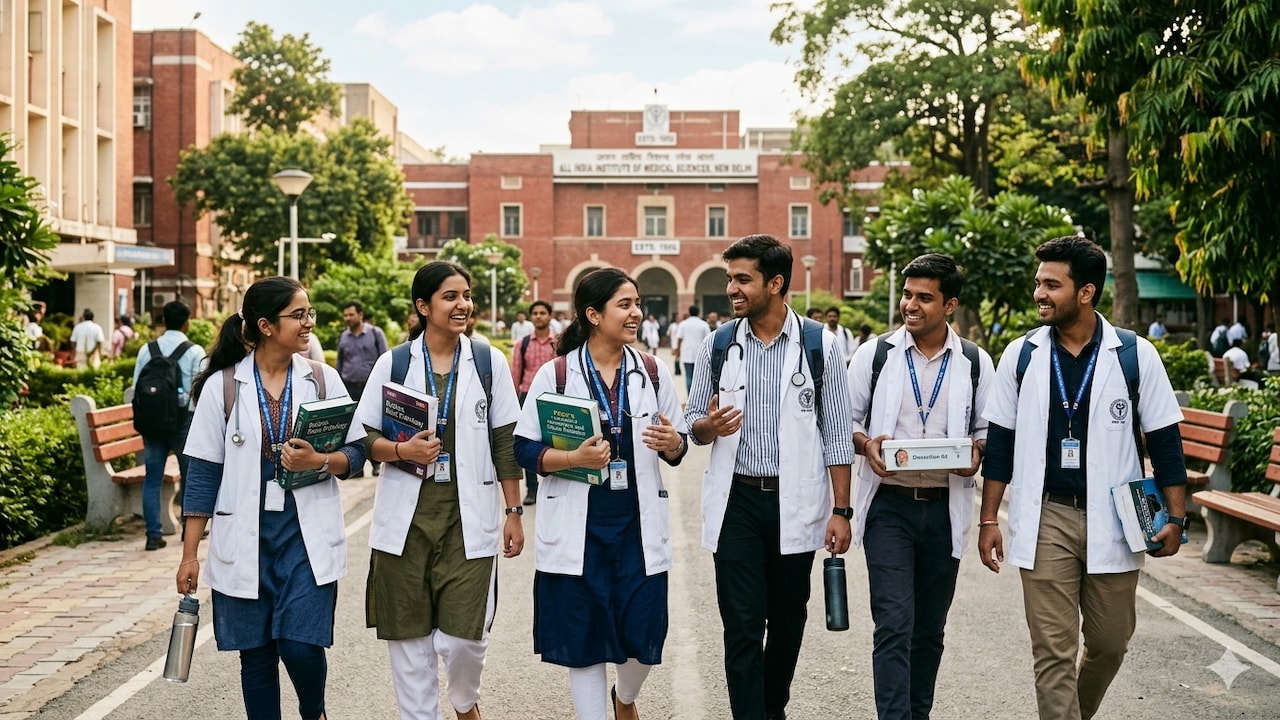
Responding to a question from CPI(M) member V. Sivadasan, Minister of State for Health and Family Welfare Anupriya Patel furnished figures showing that AIIMS New Delhi alone accounts for 2,921 vacancies. Of its 1,313 sanctioned faculty posts, 873 are currently filled, leaving 440 vacant. In the non-faculty category, 11,432 of the 13,913 sanctioned posts are filled, with 2,481 lying vacant.
The 18 AIIMS institutions established under the Pradhan Mantri Swasthya Suraksha Yojana (PMSSY) have a combined sanctioned faculty strength of 4,850 for 2026-27, of which 3,205 are filled. This leaves 1,645 vacancies, or approximately 34% of the total sanctioned strength.
The shortage is particularly acute in several newly established AIIMS. At AIIMS Rajkot, 89 of 183 sanctioned faculty posts are vacant; Guwahati has 64 vacant out of 183; Bilaspur has 78 out of 217; and Gorakhpur has 92 out of 213.
Other major central institutions also face substantial vacancy numbers. JIPMER, Puducherry, has 1,223 vacant posts; PGIMER, Chandigarh, has 1,936; Safdarjung Hospital, New Delhi, has 1,179; RML Hospital, New Delhi, has 469; Lady Hardinge Medical College and its associated hospitals, New Delhi, has 624; NIMHANS, Bengaluru, has 507; NEIGRIHMS, Shillong, has 599; RIMS, Imphal, has 386; and the National Institute of Tuberculosis and Respiratory Diseases, New Delhi, has 77.
The data also reveals a decline in the total number of sanctioned posts at some institutions. At RML Hospital, the sanctioned strength fell from 4,093 in 2021-22 to 3,152 in 2025-26. At Lady Hardinge, it dropped from 3,097 to 2,841 during the corresponding period.
In his question, MP Sivadasan pointed out that vacancies in central health institutions directly affect the availability of healthcare personnel for patients. He urged the Centre to create posts based on bed strength, patient load and treatment requirements, and to fill existing vacancies in a time-bound manner.
The figures, provided in response to a parliamentary query, underscore the ongoing staffing challenges facing India's premier public health institutions.