OBC creamy layer policy deadlock persists as ministries defer to each other, panel chief says

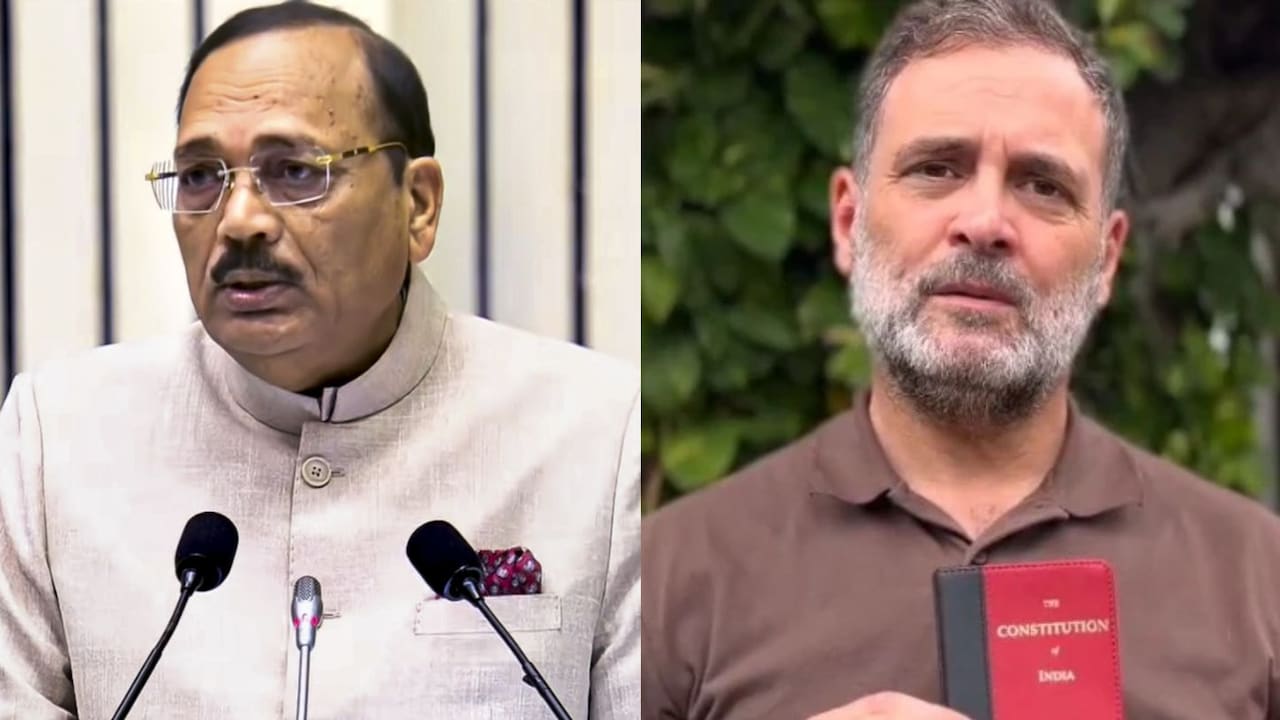
The issue concerning two components of OBC creamy layer exclusion — the income/wealth test and equivalence of posts — remains unresolved, caught between the Ministry of Personnel, Pensions and Public Grievances and the Ministry of Social Justice and Empowerment, according to Ganesh Singh, BJP MP and chairperson of the parliamentary committee on the welfare of Other Backward Classes (OBCs).
Speaking to The Hindu, Mr. Singh said the Social Justice Ministry should ideally formulate the policy based on the Supreme Court's March ruling on the income test and then place it before the Union Cabinet. "That has not happened yet," he noted.
The Supreme Court, in its judgment in the Rohith Nathan case on March 11, ruled that the Department of Personnel and Training (DoPT) was practising "hostile discrimination" by applying the income test differently to OBC candidates whose parents were in government service and to those whose parents held jobs where equivalence with government posts had not been established.
The court directed the government to exclude salary income from the means test for the latter category and to create supernumerary posts for candidates who were denied non-creamy layer status due to the earlier application of the test.
While the government had six months to implement the directions, it later moved the Supreme Court with applications stating that implementing the court's interpretation retrospectively was "extremely difficult". The government also argued that there could be cases where income from salaries must be included in the income test.
Under Mr. Singh's leadership, the House committee has repeatedly pointed out that the government was incorrectly applying the income test to OBC candidates whose parents worked in jobs without equivalence to government posts, primarily by interpreting a 2004 DoPT office memorandum.
"The Personnel Ministry and the Social Justice Ministry seem to be passing the job along to each other. Ideally, the Social Justice Ministry should have formed the policy on equivalence of posts and application of the income test so that it can be placed before the Cabinet. But that has not happened," Mr. Singh said.
The Union Minister for Personnel is Prime Minister Narendra Modi, while Virendra Singh heads the Ministry of Social Justice and Empowerment. The committee has also been urging the Social Justice Ministry to establish equivalence between posts.
The parliamentary panel last examined the issue during hearings on the DoPT's implementation of the reservation policy for OBCs. In hearings held in 2025, the Ministry of Personnel said that the issue concerned OBC candidates whose parents were in jobs where equivalence had not been established. In April 2025, the Personnel Ministry stated that the Social Justice Ministry was responsible for establishing equivalence, and in August that year, it said the Social Justice Ministry had been asked to respond to the House Committee.
However, officials told The Hindu that the Social Justice Ministry has yet to respond to the committee on the matter. In applications submitted to the Supreme Court earlier this month, the Centre said that establishing equivalence for all existing State public sector undertakings could itself take up to two years, and that doing the same for private sector posts might take longer.
When asked for his opinion on the Supreme Court's ruling and the Centre's arguments, Mr. Singh said, "There is no room for my opinion really, once the Supreme Court has ruled on it."
OBC candidates directly affected by the outcome of the Rohith Nathan judgment have argued that the Centre's current position on the difficulty of implementing the income test correctly and retrospectively appears to be an evasive tactic. One civil services candidate, who was denied OBC non-creamy layer status by the DoPT under the older reading of the income test, told The Hindu that the delays were causing uncertainty and affecting career prospects.
The development underscores the bureaucratic tangle over a policy that has significant implications for OBC candidates in central government jobs. The committee's observations bring into focus the lack of coordination between two key ministries on a matter of social justice.