Madras High Court Upholds Death Penalty for Rape of Three Minors, Deems Case 'Rarest of Rare'
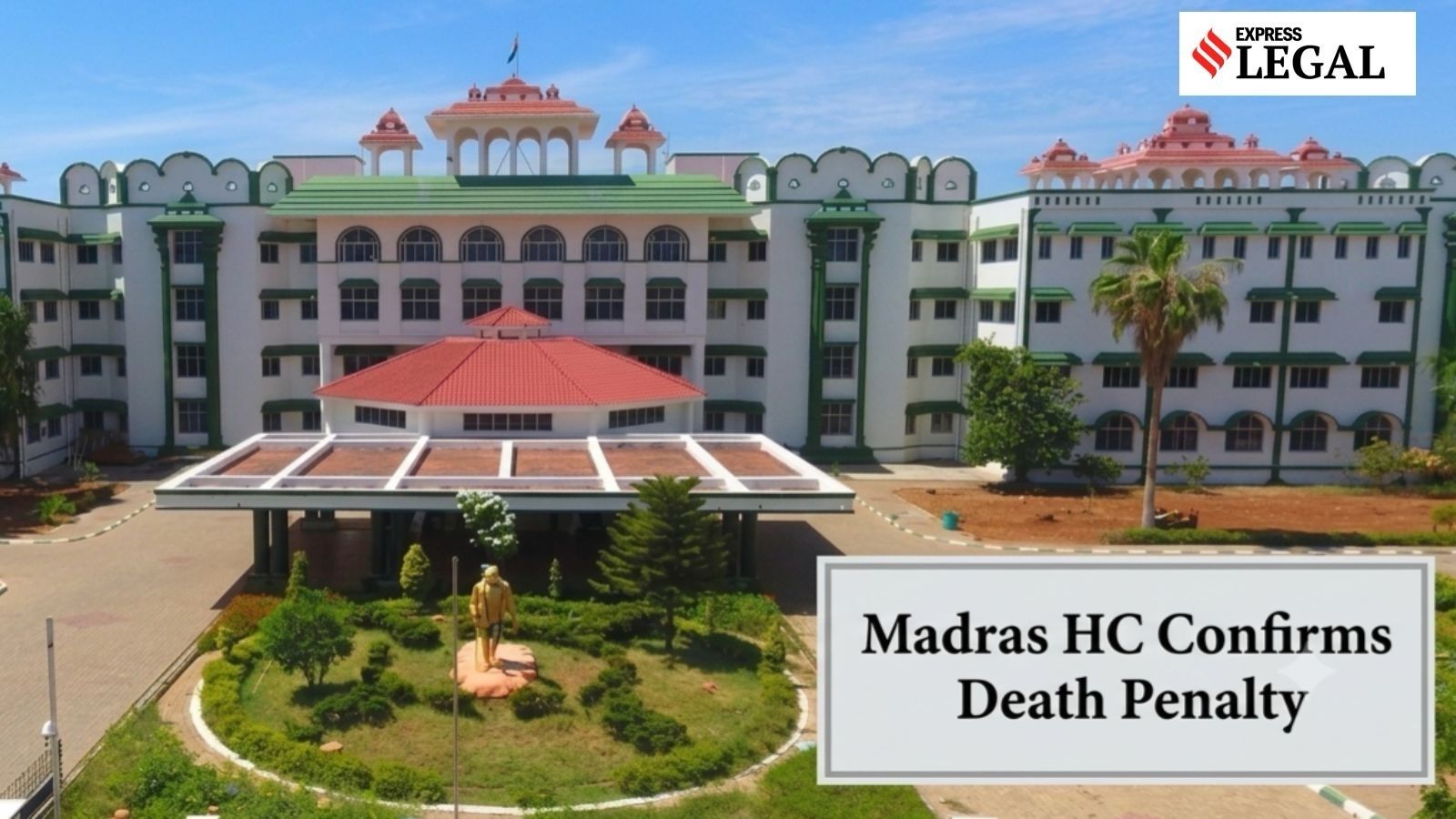
The Madras High Court has confirmed the death penalty for a man convicted of the penetrative sexual assault of three minor children, describing the case as a 'rarest of rare' instance that demands the harshest punishment under the law.
In its June 30 order, a bench comprising Justice N Anand Venkatesh and Justice K K Ramakrishnan observed that the law must possess a 'spine of steel' when dealing with individuals who prey on children to satisfy their 'darkest instincts'. The court emphasised that the accused, having destroyed the soul and dignity of three children, is not fit to live in society and must lose his life for the heinous crimes committed.
The judgment, which upheld the capital punishment under the Protection of Children from Sexual Offences (POCSO) Act, noted that the death penalty is an extraordinary measure reserved exclusively for the rarest of rare cases where the alternative is unquestionably foreclosed. 'This case stands as the tragic epitome of that exception,' the bench stated.
The court further said the judgment should serve as a stark warning to any who believe they can manipulate, terrorise, and destroy the youth of the nation with impunity. 'A crime so grotesque, so utterly devoid of a shred of human conscience, demands a judicial response that mirrors society's collective abhorrence,' it observed.
The bench reasoned that sparing the life of a perpetrator who showed such cold-blooded, protracted cruelty would be an act of misplaced mercy, rendering the law a silent spectator to the destruction of the innocent. It would send a devastating message that the soul of a child is cheap and that a monster may trade the lifelong peace of his victims for the comfort of a prison cell.
The court underscored that the measure of a society's civilisation is found in how it protects its most vulnerable, and no one is more vulnerable than a child trusting the sanctity of a home. The accused, it said, did not merely commit a crime against the physical body but executed a calculated, systematic campaign of terror that shattered the innocence of three young souls by weaponising fear, wielding threats of death, and forcing these children to witness the violation of one another.
'He did not just break the law, but he extinguished the light of their childhood and left in its place a lifetime of haunting shadows,' the order added.
The bench clarified that by confirming the sentence, the court does not act out of vengeance but out of a solemn duty to justice, deterrence, and the restoration of moral order. 'For actions that have effectively slain the souls of three innocent children, the law can offer no sanctuary. The prisoner has forfeited his right to walk among humanity,' it concluded.







