Lindsey Graham, Trump Ally Who Pushed Steep Tariffs on India, Dies at 71
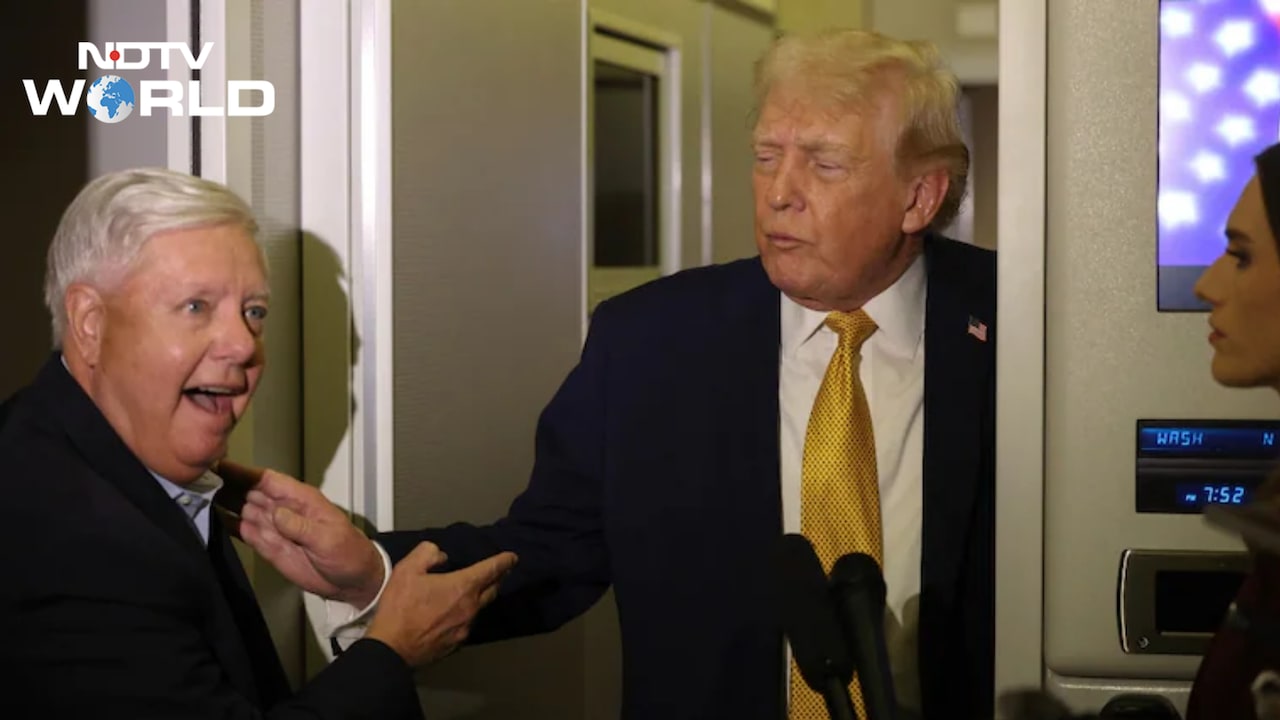
US Senator Lindsey Graham, a Republican from South Carolina and close ally of President Donald Trump, died on Saturday at the age of 71. His office confirmed that he had returned from a trip to Ukraine shortly before his death, which followed a 'brief and sudden illness.'
Preliminary findings from the medical examiner indicate that Graham died from a rupture of his aorta, a major artery near the heart, according to a statement from his spokesman.
Graham was a prominent voice in Washington on foreign policy and was known for proposing a 500 per cent tariff on India, China, and Brazil for purchasing Russian oil. He argued that such measures were necessary to pressure Moscow to end its war in Ukraine. 'You're buying cheap Russian oil at the expense of the world,' he said in a statement earlier this year.
President Trump described Graham as a 'true American patriot' who would be 'greatly missed.' Speaking to CNN, Trump said, 'Well, it's devastating. I thought he was fine. He called me last night. He just got back from Ukraine.' Trump added that Graham was 'full of vim and vigour' despite being tired from the trip.
Graham was first elected to the Senate in 2002 and served in both the House and Senate for over three decades. He was a staunch defender of Ukraine and supported aggressive policies toward Iran. However, he remained largely silent when Trump questioned NATO's value or praised Russian President Vladimir Putin.
Ukrainian President Volodymyr Zelenskyy said Graham had visited Ukraine 10 times since Russia's 2022 invasion and 'was here with our people when it was most needed.' He called Graham 'a true defender of freedom.'
Graham's proposed tariff on India was part of the bipartisan Sanctioning Russia Act of 2025, co-sponsored with Democratic Senator Richard Blumenthal. The bill aimed to impose at least a 500 per cent tariff on nations purchasing Russian energy products if Moscow continued the war.
Graham's death marks the loss of a significant figure in US foreign policy, whose views often bridged the gap between Trump's 'America First' approach and traditional Washington consensus on alliances.