Japan's Historic Defence Shift: What It Means for India and the Region
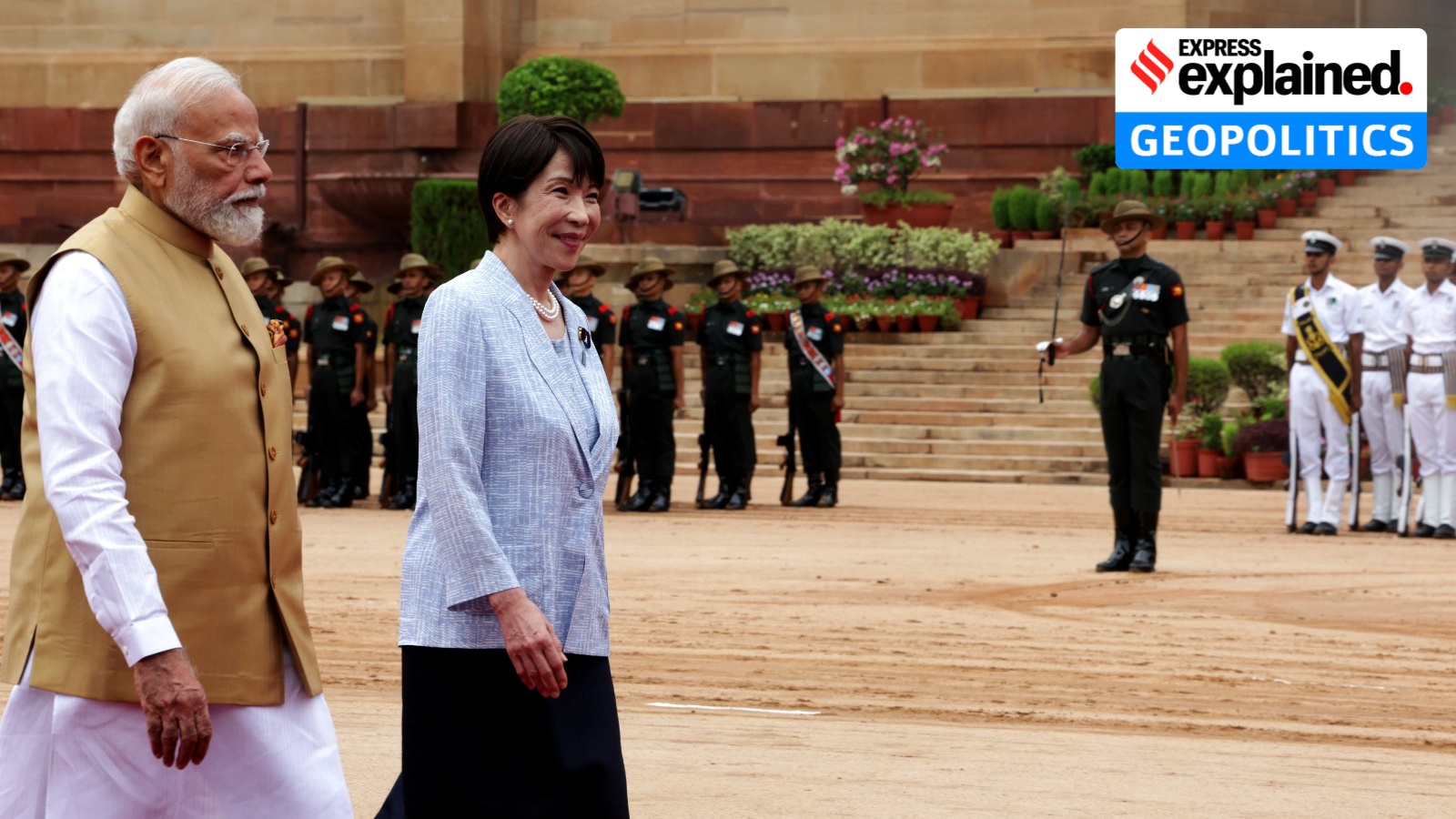
Japanese Prime Minister Sanae Takaichi arrived in New Delhi on Wednesday for the 16th India-Japan Annual Summit and a three-day visit. The visit comes shortly after Tokyo unveiled an updated vision for a 'Free and Open Indo-Pacific' (FOIP) and announced significant changes to its longstanding pacifist defence policy.
Former Ambassador to Japan Sujan Chinoy, Director-General of the Manohar Parrikar Institute for Defence Studies and Analyses, explains the geopolitical drivers behind Japan's defence modernisation and its implications for India.
Japan faces multiple threats in its neighbourhood. North Korea's nuclear weapons and missile development pose a direct danger. A territorial dispute with Russia over the 'Northern Territories' (part of the Kuril Islands) has worsened since Russia's invasion of Ukraine. Meanwhile, China's economic and military rise, coupled with its coercive maritime activities and claims over the Senkaku Islands in the East China Sea, has prompted Japan to review its passive defence posture.
Japan's shift also stems from doubts about the reliability of the US security umbrella. While the United States has guaranteed Japan's security since World War II, Tokyo now recognises that Washington's priorities may shift. A possible US-China accommodation could come at the expense of Japan's interests. Moreover, US demands for allies to increase defence spending have driven Tokyo to plan for a future with a reduced American presence in East Asia. This explains Japan's decision to double its defence spending from 1% to 2% of GDP in a short span.
Prime Minister Takaichi appears to be building on the strategic vision of former Prime Minister Shinzo Abe, who laid the groundwork for a more active defence profile. In 2013, Abe established a National Security Council and relaxed arms export guidelines that had been in place since 1967. In 2015, he reinterpreted collective security rules, giving more flexibility to the Self-Defence Forces. This momentum culminated earlier this year in the reversal of the arms export ban. Japan now plans to prioritise defence cooperation with 17 countries, including India, with which it has defence technology agreements.
For India, Japan's defence pivot presents opportunities. India has been modernising its own defence industry and seeking foreign partners. Japan's move opens the door for joint development of defence equipment, technology transfer, and deeper strategic alignment in the Indo-Pacific. Both countries share concerns about China's assertiveness and seek to uphold a rules-based order. The convergence of interests could lead to enhanced maritime security cooperation, joint exercises, and defence-industrial partnerships.
However, challenges remain. Japan's defence industry is still nascent after decades of limited production. India's procurement processes can be slow. Both nations must navigate their relationships with the United States and China. Nevertheless, the shift in Japan's defence policy marks a historic departure from its post-war pacifism and offers India a valuable partner in shaping regional security.







