Japan PM Takaichi Arrives in India for Annual Summit, Pledges Deeper Strategic Ties
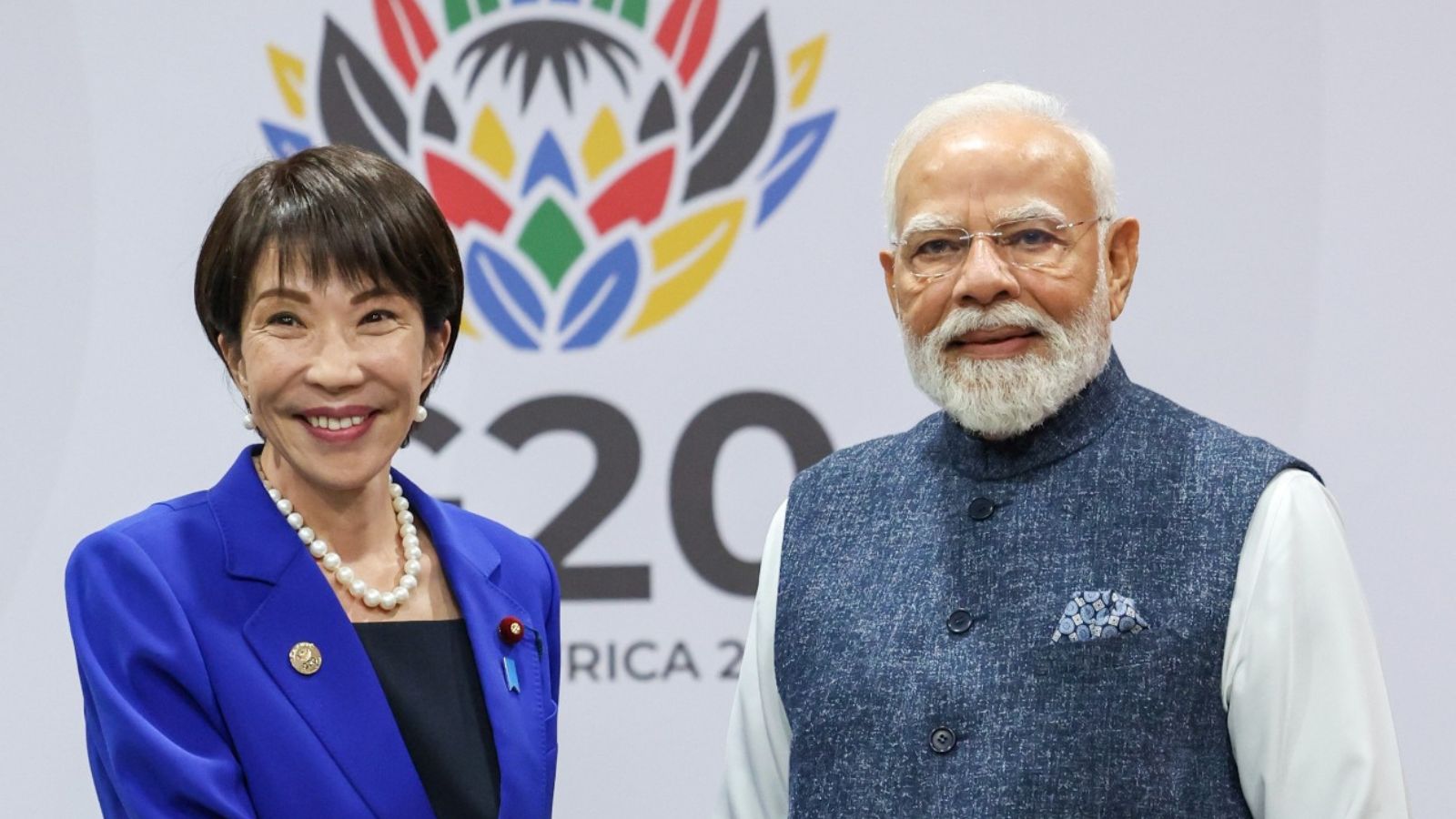
Japan's Prime Minister Sanae Takaichi arrived in New Delhi on Wednesday evening for a three-day official visit, her first to India since she became prime minister in October 2024. The visit underscores the deepening strategic partnership between Tokyo and New Delhi amid global uncertainties, particularly regarding regional security and supply chain resilience.
Upon arrival, Takaichi was received by senior Indian officials. The highlight of the visit will be the 16th India-Japan Annual Summit, a forum that has facilitated bilateral cooperation across various domains since its inception in 2006. The summit reaffirms the shared vision of a "Free and Open Indo-Pacific" — a framework both nations champion in response to China's growing influence in the region.
In an informal press conference in Tokyo before departure, Takaichi stated, "Amid growing uncertainty in the international situation, the importance of collaboration with India, which shares fundamental values and strategic interests, is only increasing." She outlined three pillars for the visit: deepening the strategic cooperative relationship, promoting cooperation in economic security, and fostering collaboration between companies toward investment and innovation.
Diplomatic sources indicate that the agenda includes advancing maritime security, defence technology cooperation, and developing an 'Industrial Value Chain' connecting the Bay of Bengal with Northeast India. Additionally, the leaders are expected to discuss energy security and ways to mitigate supply chain disruptions stemming from the West Asia crisis.
India and Japan have strengthened ties in recent years, with frequent high-level exchanges and growing economic engagement. The summit follows Prime Minister Narendra Modi's visit to Tokyo in August 2025, where the two sides committed to expanding cooperation in strategic, economic, technological, and security areas.
Takaichi is accompanied by a large business delegation, reflecting the importance of economic linkages. According to government data, approximately 1,400 Japanese companies operate in India, with about half engaged in manufacturing. Japan has been a key investor, backing flagship projects like the Mumbai-Ahmedabad high-speed rail corridor. In a notable development, Japanese firms recently acquired a 20% stake in Yes Bank for $1.6 billion.
A Japan-India Economic Forum will be held on Thursday after the delegation-level talks, with participation from over 150 Japanese business leaders. "By uniting government and private sectors, we aim to broaden the scope of Japan-India cooperation and realise a strong economy," Takaichi said.
Bilateral trade reached $27.5 billion in the financial year 2025-26, while Japanese investment in India totaled $3.2 billion between April and December 2025. The summit is expected to produce a joint statement and an agreement on energy cooperation, further solidifying the partnership.
The visit highlights the strategic convergence between the world's two largest democracies in the Indo-Pacific, driven by mutual economic and security interests. As global uncertainties persist, the India-Japan partnership is poised to become a cornerstone of regional stability.







