Israel Rejects Gaza Plan: Netanyahu Says No Withdrawal Until Hamas Disarmed
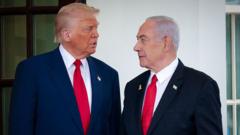
Israeli Prime Minister Benjamin Netanyahu has rejected a 15-point plan for Gaza presented by US President Donald Trump's peace initiative, declaring that Israel will not withdraw its military forces from the enclave until Hamas is "genuinely disarmed."
The plan, announced last month by Trump's Board of Peace, claimed to have reached an agreement for the "complete disarmament" of Hamas and other armed groups in Gaza. But Hamas has responded that it would hand over its heavy weapons only if Israel ends "all forms of aggression" and withdraws its forces from the territory.
Netanyahu made his remarks during a cabinet meeting on Sunday, stating: "Israel rejects the 15-point document. The Israeli military will not carry out any withdrawal until Hamas is genuinely disarmed and will continue to thwart threats against our forces and our citizens."
This rejection comes as Israel has continued to conduct strikes in Gaza since agreeing to an initial ceasefire in October last year. The ceasefire, which was intended to halt months of hostilities, has remained fragile, with periodic exchanges of fire and mutual accusations of violations.
The core disagreement lies in the sequencing of any peace agreement. Israel maintains that disarmament of Hamas and other militant groups is a non-negotiable precondition for any troop withdrawal. Hamas, on the other hand, sees its military capacity as a means of resistance and insists that disarmament can only take place once Israel ends its military operations and withdraws from Gaza.
The 15-point plan was meant to address these competing demands by presenting a structured approach to disarmament, security, and governance. However, Israel's outright rejection has called into question the viability of the proposal.
Gaza, a narrow coastal strip home to around two million people, has been governed by Hamas since 2007. The enclave has faced a blockade and multiple rounds of conflict with Israel. The ongoing ceasefire is seen as a fragile pause rather than a durable end to the fighting.
The United Nations and other international actors have repeatedly called for restraint and a return to political negotiations. Yet, the latest development signals that the two parties remain far apart, and the risk of renewed conflict is ever-present.
For civilians in Gaza, the continued strikes have worsened an already severe humanitarian crisis, with shortages of medical supplies, electricity, and clean water. The prospect of further escalation raises concerns of additional civilian casualties and long-term damage.
So far, there has been no immediate official response from the Trump administration or the Board of Peace to Netanyahu's statement. It is unclear whether the plan can be amended or whether alternative diplomatic channels will emerge.
Over the years, numerous ceasefires and peace initiatives have been attempted, but none have succeeded in bringing a permanent settlement. The rejection underscores the deep mistrust between Israel and Hamas, and the challenges facing any effort to broker a lasting peace in the region.