Indian Railways Imposes Rs 2,000 Fine for Smoking, Hawking, and Begging Under Revised Law
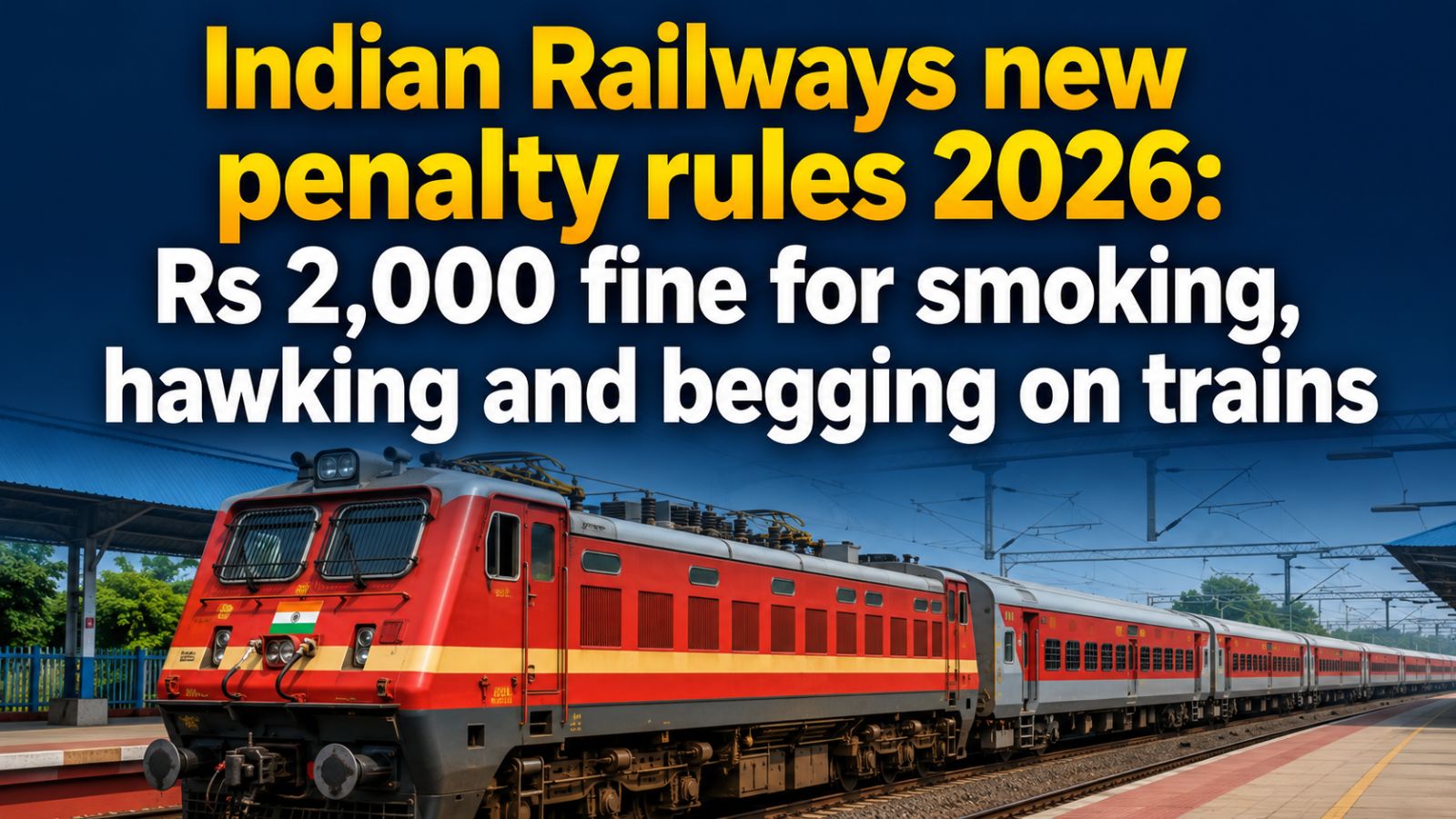
Indian Railways has strengthened its rules to enhance passenger safety and comfort, introducing stricter penalties for violations such as smoking, hawking, and begging on trains and railway premises. The changes, effective from June 19, 2026, follow a gazette notification under the Jan Vishwas (Amendment of Provisions) Act, 2026.
The notification, issued by the Ministry of Railways, cites Section 167 of the Railways Act, 1989, which prohibits smoking in railway carriages and premises. Previously, the maximum fine for smoking was Rs 100. Under the amended law, offenders now face an immediate penalty of Rs 2,000. If the penalty is not paid, the individual may be produced before a competent court, where conviction can lead to a fine of up to Rs 5,000, with a minimum of Rs 2,000 unless the court records special reasons for a lower amount.
Additionally, the amendment empowers railway staff to remove the offender from the train and forfeit their pass or ticket. The changes aim to address safety concerns, as several past incidents were suspected to have been caused by smoking onboard or by the transport of inflammable materials.
Similar penalties apply to hawking and begging under Section 144 of the Railways Act. Unauthorised vending and begging in passenger areas are now punishable with a Rs 2,000 on-the-spot fine. If the offender fails to pay, they may be taken to court, where the fine can extend to Rs 5,000, with a minimum of Rs 2,000. The railways have noted that while many licensed and unlicensed hawkers rely on selling goods, unauthorised activities in passenger areas are prohibited to ensure comfort and safety.
The revised penalties are part of the broader Jan Vishwas Act, which aims to decriminalise minor offences and rationalise fines across various laws. In this context, the railways have increased fines for certain offences while maintaining the possibility of legal recourse for non-payment.
Passengers are advised to adhere to the rules to avoid penalties. The railways have also launched awareness campaigns to inform travellers about the new provisions.