India Pulls Up US Lawmaker Pramila Jayapal Over Voter Roll Remarks, Calls It Interference
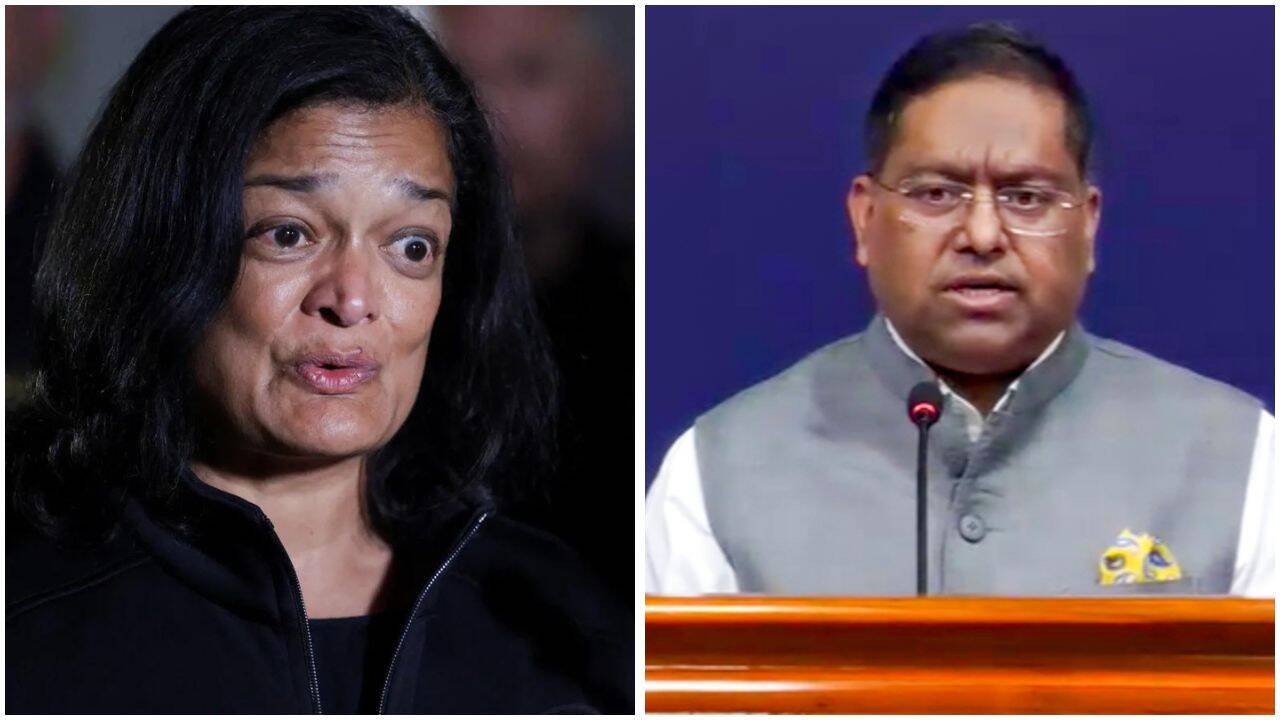
India has dismissed remarks by United States Congresswoman Pramila Jayapal about its electoral process as unwarranted and uninformed. The Ministry of External Affairs said her comments amounted to interference in India's democratic practices.
India's Ambassador to the United States, Vinay Mohan Kwatra, also rejected the allegations, describing them as unacceptable interference. New Delhi's position is that the conduct of elections and the maintenance of electoral rolls are sovereign matters, and that public commentary on them by foreign legislators is inappropriate.
The remarks in question concerned the deletion of names from India's voter rolls. The Election Commission of India is currently carrying out a nationwide revision of electoral rolls, an exercise being conducted in multiple phases.
Revision of electoral rolls is a periodic, administrative process rather than a single event. Under its established procedure, the Commission publishes draft rolls, invites claims and objections from citizens, and disposes of those claims before final rolls are published. The Commission has said the current exercise is being carried out in accordance with these procedures and that safeguards are in place for eligible voters.
The revision has nonetheless become a subject of public debate. Opposition parties and civil society organisations have raised concerns about the removal of names of eligible voters, and have called for greater transparency. The Commission has maintained that its process is transparent and that no eligible elector is removed without due procedure. Courts have, in the past, examined individual grievances relating to roll revisions and directed corrective measures where errors were found.
Ms Jayapal represents a congressional district in Washington state and is the first Indian-American woman elected to the United States House of Representatives. She has spoken publicly on a range of subjects concerning India and the Indian-American community. Her comments on the voter rolls drew a sharp response from New Delhi, which has objected to similar commentary in the past, holding that matters relating to India's internal affairs should not be the subject of public statements by elected representatives of other countries.
India is the world's largest democracy, with an electorate of nearly one billion registered voters. The Lok Sabha election was held in 2024, and assembly elections in several states have followed since. Because of this scale, the accuracy of electoral rolls is a matter of continuing public interest, and the Commission's revision drives routinely attract scrutiny from political parties, civil society and the media within the country.
The exchange comes at a time when India and the United States maintain a broad strategic partnership covering trade, defence, technology and people-to-people ties. Disagreements between the two countries have generally been handled through diplomatic channels, and New Delhi has consistently drawn a line between legitimate discussion of bilateral issues and commentary on domestic political processes.
What the Ministry of External Affairs has made clear is that it views the Congresswoman's statements as crossing that line. It has described them as both unwarranted and uninformed, and has said they interfere with India's democratic practices. Ambassador Kwatra's rejection of the allegations reinforces that the government is treating the matter as one of principle rather than a difference over policy.
For readers, the substantive question remains the conduct of the electoral roll revision itself. The Commission's phases, draft publications, claim-and-objection windows and final roll dates are public documents, and voters whose names are affected have a defined process for redressal. The diplomatic dispute over foreign commentary does not alter that process, which will continue to run under the Commission's announced schedule.