India and Indonesia Forge Closer Defence Ties to Reshape Indo-Pacific Order
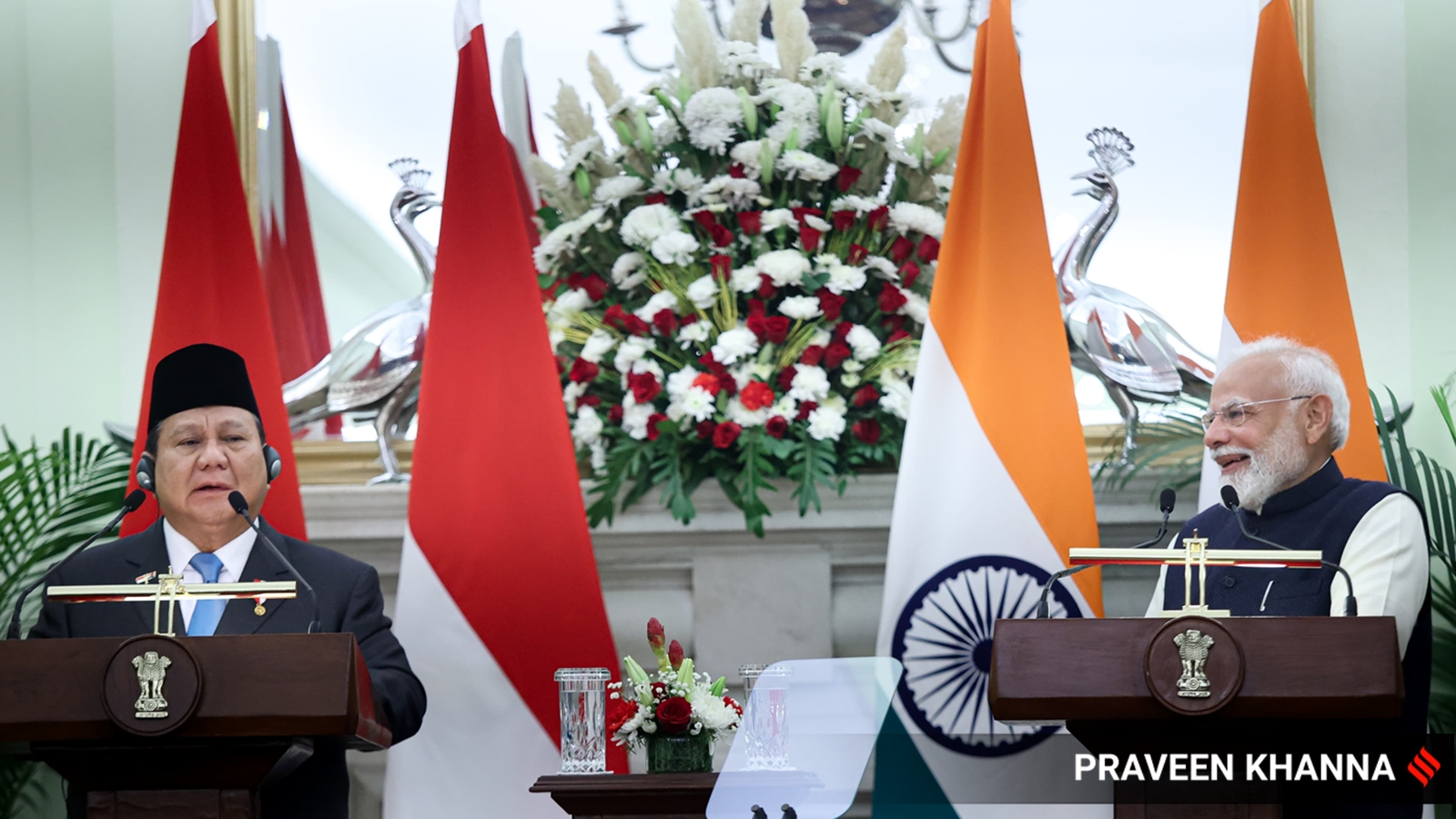
When Prime Minister Narendra Modi arrives in Jakarta on July 6, the visit marks the latest in a series of high-level engagements between India and Indonesia. The two democracies are deepening their strategic partnership amid a shifting geopolitical landscape in the Indo-Pacific region.
The growing presence of China in the South China Sea and Southeast Asia has prompted regional states to reassess their security arrangements. The United States' 2025 National Security Strategy, with its limited focus on Southeast Asia, has also led ASEAN countries to diversify their partnerships. This presents an opportunity for India to strengthen its ties with Indonesia, the world's largest archipelagic nation and a key maritime neighbour.
Indonesia oversees critical maritime chokepoints such as the Malacca, Sunda, and Lombok Straits, through which a substantial portion of global trade passes. India's Act East policy has long recognised this strategic significance. In 2018, the two countries elevated their relationship to a Comprehensive Strategic Partnership, with subsequent mechanisms including a Defence Cooperation Agreement, Defence Ministers' Dialogues, and a Joint Commission Meeting.
The recent high-level exchanges indicate a concerted effort to translate these agreements into tangible outcomes. Indonesian President Prabowo Subianto was the chief guest at India's Republic Day celebrations in January 2025, and Foreign Minister Sugiono visited Delhi in June to prepare for Modi's visit. These three engagements within 18 months highlight the growing momentum in bilateral relations.
A key focus of the partnership is defence cooperation. The potential sale of BrahMos supersonic cruise missiles to Indonesia is a significant development. India aims to offer co-production, aligning with Indonesia's goal of self-reliance without dependence on a single supplier. This mirrors India's own push for military-industrial indigenisation.
Beyond the BrahMos deal, the Andaman-Nicobar-Sabang corridor presents strategic opportunities. The proximity of India's Andaman and Nicobar Islands to Indonesia's Sabang Port allows for joint surveillance of the Malacca Strait, enhancing maritime security, counter-piracy operations, and disaster response capabilities in the Bay of Bengal.
Economic ties between the two countries also run deep. Historical trade in spices and textiles has evolved into modern economic cooperation, including in sectors such as nickel processing and digital payments. Both nations are exploring ways to boost bilateral trade and investment.
As the Indo-Pacific order undergoes transformation, India and Indonesia are positioning themselves as key partners in shaping a stable and secure regional architecture. Their growing cooperation reflects a broader trend of middle powers taking on greater responsibilities in a multipolar world.