India and China present contrasting visions for Global South at BRICS meeting
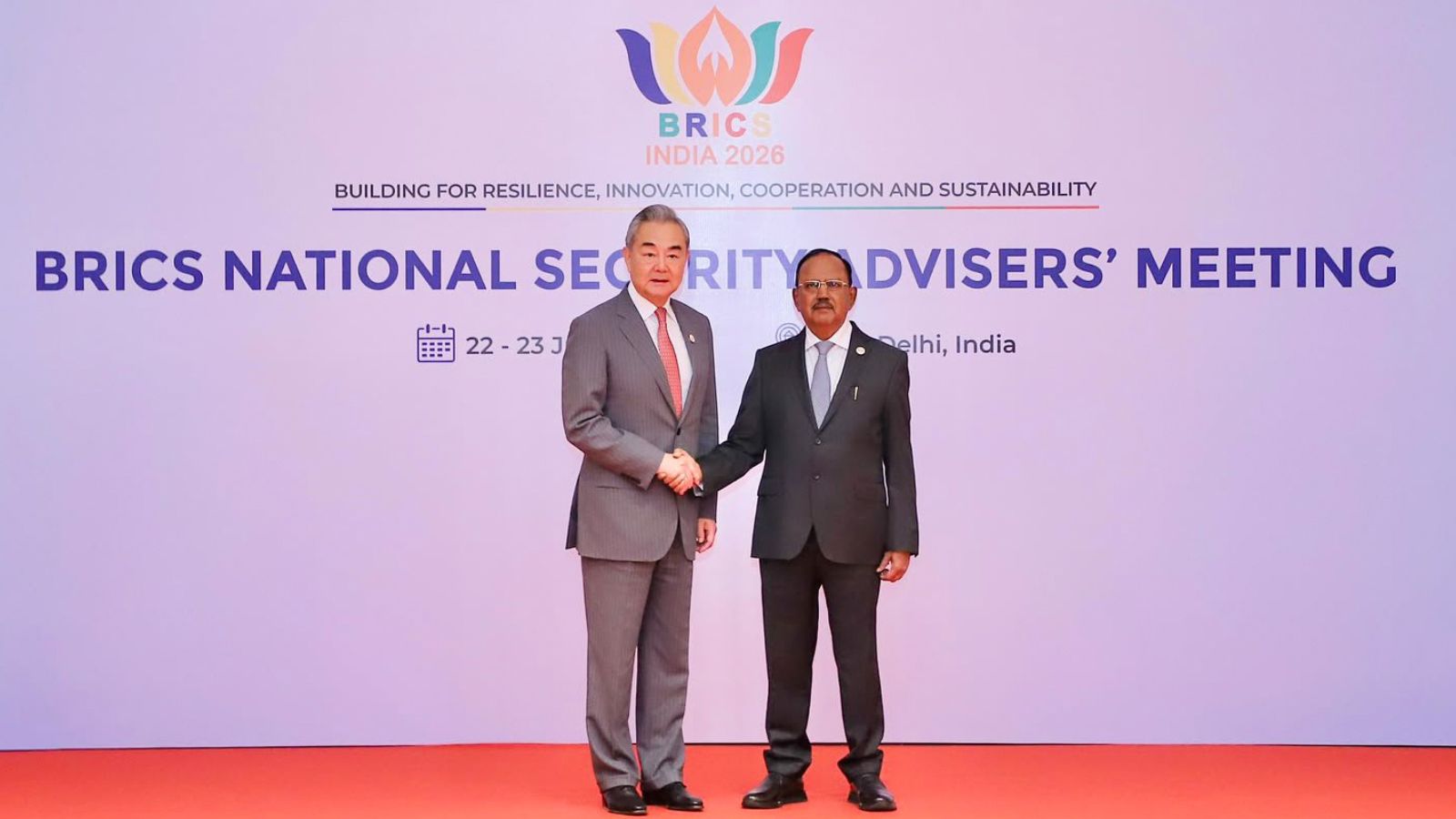
On June 22, National Security Advisor Ajit Doval met Chinese Foreign Minister Wang Yi on the sidelines of the 16th BRICS National Security Advisors meeting in New Delhi. The meeting highlighted differing priorities between the two nations regarding the Global South.
India emphasised the need for 'stable, predictable and constructive bilateral relations' and a 'gradual normalisation' of ties since the 2020 Galwan clashes. China, however, framed the discussion within the context of a rising Global South. Wang Yi stated that 'the Global South, including China and India, is collectively rising' and called on both countries to 'accelerate the modernisation process of the Global South together.'
This language closely mirrored a White Paper on global governance published by China five days earlier. The document outlines three approaches: first, it argues that any concept of a Global South excluding China is invalid; second, it promotes China's 'win-win' and 'harmonious' cooperation within the grouping; and third, it adopts India's preferred metaphor of acting as a bridge between the Global North and Global South, though China frames it as 'synergising' North-South cooperation.
Analysts note that while both countries seek to shape the narrative around the Global South, their strategies diverge. India has traditionally positioned itself as a representative of developing nations and a bridge between developed and developing worlds. China's recent efforts appear to assert its leadership within the Global South, potentially challenging India's role.
The meeting occurred amid ongoing tensions along the Line of Actual Control (LAC) in eastern Ladakh. India has consistently called for adherence to bilateral agreements and a return to the status quo ante of April 2020. China has called for broader cooperation on global governance issues.
The BRICS NSA meeting brought together security advisors from Brazil, Russia, India, China, and South Africa. Discussions covered counter-terrorism, cybersecurity, and regional stability. The India-China bilateral meeting was a key moment, given the strained relations since Galwan.