India Aims to Scale Nuclear Capacity; IAEA Confirms Zero Accidents
As India plans to expand its nuclear power capacity from 8 gigawatts to 100 gigawatts over the next 21 years, the International Atomic Energy Agency (IAEA) confirms that the country has maintained a zero-accident record across its nearly two dozen atomic reactors.
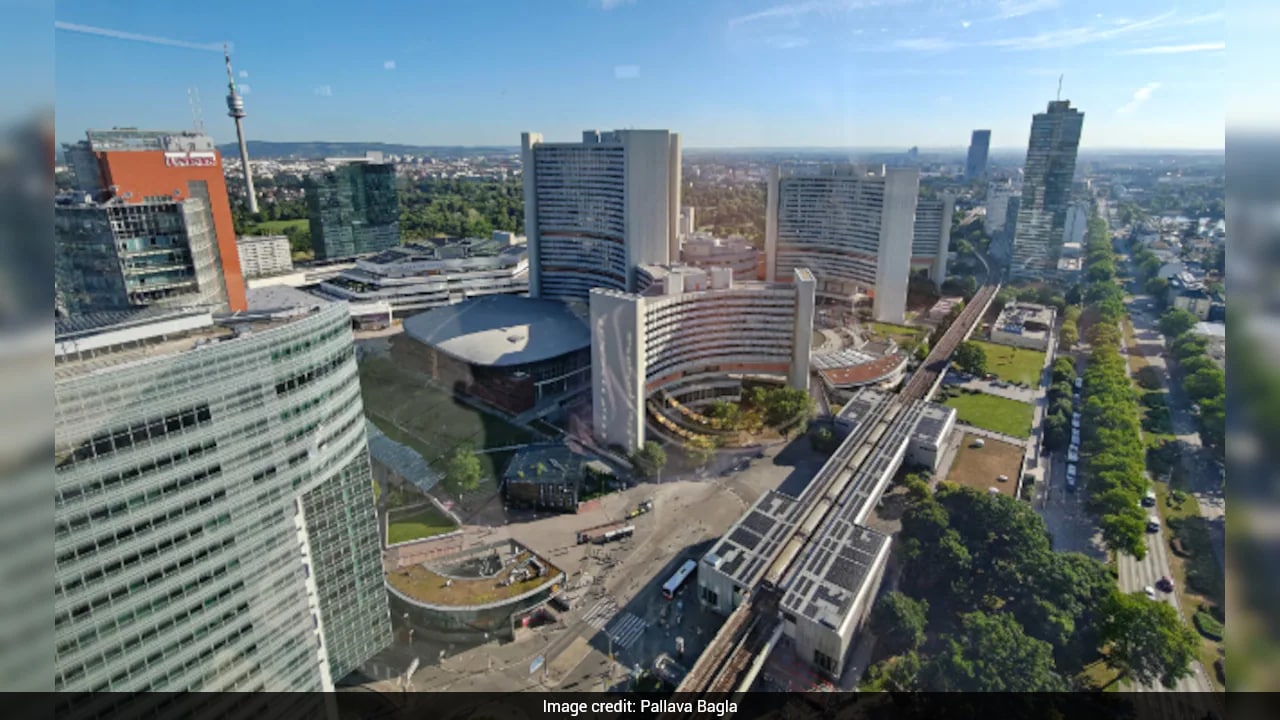
At the IAEA's Incident and Emergency Centre in Vienna, a team of around 35 staff, supported by over 170 specialists and a global network of experts, monitors radiation levels and nuclear events worldwide. The centre acts as the global focal point for nuclear emergency preparedness, communication, and response.
Director Amgad Shokr stated, 'We do much more than monitoring emergencies. The centre is the global focal point for international coordination, cooperation, and coordination of emergency preparedness, communication, and response.'
The centre is linked to over 130 designated contact points in member states, including India, which operate 24/7 to feed real-time information into the system. Shokr emphasised that their work begins well before any accident: 'We help member states to develop their capabilities so that in case of an emergency or accident, they know how they can respond with the objective to protect the people and environment from radiation hazards.'
While ultimate responsibility for nuclear safety lies with national governments, the IAEA helps establish regulatory frameworks and response capacities. When an incident occurs, the centre collects information from national contact points, validates it, and conducts technical assessments to evaluate potential radiological consequences. If requested, the centre deploys international assistance for radiation protection and assessment.
The centre's global reach extends to monitoring developments such as attacks on the Barakah nuclear power plant in the UAE and the situation at Zaporizhzhia in Ukraine. During the Fukushima disaster in 2011, the centre was activated for over 54 days continuously and six months in a basic mode, coordinating data and deploying teams for radiation monitoring and decontamination.
India's track record of zero accidents is significant as it plans a major scale-up. However, experts note that maintaining safety standards will be critical as capacity expands. The IAEA's continuous monitoring and support provide a layer of international oversight, but national regulators bear primary responsibility.
The IAEA system is designed to track transnational implications of nuclear accidents, as highlighted by past crises like Chernobyl and Fukushima, where radiation crossed borders. Shokr underscored this global responsibility, noting that the centre's functions include ensuring that member states are prepared to protect people and the environment.