Hijab Row: Owaisi Slams Allahabad HC Ruling, Says 'Our Religion, We Decide'
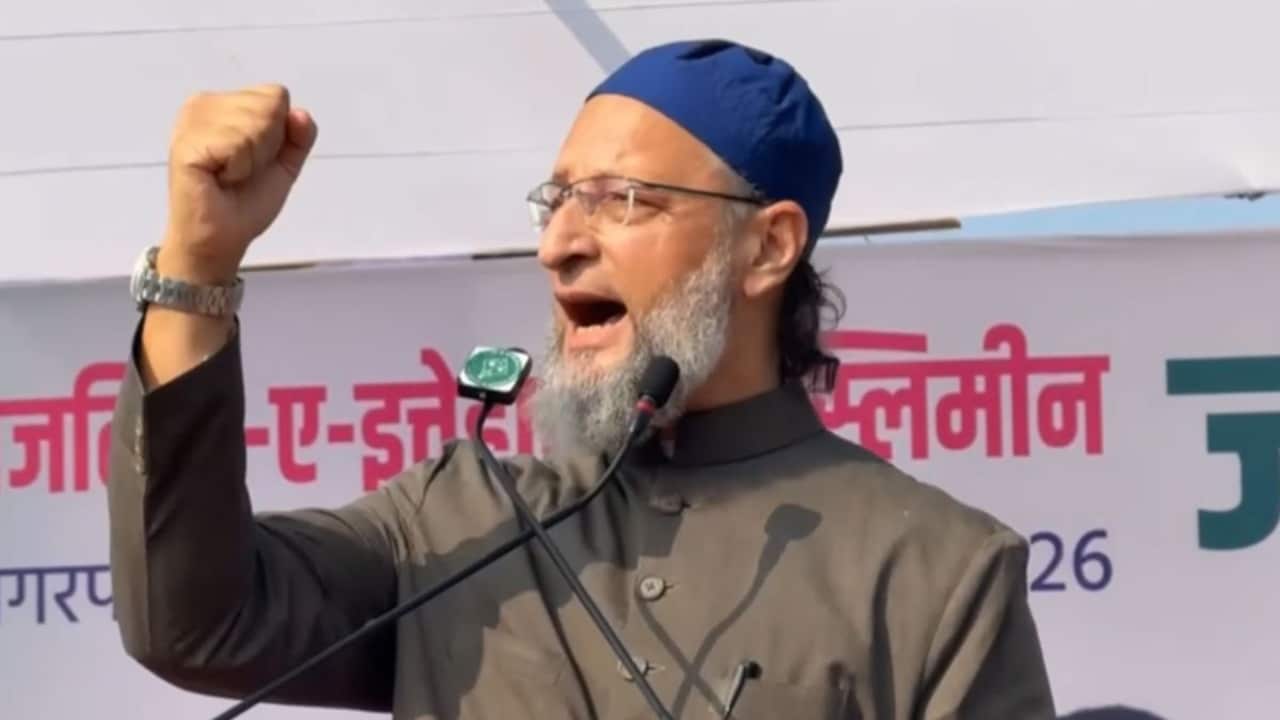
All India Majlis-e-Ittehadul Muslimeen (AIMIM) chief Asaduddin Owaisi has strongly criticised the Allahabad High Court's recent ruling that rejected a Muslim girl's petition to wear a headscarf in school, calling it an 'attack on Islam'. The Hyderabad MP asserted that it is not for judges to decide what is essential to the faith.
'It is our religion and we will decide what is essential. Who are the judges to decide? This is an attack on our religion,' Owaisi said while addressing the media on Tuesday. His remarks come in response to the court's August 21 verdict, which dismissed a plea filed by a minor girl seeking permission to wear a headscarf along with the uniform prescribed by her private school in Prayagraj.
The two-judge bench of Justices JJ Munir and Indrajit Shukla ruled that no student has a right to alter the dress code prescribed by an educational institution according to personal preferences. The court also rejected the argument that wearing a headscarf is an essential Islamic practice, noting that high courts across the country have been consistent in their view on this matter.
'Wherever this issue has arisen, the high courts have been unanimous in opinion that wearing a headscarf is not an essential part of the Islamic faith for a woman to don, in the absence of which faith would be jeopardised,' the court observed. It further stated that as long as a school's uniform code is fair, non-discriminatory, and implemented to maintain institutional discipline and equality, the institution retains full autonomy to enforce its internal discipline and dress code.
Owaisi, however, disagreed with the ruling, arguing that 'uniformity is not equality'. He also contended that the order violates Articles 19 and 25 of the Constitution, which guarantee freedom of speech and expression, and freedom of religion, respectively. He noted that the Supreme Court is already examining the broader question of essential religious practices in the Sabarimala case, and said the Allahabad High Court should have waited for the apex court's guidance.
Supporting the girl's demand, Owaisi framed the issue as one of personal choice and privacy, saying, 'She is wearing hijab on her head, not on her mind.' He expressed concern that the ruling could adversely impact Muslim girls' education, pointing to low enrolment rates in secondary schools in Uttar Pradesh. 'They want to stop education of Muslim girls,' he alleged.
The petitioner, a minor girl who had passed high school and sought admission to Class XI in the same institution, argued that the school's refusal to allow her to wear the headscarf infringed upon her fundamental rights. The court, however, said that the school's uniform policy is reasonable and does not discriminate against any particular religion.
Legal experts note that the judgment adds to a series of similar rulings by various high courts, including the Karnataka High Court in the Hijab case, which is also pending before the Supreme Court. The Supreme Court is likely to examine these matters collectively to settle the legal position on religious attire in educational institutions.
Owaisi's remarks have reignited the political debate over religious symbols in public spaces, with some supporting his stance and others backing the court's decision. However, the core issue remains the balance between individual religious expression and institutional discipline in schools.