Govt offices' e-waste could fetch Rs 10,000 crore a year, says Minister Jitendra Singh
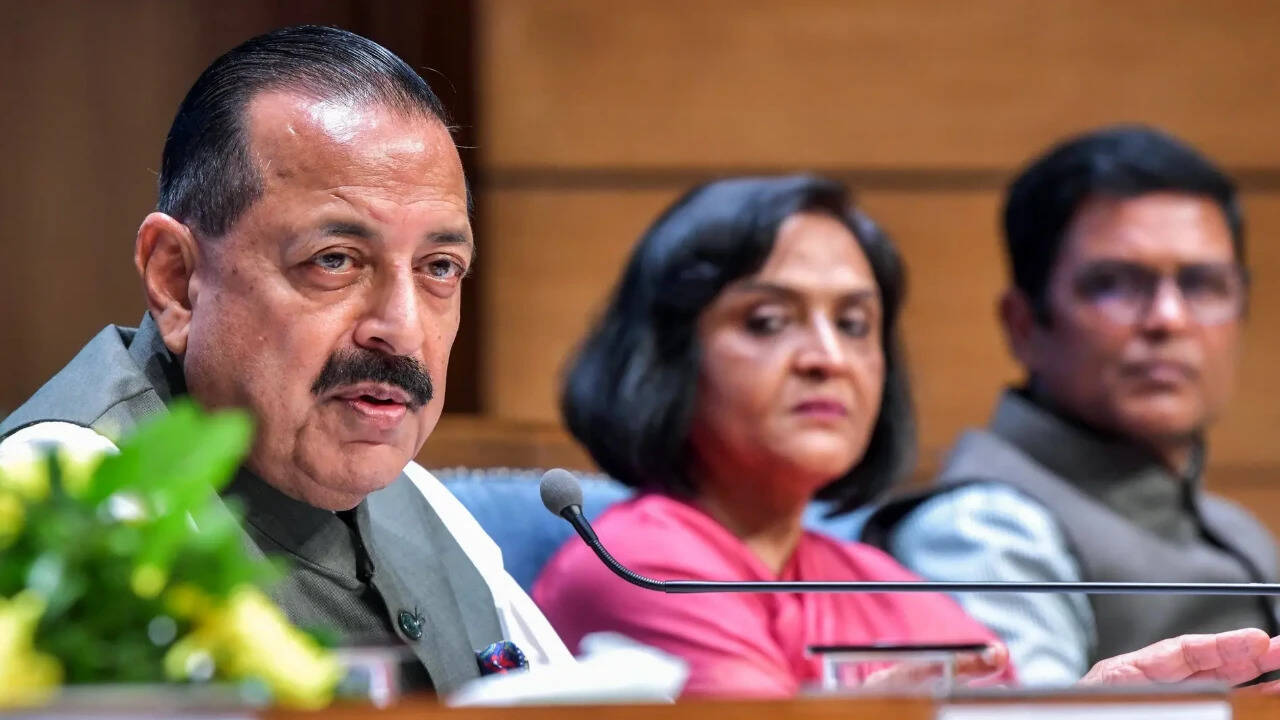
Electronic waste lying in government offices across the country could fetch around Rs 10,000 crore every year if it is collected and disposed of in an organised manner, Union Minister of State for Personnel, Public Grievances and Pensions Jitendra Singh has said.
The minister made the observation while launching a monitoring portal for "Special Campaign 6", an exercise under the Department of Administrative Reforms and Public Grievances (DARPG) aimed at institutionalising Swachhata in government offices and reducing pendency of files, grievances and inter-departmental references.
The Special Campaign series is a recurring, time-bound drive in which ministries and departments are asked to clear old files, dispose of scrap and redundant equipment, free up office space and settle long-pending public grievances. The campaigns are monitored centrally, and departments are expected to report progress against fixed targets. The new portal is intended to make that monitoring continuous rather than confined to the duration of the drive.
E-waste refers to discarded electrical and electronic equipment — computers, monitors, printers, servers, telephones, cables, batteries and air-conditioners — that have reached the end of their useful life. Government offices are significant holders of such equipment because of the scale of public administration and the periodic replacement cycles followed by departments.
The Rs 10,000 crore figure is a potential or indicative value of the recoverable material and realisable sale proceeds, not a budgeted receipt. The actual amount realised in any year would depend on how much equipment is written off, its condition, prevailing prices for recoverable metals and components, and the route used for disposal. There is no public breakdown of how the estimate was arrived at, and the government has not yet spelt out how such receipts would be accounted for or whether they would be retained by the departments concerned.
Under India's E-Waste (Management) Rules, notified in 2016 and subsequently amended, bulk consumers such as government departments, local bodies and public sector undertakings are required to channel their discarded equipment only to registered dismantlers and recyclers, and to maintain records of the same. Extended Producer Responsibility obligations place the onus of collection and environmentally sound recycling on manufacturers and importers.
India generates a large and growing volume of e-waste. Central Pollution Control Board data estimated generation at about 16 lakh tonnes in 2021-22, and the figure has been rising with the spread of digital devices. Official and industry assessments have repeatedly noted that only a fraction of this is processed through the formal, regulated system, with a substantial share being handled by informal operators who often use unsafe methods to extract metals.
For government departments, the practical route for disposal is generally sale through e-auction platforms such as the Government e-Marketplace, followed by handover to authorised recyclers. Officials say this serves two purposes: it recovers some value for the public exchequer and it keeps hazardous material out of unregulated channels. Improper handling of e-waste can release lead, mercury, cadmium and other toxic substances into soil and water, and can expose workers to serious health risks.
The proposal also raises operational questions that departments will have to address. Storage devices in government computers may contain sensitive or personal data, and rules on secure erasure or destruction of such media before disposal are relevant. Valuation of obsolete equipment, transparency in auctions and timely removal of written-off items from inventory are other issues that have been flagged in previous cleanliness campaigns.
Observers note that an organised disposal system could also reduce expenditure on renting storage space for junked equipment and improve the working environment in offices. Whether the projected Rs 10,000 crore is realised annually will depend on how consistently departments follow the prescribed process, how quickly written-off items are cleared, and how effectively the new monitoring mechanism tracks compliance.