Full Vande Mataram rendition sparks fresh Congress-BJP political clash
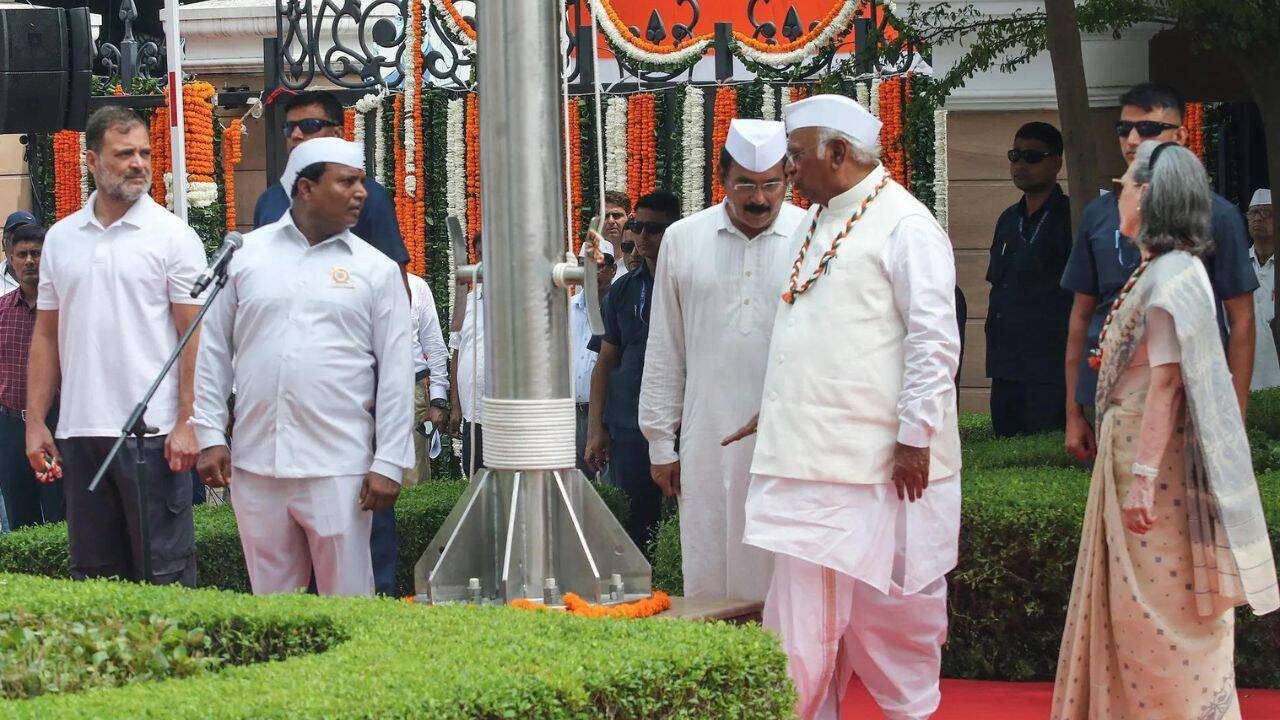
A recent rendition of the complete version of Vande Mataram at a public function has triggered a fresh political confrontation between the Congress and the Bharatiya Janata Party (BJP). The two parties exchanged sharp remarks over the singing of the national song, reviving a long-standing debate over its full version and its place in public life.
The incident took place during an event where the full two-stanza rendition was performed. While the BJP hailed the move as a tribute to the nation's heritage, the Congress criticised it as a deliberate attempt to create a divisive narrative. Congress leaders argued that the full version of Vande Mataram, particularly its later verses, contains references that have historically been a subject of debate and could hurt the sentiments of certain communities. They accused the BJP of using the song as a political tool to further its majoritarian agenda.
In response, BJP representatives accused the Congress of disrespecting national symbols and questioned the party's commitment to patriotic values. They pointed out that Vande Mataram was a rallying cry during the freedom struggle and that singing it in its entirety is an expression of respect for the martyrs and the nation.
The exchange highlights a long-standing disagreement over the song's status and its usage. Vande Mataram, composed by Bankim Chandra Chatterjee, served as a powerful anthem for Indian independence. However, the Congress party had historically expressed reservations about certain verses that were seen as reminiscent of idol worship, leading to a compromise in the 1937 session where only the first two stanzas were officially adopted for singing at Congress functions. This compromise was an attempt to be inclusive of all communities, including Muslims, who might have found some verses problematic.
Over the years, the BJP has advocated for the full rendition of the song, linking it to a robust expression of nationalism. The Congress has maintained that the selective singing of the first two stanzas is not a sign of disrespect but rather a reflection of the country's pluralistic ethos.
Political analysts note that such symbolic flashpoints often serve as proxies for deeper ideological battles. While the current clash may be triggered by a song, it underscores the persistent tensions between the two parties on questions of national identity and cultural symbols.
Observers suggest that such disputes divert attention from more pressing issues facing the country, such as economic challenges, employment, and social welfare. They call upon political leaders to engage in constructive dialogue rather than engage in confrontation over emotive cultural issues.
Both parties have appealed to their supporters and condemned the other's stance. However, there has been no indication of an immediate resolution. The debate over Vande Mataram continues to be a recurring feature in India's political landscape, reflecting the complex interplay of history, religion, and politics.
As the country moves forward, it may be beneficial to revisit the historical context of such symbols and find common ground that respects both the nation's heritage and its diverse population.