EU urges joint border action after Ceuta migrant surge
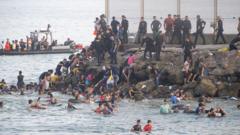
The European Commission has called for stronger and more coordinated border security after a sudden influx of migrants into Spain's North African enclave of Ceuta last week. Commission President Ursula von der Leyen described the situation as a challenge requiring “united action” from all member states.
Spanish authorities estimate that approximately 69,500 migrants have now been returned to Morocco, exceeding the initial estimate of 50,000. The official death toll on the Spanish side of the border has been reported as 72, with 11 deaths on the Moroccan side. The figures have not been independently verified.
The events in Ceuta have sharpened tensions between the European Union's 27 member states, exposing differing views on migration and border management. On Tuesday, EU interior ministers are scheduled to hold an emergency video conference to discuss the crisis and possible joint responses.
In a letter to Spanish Prime Minister Pedro Sánchez, von der Leyen praised Spain's “swift handling” of the emergency. However, she stressed that the incident revealed the need to “further strengthen our borders at critical points.” Her remarks reflect growing concern in Brussels over the vulnerability of the EU's external frontiers.
Ceuta, along with the neighbouring enclave of Melilla, is one of only two EU territories sharing a land border with Africa. The region has long been a focal point for migration from Morocco and sub-Saharan Africa. The recent surge appears to have been influenced by diplomatic friction between Spain and Morocco, although no official cause has been confirmed.
The crisis has also triggered a political reaction within the EU. Italy temporarily suspended the Schengen arrangement with Spain, a move that allows for temporary border checks within the normally passport-free zone. Finland and Denmark have expressed support for Italy's decision, while Czech Prime Minister Andrej Babiš went further by urging a temporary suspension of Spain's Schengen membership altogether.
Prime Minister Sánchez responded sharply to his critics, saying he had “serious concerns” about the approach of some European governments. He pointed out that Ceuta is not part of the Schengen area, a fact that he said had been overlooked in the debate. Most EU partners, he added, had shown “support and solidarity,” but others had chosen to attack Spain “driven by prejudice, fake news, ignorance, or political interest.”
The Schengen agreement, which now covers more than 450 million people across 29 countries, eliminates routine border checks between member states. It is considered a cornerstone of European integration. However, migration crises have repeatedly put pressure on the system, leading to temporary reintroductions of internal border controls in several countries.
The current dispute highlights a deeper divide within the EU over how to manage migration. Some members, particularly those in southern Europe, argue for shared responsibility and more legal pathways for migrants. Others, often in central and eastern Europe, insist on stricter external border controls and faster returns of undocumented migrants.
Observers say the Ceuta episode is unlikely to produce a quick consensus, but it has raised the issue of border security back to the top of the EU agenda. The emergency meeting of ministers is expected to discuss both immediate humanitarian measures and long-term policy options, though any concrete decision remains uncertain.
The situation in Ceuta has also drawn attention to the broader migration dynamics at Europe's southern flank. Human rights organisations have voiced concern about the treatment of migrants, including unaccompanied minors, and have called on both Spain and Morocco to ensure protections under international law.
As EU leaders prepare for the video conference, the underlying questions remain: how to balance security with humanitarian obligations, and how to prevent similar incidents from becoming recurring flashpoints at Europe's borders.