Ethiopia monastery landslide: 14 killed during overnight prayer
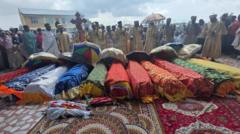
Funerals have been held for some of the 14 people killed in a landslide that hit a mountain monastery in Ethiopia's northern Amhara region, where worshippers had gathered for an overnight prayer service.
The hillside above the Tsadqane Debre Mitmaq St Mary Monastery collapsed early on Monday morning, burying a prayer chamber carved into the mountainside. Rescue operations have now been halted, with authorities saying they do not believe anyone else remains alive under the debris.
Dagnachew Azbite, a senior local official, told the BBC that the land above the cave slid after heavy rain that lasted throughout the night. Seven people were found injured, five of them seriously, he said.
The prayer service included a holy water cleansing ritual, a practice popular among Orthodox Christians seeking spiritual healing for chronic illnesses. Megabe Hadis Neka Tibeb Ababu, the diocese's general manager, told the Associated Press that many of those who died had gathered to receive the holy water.
The monastery, with its prayer chamber cut into the rock, is a significant site for Orthodox Christians in the region. The holy water ritual, known as 'tebel', is believed by many to have healing properties, drawing worshippers from across the area.
Megabe added that 11 of the deceased have been buried at the monastery, while the bodies of the others were returned to their hometowns. Identifying some of the victims remained a challenge, he said.
Emergency teams, security personnel, healthcare workers and nearby residents took part in search and rescue operations, local authorities reported. Archbishop Abune Klementos, head of the Ethiopian Orthodox Church's North Shewa Diocese, travelled to the monastery to lead funeral prayers, pray for the injured and offer comfort to grieving families.
Landslides are a recurring hazard in Ethiopia during the main rainy season, which typically runs from June to August. In March, more than 100 people were killed in floods and landslides in the southern Gamo Zone. In July 2024, a landslide in the neighbouring Geze Gofa Zone killed 229 people, including rescuers, making it one of the country's deadliest weather-related disasters in recent years.
Over the past two decades, studies have documented a rise in both extreme wet spells and prolonged dry periods across East Africa. Scientists have repeatedly cautioned that human-driven climate change is making severe weather events, such as intense and long-lasting downpours, more frequent and severe.
The disaster has once again drawn attention to the vulnerability of communities in mountainous and rain-prone areas of Ethiopia. Authorities have urged residents to remain alert during the rainy season, while local officials continue to assess the damage and support affected families.