El Niño Threat: India's Vegetable Oil, Pulses, Cotton Imports Poised to Break Records
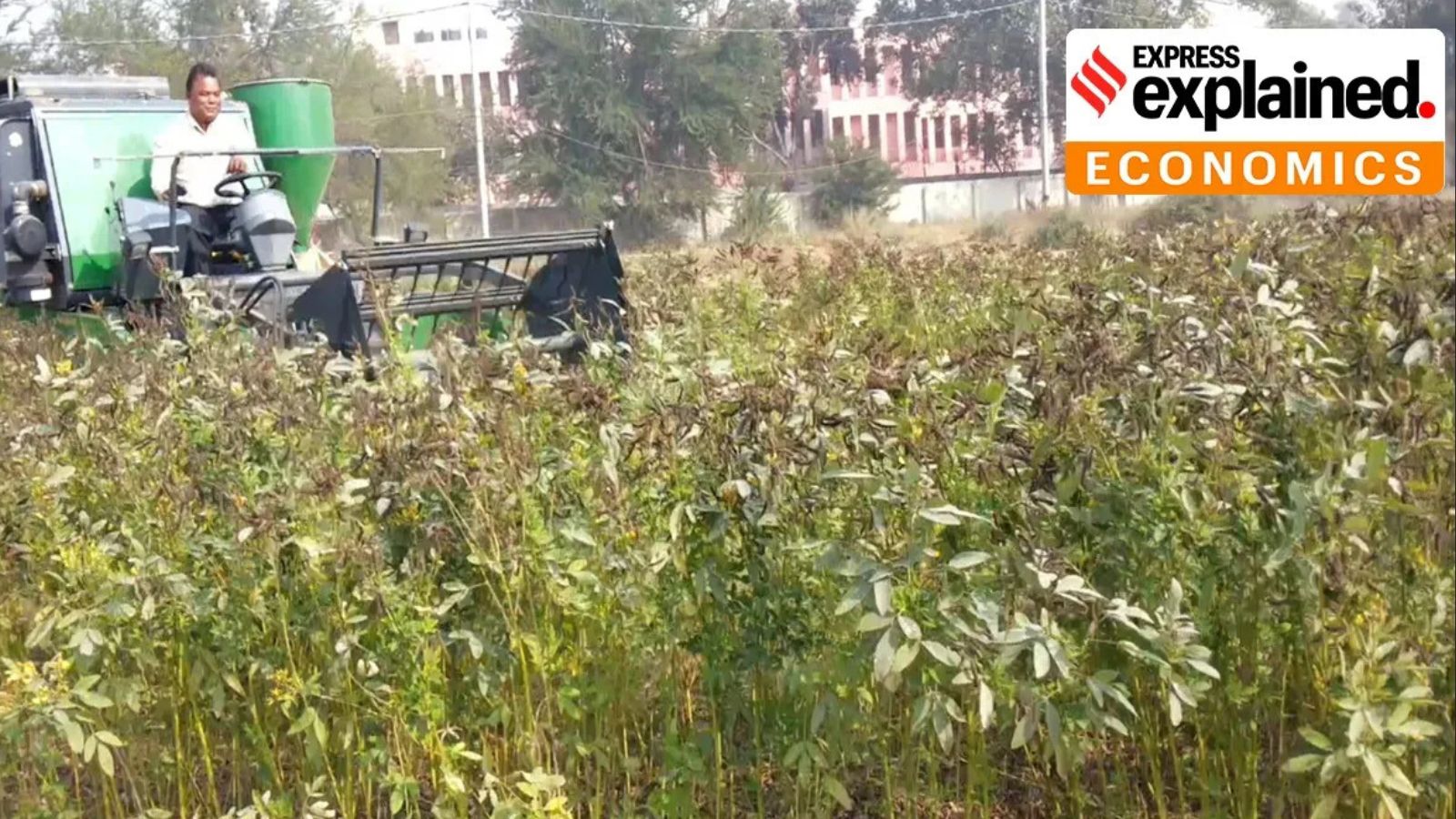
In 2025-26 (April-March), India imported a record 16.4 million tonnes of vegetable oils and 1.1 million tonnes of raw cotton, valued at $19.5 billion and $1.9 billion respectively. It also imported nearly 6 million tonnes of pulses, the highest after 2024-25 and 2016-17, worth $3.6 billion. The current fiscal year could see these records broken, driven largely by the El Nino climate phenomenon.
El Nino, an abnormal warming of the central and eastern Pacific Ocean, is associated with dry weather across India, Southeast Asia, and Australia. Its impact is already evident: rainfall for the country as a whole in June was 38% below the normal long-period average. While July has registered a lower 7.3% shortfall so far, the cumulative deficiency for the four-month southwest monsoon season (June-September) as of July 16 remains at 24%.
The lack of rains has affected planting of most kharif (monsoon-cultivated) crops. Overall sown area till July 10 was 16% below the coverage for the same period of 2025, with declines even steeper in pulses (23.3%) and oilseeds (21%). Within pulses, acreage dropped 30.3% for arhar (pigeon pea) and 29.7% for urad (black gram). In oilseeds, declines ranged from 16% for soyabean to 34% for groundnut and 46% for sesamum. Cotton sown area was down 15.3% compared to last year.
“Rainfall has been weak and, moreover, scattered. There are areas within 20-25 km of the same taluka that have received showers and those which haven’t,” said Nitin Kalantri, a leading dal miller from Latur in Maharashtra. The monsoon’s revival in July should help close some gaps. “Sowing of pulses, including arhar (a 5-6 month crop), can take place till July-end. What we need is good rains over next two weeks,” he added.
For cotton, the sowing window in central and southern India usually closes by mid-July but can be extended till month-end if the monsoon is delayed. “Cotton doesn’t need too much rain. The price sentiment for cotton is also good this time, with many farmers keen to shift from rice and maize,” said M. Prabhakar Rao, chairman and managing director of Nuziveedu Seeds Ltd. He noted that less rainfall could increase pink bollworm infestation, a pest that feeds exclusively on cotton. “Frequent rains help disrupt the mating cycle of adult moths and drown pupae in the soil. Prolonged dry weather is conducive for uninterrupted mating, egg-laying, and larvae growth, reducing yields.”
The worry is compounded by a strengthening El Nino. The US National Oceanic and Atmospheric Administration (NOAA) has forecast an 81% probability of the present El Nino intensifying into a “very strong” event during October-December, with a 97% chance of persisting through spring. El Nino not only suppresses rainfall but also raises temperatures, potentially leading to a short, warm winter that could hurt rabi crops such as wheat, rapeseed-mustard, chickpea, red lentil, and potato.
The brunt of these conditions will be borne by oilseeds, pulses, millets, and cotton, which are predominantly rain-fed. The combination of deficient monsoon and potential rabi crop damage underscores the risk of record imports of vegetable oils, pulses, and cotton in the coming fiscal year.