DR Congo's Ebola Outbreak Is Deadliest in Its History, Officials Say
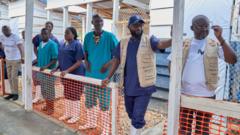
The Ebola outbreak in the Democratic Republic of Congo (DRC) has become the deadliest in the country's history, according to public health officials. At least 2,325 people have died since the outbreak was declared on 15 May, surpassing the death toll of the 2018-2020 outbreak, which was previously the worst in the nation.
The outbreak is also the fastest growing on record, United Nations humanitarian chief Tom Fletcher said last week. He warned that "the epidemic is killing someone every 30 minutes". The rapid spread has raised concerns among health authorities, who are struggling to contain the virus in a country facing decades of conflict and displacement.
The current epidemic is caused by the Bundibugyo species of the Ebola virus, one of six known strains. Unlike the Zaire strain that drove the 2018-2020 outbreak, there is no approved vaccine for the Bundibugyo species. However, several vaccine candidates are in development, including one that relies on technology similar to that used for the AstraZeneca Covid-19 vaccine.
According to the DRC's Institute of Public Health, 4,945 confirmed cases have been recorded as of Sunday, including 101 in the previous 24 hours. The majority of infections are within the country, but the virus has also crossed borders: 20 cases have been confirmed in neighbouring Uganda, two people have been treated in Germany, and one case has been declared in France.
The virus has now reached six of the DRC's 26 provinces, a geographical spread that the World Health Organization has described as "exceptional". The fast pace of transmission is especially worrying given that the 2014-2016 West Africa outbreak, the deadliest worldwide, took nearly five months to reach 1,000 fatalities. In contrast, the current outbreak has recorded more than 2,000 deaths in less than three months.
This is the 17th Ebola outbreak in the DRC since the virus was first identified in 1976. Years of armed conflict and a highly mobile population have made it difficult for health workers to track and treat suspected cases. Insecure regions have restricted access for medical teams, allowing the virus to spread silently in some communities.
Ebola is a severe viral illness with a high case fatality rate. It spreads through direct contact with the blood, bodily fluids, or tissues of infected people or animals. Symptoms include sudden fever, fatigue, muscle pain, and a sore throat, followed by vomiting, diarrhoea, and in some cases, internal and external bleeding.
Health authorities are conducting extensive contact tracing, community surveillance, and public awareness campaigns to curb the outbreak. The DRC government is coordinating with international partners, including the World Health Organization and humanitarian agencies, to deploy medical supplies and personnel to affected areas. However, the combination of the virus's speed and the prevailing insecurity poses an ongoing challenge to these efforts.