Delhi Police deploy AI facial recognition at Jantar Mantar protest: Privacy vs safety debate intensifies
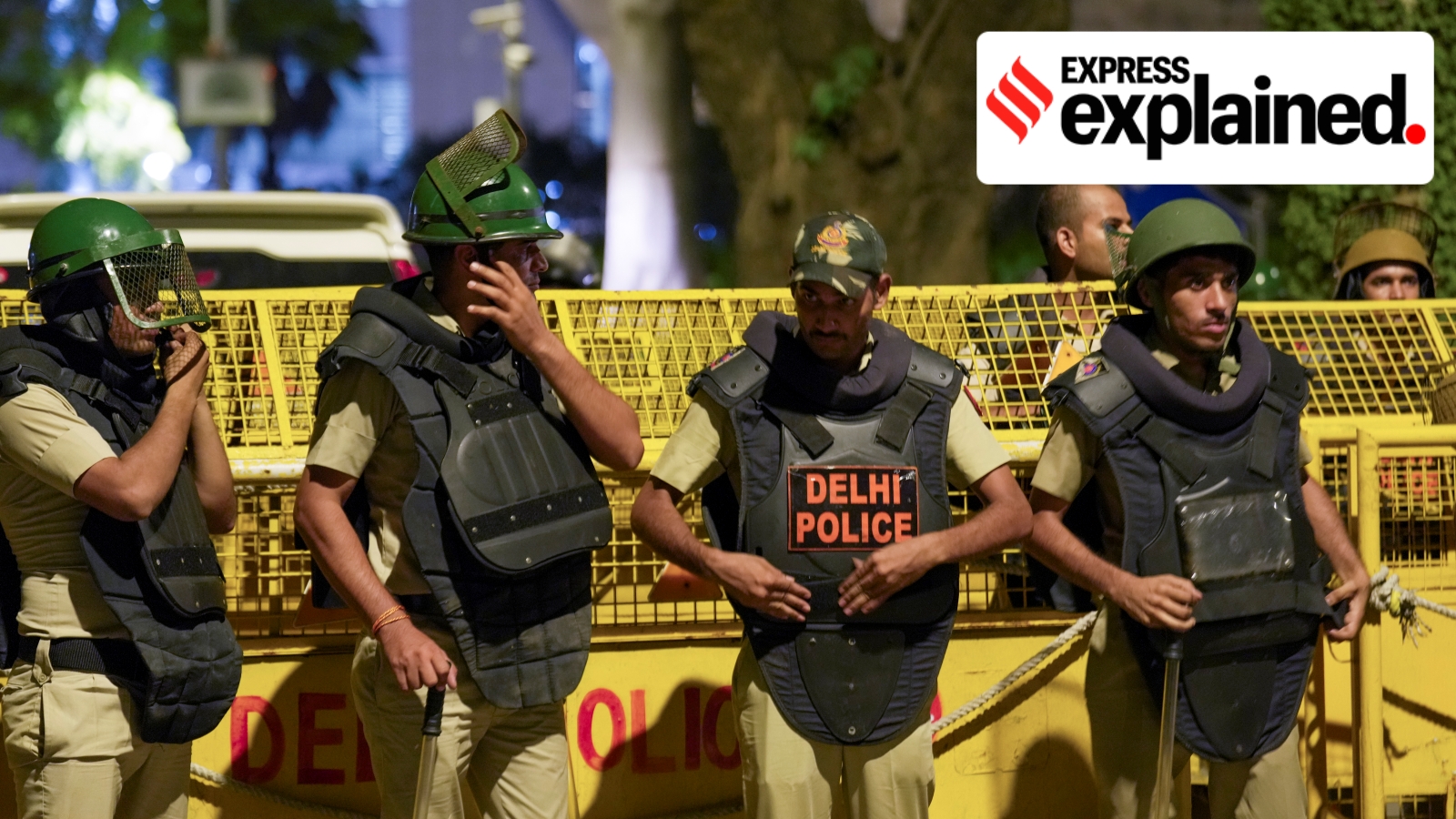
The use of live video feeds and artificial intelligence (AI)-powered facial recognition technology by Delhi Police at the ongoing student protest at Jantar Mantar has sparked a debate over the balance between public safety and privacy rights.
Two surveillance vehicles have been deployed: a Mobile Command and Control Vehicle and the Ikshana van, which was inducted ahead of the G20 Summit in 2023. The Ikshana van, developed with technology partner CP Plus, has eight cameras providing a 360-degree view. It can perform face detection and recognition, number-plate recognition, traffic management, crowd monitoring, and on-the-spot video analytics. At Jantar Mantar, footage from area cameras is being run through facial recognition software that compares detected faces with images in police databases.
A senior police officer told The Indian Express that the system is being used to check whether any individual matches the database of known criminals. However, the Delhi Police has not disclosed the size or composition of the database, the accuracy of the software at the protest site, or the procedure followed after a possible match.
Protesters say the round-the-clock recording has created an atmosphere of intimidation. Several students have covered their faces, fearing they may be profiled. The issue has reached the Delhi High Court, which is examining questions about how facial recognition works and what safeguards should govern its use.
Civil liberties groups have raised concerns over privacy, proportionality, transparency, and the absence of a comprehensive legal framework for state-sponsored surveillance. The use of such technology has grown across India, with law enforcement deploying CCTV networks, facial recognition, drones, automated number plate recognition, and AI-powered analytics. Authorities argue these tools improve public safety and policing efficiency.
Some social media reports also claimed that police were using AI-enabled smart glasses. During Republic Day celebrations earlier this year, Delhi Police had used such glasses equipped with facial recognition and thermal imaging, developed by Indian company AjnaLens. However, the Delhi Police did not respond to queries about their use at Jantar Mantar.
Facial recognition systems work by analysing facial features from an image or video, converting them into a digital template, and comparing that template against a database. If the similarity score crosses a threshold—Delhi Police uses an 80% accuracy rate as per a 2022 RTI reply—the system flags a potential match for further verification. But the result is not proof of identity; performance varies with lighting, angle, image quality, and the database. Testing by the US National Institute of Standards and Technology has found differences in error rates across demographic groups in many algorithms. Human verification and clear procedures are therefore essential.
The controversy highlights the need for a legal framework that balances the benefits of surveillance with constitutional rights to privacy and freedom of assembly. The Delhi High Court's hearing is expected to set important precedents for the use of such technology in India.