China Regains World's Fastest Supercomputer Title, Ousting US After Six Years
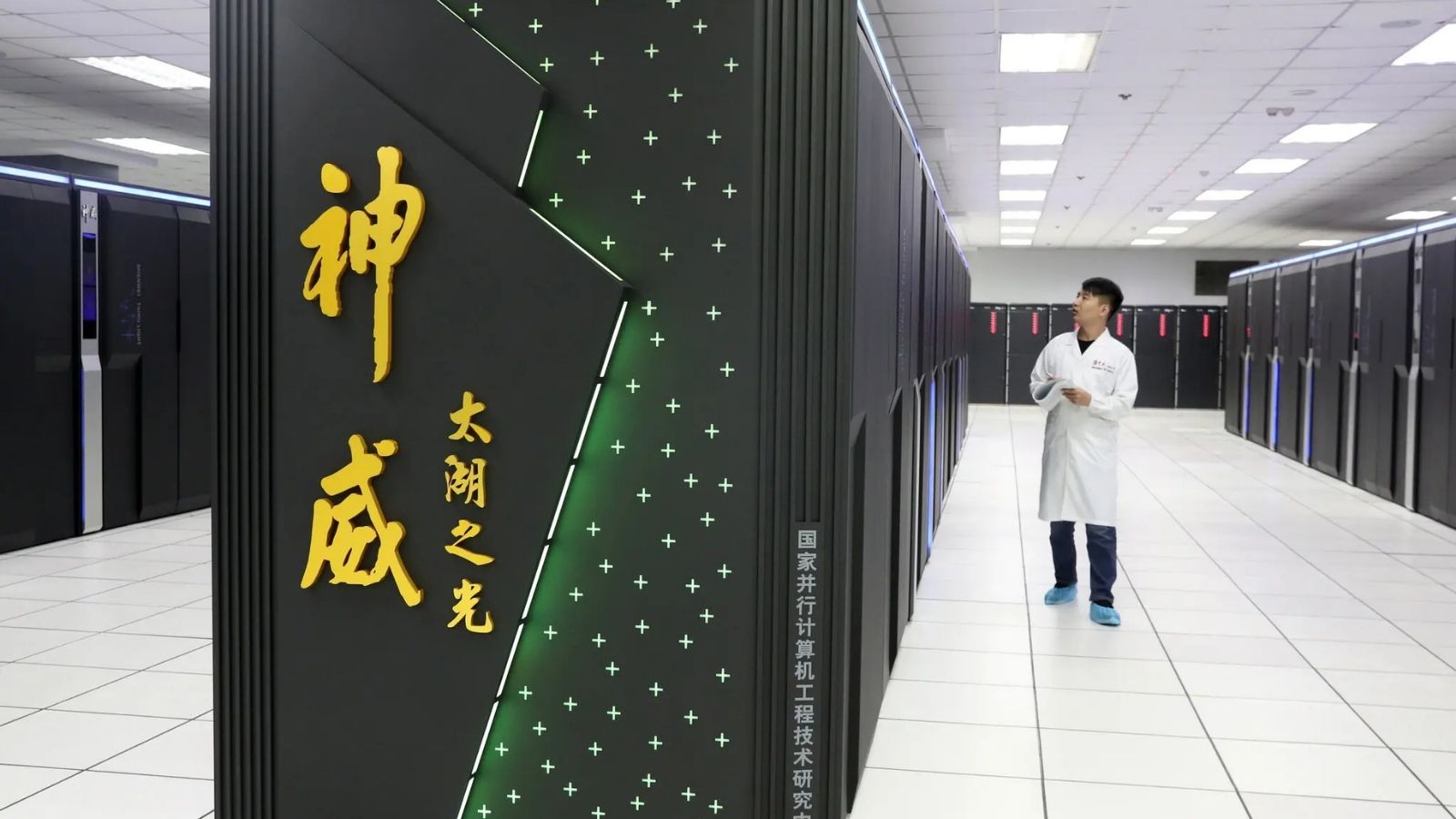
China has reclaimed the top spot in the global supercomputer rankings for the first time since 2017, intensifying the technological rivalry between the world's two largest economies. The new system, named LineShine and located in Shenzhen, was declared the fastest in the world on Tuesday by the researchers who compile the Top500 list.
The supercomputer achieved the highest performance on a set of standard benchmarks, surpassing all other systems. Notably, LineShine uses only standard microprocessors rather than the specialised graphics processing units (GPUs) that most high-end supercomputers depend on for heavy computational tasks. This design choice could indicate a more efficient approach to combining artificial intelligence with traditional scientific computing, according to Jack Dongarra, a prominent computer scientist involved in compiling the Top500 list.
The competition between China and the United States in supercomputing has significant implications for scientific research, national security, and geopolitical influence. Supercomputers are critical for complex simulations, weather forecasting, drug discovery, and military applications. The US had held the top position since June 2018, when the Summit system at Oak Ridge National Laboratory took the lead. China's previous number one was the Sunway TaihuLight, which topped the list from June 2016 to November 2017.
LineShine's architecture, relying on standard central processing units (CPUs) rather than GPUs, is notable because it achieves high performance without the specialised hardware that dominates other top systems. This could make it easier to program and more versatile for a range of tasks, including AI workloads. The system is expected to be used for research in areas such as climate modelling, materials science, and genomics.
The Top500 list, updated biannually, is a collaboration between researchers in the US and Europe. It ranks supercomputers based on their performance on the LINPACK benchmark, which solves a dense system of linear equations. While the list provides a snapshot of raw computing power, experts caution that it does not capture other important metrics such as energy efficiency or real-world application performance.
The US still leads in overall supercomputing capability, with more systems in the top 100 than any other country. However, China has been rapidly closing the gap, both in terms of number of systems and peak performance. The development of exascale computing—systems capable of a billion billion calculations per second—is a key goal for both nations. The US has two exascale machines planned for completion in the coming years, while China has announced its own exascale ambitions.
This achievement underscores the broader technological competition between the two countries, spanning semiconductors, artificial intelligence, and quantum computing. The outcome of this rivalry could shape global economic and military balances for decades to come.