Centre refers FCRA Amendment Bill to Joint Committee after minority appeals

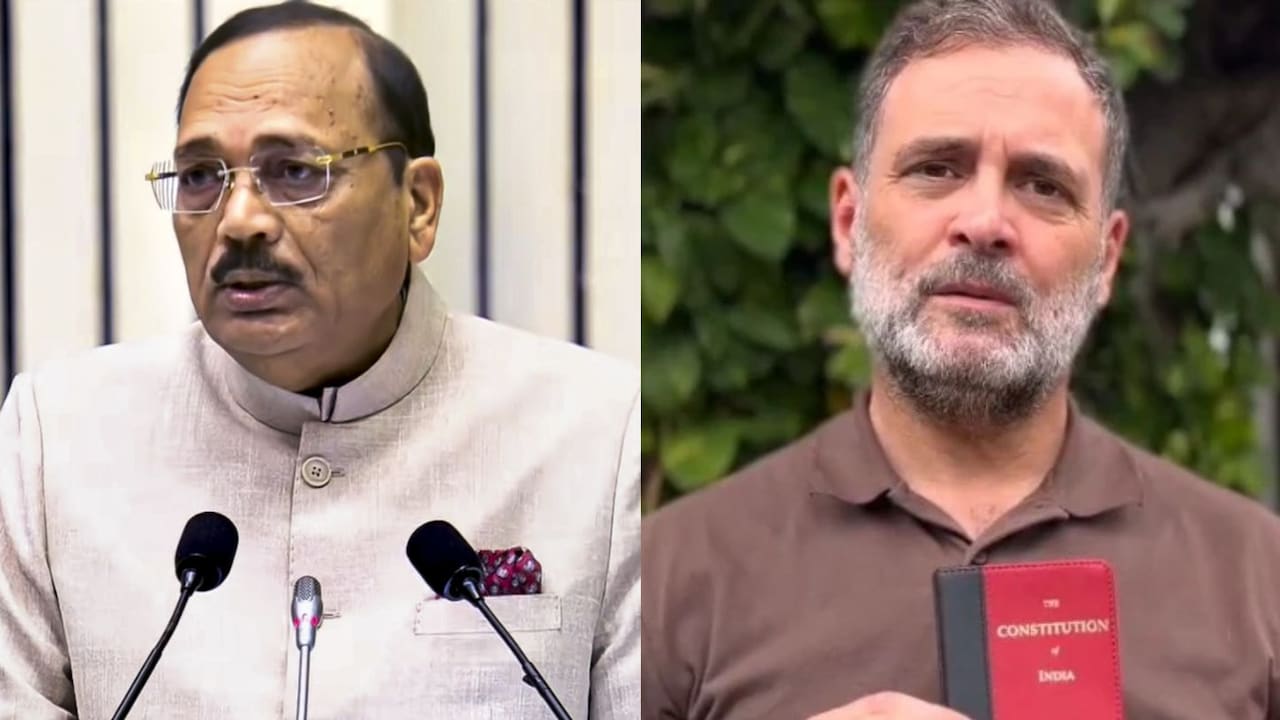
The Union Government has decided to refer the Foreign Contribution (Regulation) Amendment Bill, 2026, to a Joint Parliamentary Committee (JPC), a move seen as a concession to appeals from Christian organisations and other minority groups. The decision was announced in the Lok Sabha on Wednesday when Minister of State for Home Nityanand Rai moved a motion to send the Bill to the committee. The motion was adopted amid din, giving Parliament more time to examine the contentious provisions.
The Bill, introduced in the Lok Sabha on March 25, seeks to amend the Foreign Contribution (Regulation) Act, which governs the acceptance of foreign funds by non-governmental organisations (NGOs) in India. One of its key provisions allows for the appointment of a 'designated authority' to take over, manage, or dispose of assets created from foreign funds when an NGO's FCRA registration is suspended, cancelled, or not renewed. This authority would have the powers of a civil court and could order the transfer or sale of assets to the government or any other body.
The move to refer the Bill to a JPC comes after weeks of sustained opposition from minority groups. On August 9, several Christian organisations launched coordinated appeals on YouTube, Facebook, and WhatsApp, urging the Centre to either send the Bill to a JPC or withdraw it altogether. The appeals were widely interpreted as an attempt to give the government a face-saving way to step back from pushing the legislation through Parliament during the Monsoon Session, which concludes on August 13.
Since July 6, Union Home Minister Amit Shah has held at least four meetings with various Christian groups to address their concerns. The latest meeting took place on August 6 at the Parliament House complex, where he met an 18-member delegation representing all Christian denominations, including Catholic, Protestant, and Orthodox churches. The delegation, led by Dravida Munnetra Kazhagam (DMK) MP P. Wilson, had written to Prime Minister Narendra Modi, and the Prime Minister's Office forwarded the representation to the Home Minister.
Government sources said the decision to refer the Bill to a JPC was also a conciliatory move aimed at breaking the parliamentary deadlock. Opposition parties have been demanding a discussion on the police action against Jantar Mantar protesters on July 20, which has stalled legislative business. The Bill was among several legislations listed for passage in the Monsoon Session, and its referral to a committee means it will not be taken up for passage immediately.
Sources also indicated that a statement by U.S. Congressman Riley Moore, a close ally of U.S. President Donald Trump, influenced the rethink. In a post on X on August 4, Moore alleged that the Bill could permit government takeovers of churches and religious charities, calling it a 'clear attack against Christians' and warning that the issue could affect India-U.S. relations.
Christian groups have welcomed the decision. The Catholic Bishops' Conference of India (CBCI) and the National Council of Churches in India (NCCI) described it as a 'positive step'. Jonathan Lalremruata, advisor to the CBCI, said the legislation should differentiate between major and minor offences before assets built by an NGO are taken over. He also raised concerns about how foreign funds would be identified when mixed with domestic contributions, and said the CBCI will submit a list of Christian institutions whose FCRA registrations have been cancelled or delayed arbitrarily.
The JPC will now examine the Bill in detail, allowing stakeholders to present their views. Mizoram Chief Minister Lalduhoma, who met the Home Minister on August 6, had earlier indicated that the Bill would likely be discussed in the House on August 12. With the referral, the timeline for its passage remains uncertain, but the move is expected to ease tensions and allow for a more thorough review of the proposed law.