CBSE Allows Students in Classes 7-9 to Keep Foreign Languages Till Class 10
In a move that eases concerns for many students and parents, the Central Board of Secondary Education (CBSE) will allow students currently in classes 7, 8, and 9 who have opted for foreign languages to continue with their chosen combination until their Class 10 board examinations. This clarification comes after confusion over the implementation of the three-language policy under the National Education Policy (NEP) 2020.
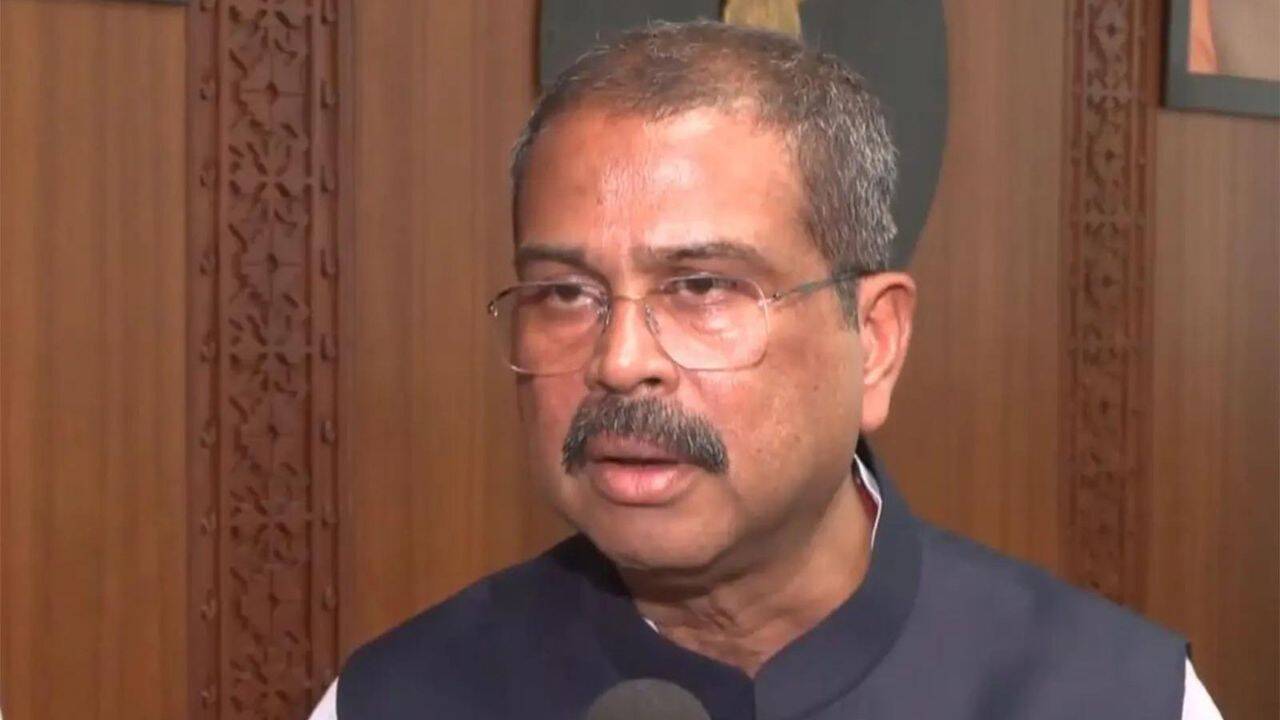
Union Education Minister Dharmendra Pradhan stated that the requirement to study two Indian languages under the new policy will begin with Class 6 and progress gradually, rather than being applied retroactively to students already enrolled in higher classes. This means that students who had chosen two foreign languages under the existing system can continue with their current combination until their Class 10 exams — for Class 7 students, that would be in 2030, and for Class 9 students, in 2028.
The clarification addresses a significant worry raised by schools and parents after CBSE initially asked affiliated schools to roll out the policy from July. There was fear that students who had studied a foreign language for years might be forced to drop it in Class 9 in favor of an Indian language, causing academic stress and operational difficulties for schools.
Pradhan acknowledged that the board's earlier communication had not clearly outlined the transition for students already in the system. "CBSE could not give a clear order," he said, adding that the ambiguity would now be removed. "No child will face any difficulty. Those already studying two foreign languages will be allowed to continue till they pass Class X."
Under NEP 2020, students from Classes 6 to 8 are expected to study three languages. Pradhan noted that this is already the norm across most school boards in India. Of about 25 crore school students nationwide, roughly 90% study three languages, and barring CBSE and Tamil Nadu, most boards follow this pattern up to Class X. Within CBSE, nearly 99% of students already study two Indian languages; only about 1.3% have combinations involving two foreign languages — the group that will remain unaffected.
Students entering Class VI from the upcoming academic session will study three languages, of which two must be Indian languages. Pradhan assured that class-appropriate books in 22 Indian languages will be made available, and issues related to teachers and resources will need to be addressed by CBSE. He described this as "CBSE's challenge, not the country's challenge, not the state board's challenge." Textbooks in 22 languages will be ready on time, he said, to ease confusion over books, teachers, and timelines that had reached the courts.
A fourth language remains optional, and the policy does not bar foreign languages. The emphasis, Pradhan stressed, is on ensuring that Indian languages anchor schooling, as part of a broader effort to move away from what he called a "colonised mindset."
Beyond the language issue, there is a parallel push on skill education. From Classes 6 to 8, vocational exposure is compulsory, with schools required to spend 110 hours per year on skill modules and set up composite skill labs. In Classes 9 and 10, a skill subject such as Kaushal Vikas is mandatory, assessed through internal marks and board exams. In Classes 11 and 12, it will remain elective but is expected to be strongly promoted.