BJP Sets Sights on Rural Punjab, Directly Challenging Amritpal Singh's Turf
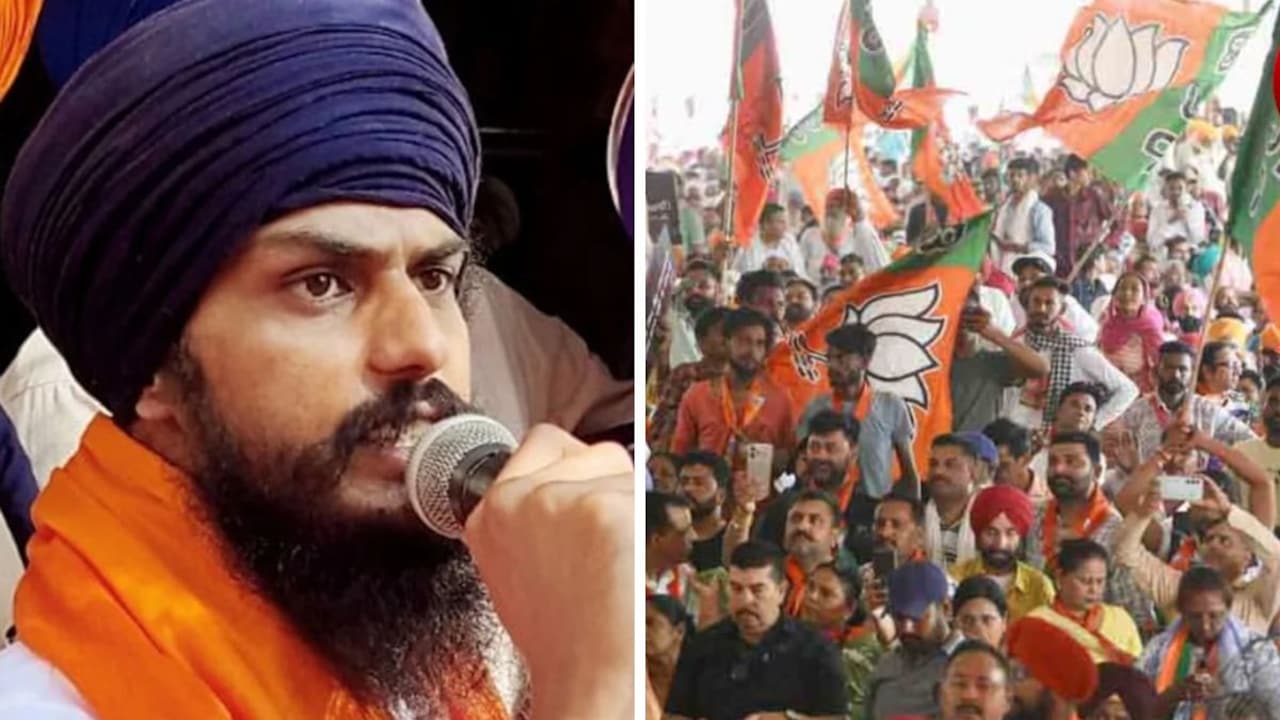
The Bharatiya Janata Party (BJP) is recalibrating its political strategy in Punjab, aiming to establish a direct footprint in rural areas that have traditionally been the stronghold of the Shiromani Akali Dal (SAD) and, more recently, jailed MP Amritpal Singh. This move sets up a high-stakes contest for the rural vote ahead of the 2027 Assembly elections.
According to sources within the party, the BJP has indicated to the Akali leadership that it should hold back its campaign in rural regions, as the BJP seeks to build its own organisational presence in villages rather than relying on its alliance partner for outreach. This marks a significant departure from the party's earlier approach, where the Akalis were the primary conduit to rural Punjab.
Central to the BJP's new strategy is a focus on anti-drug campaigns, which the party plans to take across all 117 Assembly constituencies. The party also intends to highlight central government schemes and farmer assistance programmes as part of its rural engagement. These issues resonate strongly with a young, rural electorate increasingly concerned about unemployment, drug abuse, and farm distress.
However, the BJP is entering a political arena where Amritpal Singh, the Khadoor Sahib MP currently detained in Dibrugarh jail under the National Security Act (NSA), has already established a significant presence. Amritpal's anti-drug messaging, combined with his emphasis on Panthic and Punjab-centric issues, has garnered support among the same demographic the BJP is now courting.
Amritpal Singh, who contested the 2024 Lok Sabha elections from jail and won as an Independent, represents a potent force in rural Punjab. His appeal lies in his assertive stance on issues affecting Punjabi identity and his vocal opposition to drugs, which have ravaged many villages. The BJP's attempt to co-opt these very issues could lead to a direct clash for the attention and allegiance of rural youth.
Political observers note that this emerging contest is not merely ideological but a struggle over who can articulate the aspirations and anxieties of rural Punjab. For the BJP, the challenge is converting its organisational expansion into electoral gains in a region where it has faced historic resistance, particularly following the prolonged farmers' agitation. For Amritpal Singh, the challenge is transforming his personal popularity and Panthic resonance into a structured electoral machine capable of sustaining a political movement.
In this evolving scenario, the biggest beneficiary—or victim—could be the Shiromani Akali Dal. If the BJP successfully attracts a segment of the rural electorate historically accessed through the Akalis, and Amritpal Singh fragments the Panthic vote further, the SAD risks being squeezed from both ends. This would fundamentally alter Punjab's electoral landscape, which has traditionally been a three-way contest among the SAD, the Congress, and the Aam Aadmi Party (AAP).
The BJP's pivot to rural Punjab is thus being watched closely as one of the most consequential subplots of the 2027 elections. The party’s ability to penetrate this political space will depend on its ability to convince voters of its credibility on issues that have long been championed by regional actors. Meanwhile, Amritpal Singh's influence, even from behind bars, remains a wildcard that could reshape alliances and voter alignments.
As the political battle lines are drawn, the rural voter in Punjab finds themselves at the centre of a multi-front contest. With drugs, unemployment, and farmer welfare at the forefront, the 2027 elections promise to be a defining moment for the state's political future.