At UNSC, India Presses for Dialogue and Diplomacy to End Middle East Conflict
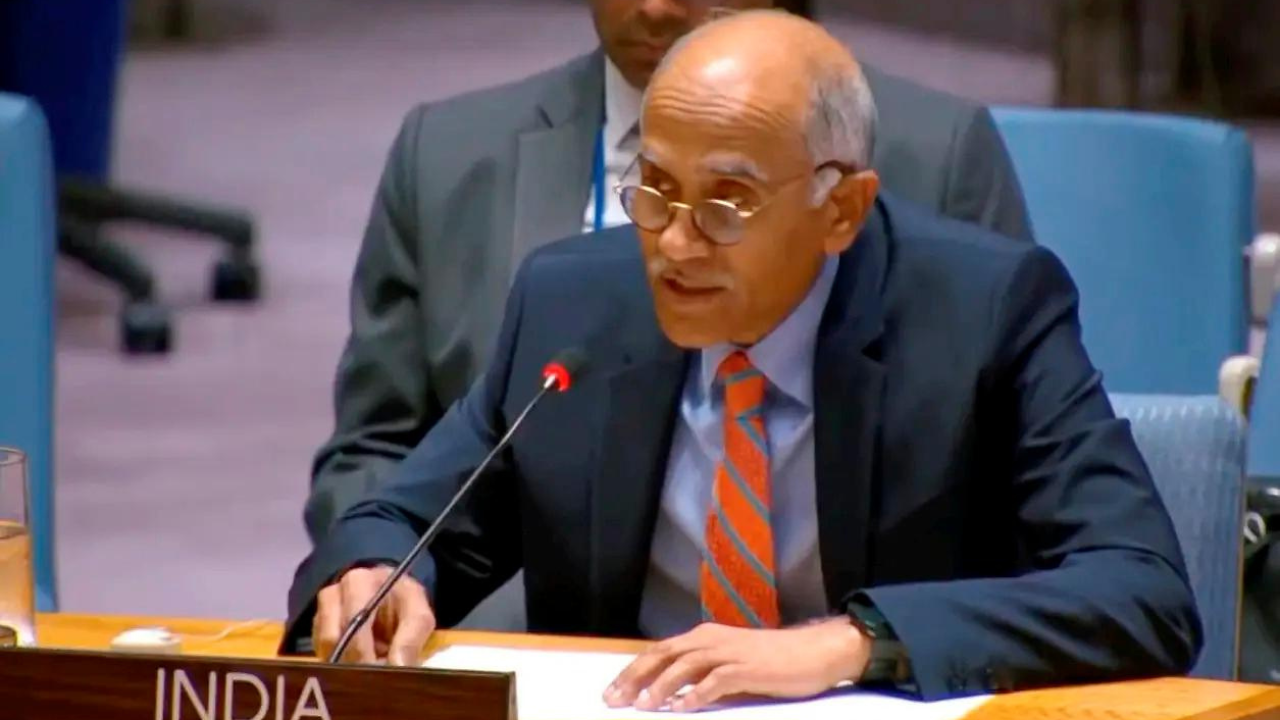
India has renewed its call for the conflict in the Middle East to be settled through dialogue and diplomacy, setting out its position during discussions at the United Nations Security Council as the war continues to inflict a heavy toll on civilians.
New Delhi's stand rests on a set of principles it has repeated since the current phase of the conflict began. India has condemned terrorism in all its forms, including the attack of 7 October 2023, and has called for the release of all hostages. It has also stressed that civilians must be protected at all times and that international humanitarian law must be respected by all parties.
Alongside this, India has held firmly to its long-standing support for a two-state solution — a sovereign, viable and independent Palestine living within secure and recognised borders, side by side with Israel. Successive Indian governments have described this as the only path to a durable peace, and the Ministry of External Affairs has restated it repeatedly through the present crisis.
The emphasis on dialogue and diplomacy reflects a wider principle of Indian foreign policy: that disputes are best settled at the negotiating table and not on the battlefield. India has consistently argued that military means cannot deliver a lasting answer to a political question, and that the UN Charter's call for the peaceful settlement of disputes must guide the Council's approach.
India has often told the Council that it must speak with one voice and act in a manner that helps de-escalate tensions rather than deepen divisions. As a country that has long sought reform of the Security Council to reflect contemporary realities, India has argued that the credibility of the multilateral system depends on its ability to deliver peaceful outcomes.
India's position is also shaped by its own diplomatic realities. It maintains working relations with Israel and with Arab and Gulf states alike, and has resisted pressure to align itself with any single bloc. New Delhi has said its votes and statements at multilateral forums are decided on the merits of each proposal, guided by national interest and by the principles of its foreign policy.
Humanitarian concerns have been central to India's messaging. India has backed United Nations resolutions calling for a humanitarian ceasefire and unhindered aid access, and has dispatched consignments of medical supplies and relief material for the people of Gaza. It has supported relief efforts carried out through UN channels and other agencies, and has urged that assistance reach those who need it without obstruction.
The conflict carries direct consequences for India. A large Indian diaspora lives and works in the Gulf region, and Indian nationals have been affected by the hostilities. Escalation threatens energy supplies, shipping routes and trade, all of which matter to an economy that depends heavily on imports of crude oil and on stable sea lanes. Disruption in the Red Sea has already raised shipping costs and delayed cargo worldwide.
India has also warned against the conflict widening. A broader confrontation involving regional actors would be difficult to contain, and New Delhi has urged all sides to exercise restraint and avoid steps that could push the region into a larger war.
Analysts note that India's approach combines firmness on terrorism with continued advocacy for Palestinian rights — a balance it has maintained for decades and one that allows it to engage with both sides of the divide. The call for dialogue and diplomacy is, in this reading, less a neutral formula than a practical recognition that no military outcome can settle the underlying political questions.
Note: This report is based on India's stated policy positions as publicly articulated. The full text of the latest statement delivered at the Security Council was not available in the source material reviewed.