Amit Shah to chair Southern Zonal Council meet to resolve inter-state issues
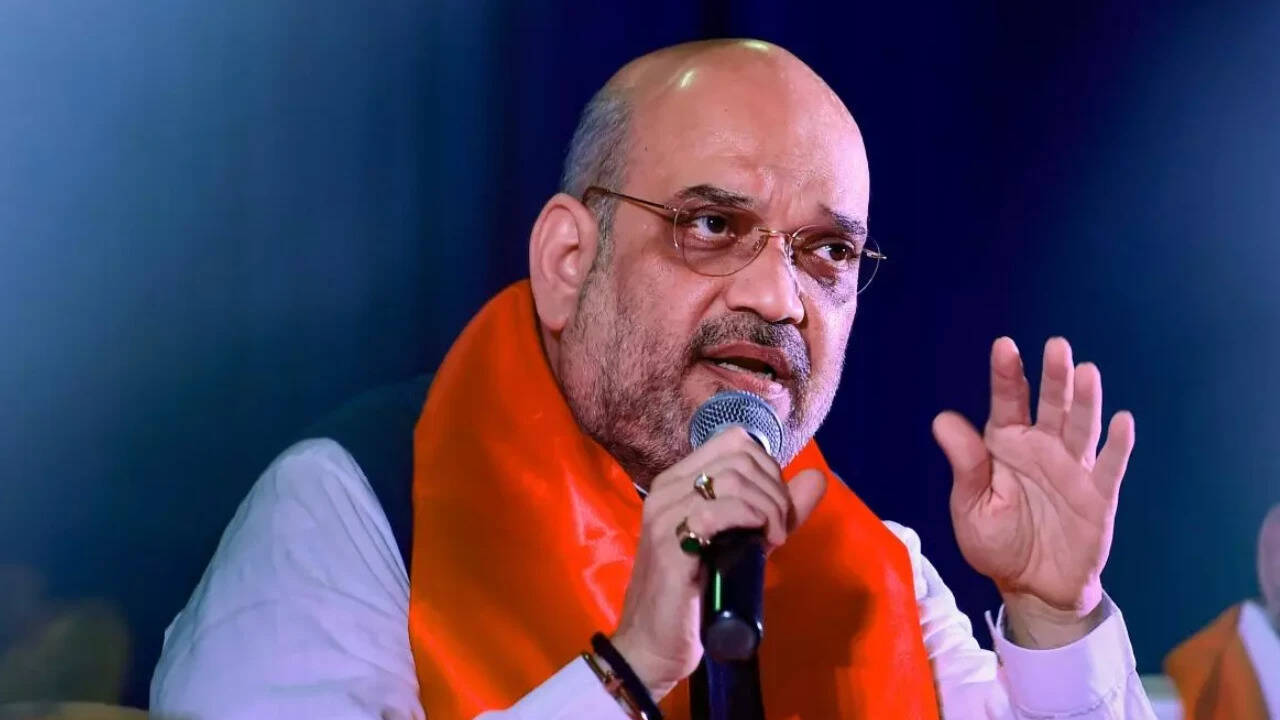
Union Home Minister Amit Shah will chair a meeting of the Southern Zonal Council, bringing together chief ministers and senior officials of southern states to address inter-state issues. The meeting, scheduled in the coming days, is part of the Centre's efforts to promote cooperative federalism and resolve long-pending disputes through dialogue.
The Southern Zonal Council comprises the states of Andhra Pradesh, Telangana, Karnataka, Kerala, Tamil Nadu, and the Union Territory of Puducherry. Amit Shah, in his capacity as Union Home Minister, serves as the chairperson of the council, while Tamil Nadu Chief Minister M.K. Stalin is the current vice-chairperson. The council was established under the States Reorganisation Act, 1956, to provide a forum for inter-state coordination and cooperation.
While an official agenda has not been made public, sources indicate that the discussions are likely to focus on contentious matters such as water sharing disputes, boundary disagreements, and coordination on infrastructure and security-related issues. The Cauvery River water dispute, which has been a recurring point of friction between Karnataka and Tamil Nadu, and the sharing of Krishna River waters among Andhra Pradesh, Telangana, and Karnataka, are expected to feature prominently. The zonal council mechanism offers an alternative forum for negotiation, complementing legal and judicial processes.
Inter-state issues have often created administrative friction, affecting millions of citizens. The council's role is to facilitate consensus and make recommendations to the central and state governments. Though these recommendations are not legally binding, they carry significant political and administrative weight, often paving the way for bilateral or multilateral agreements.
This meeting assumes importance as it brings together leaders from different political parties, some of whom are often at loggerheads over state-specific demands. The Central Government has reiterated its commitment to fostering a spirit of cooperative federalism, and zonal councils have been revived in recent years as key platforms for this purpose. Amit Shah has personally chaired several such meetings, underscoring the priority given to inter-state harmony.
Besides the chief ministers, state ministers responsible for relevant portfolios, chief secretaries, and senior bureaucrats are expected to attend. Officials from the Ministry of Home Affairs will also participate in the proceedings. The meeting is likely to be held in one of the southern states, though the exact venue has not been officially confirmed.
The Southern Zonal Council also deliberates on broader issues such as law and order, internal security, disaster management, and resource-sharing. These areas are critical for the region, which is vulnerable to natural calamities like cyclones and flooding. Coordinated disaster response and shared early warning mechanisms could be among the topics discussed.
In recent years, there have been calls from various quarters for strengthening the zonal councils to ease litigation between states. Many disputes end up in the Supreme Court, leading to lengthy legal battles that drain resources and delay development. A functional zonal council can help states reach mutually acceptable solutions through constructive dialogue, thereby reducing tension and enhancing trust.
Observers note that the effectiveness of the council depends on the willingness of states to engage sincerely. Previous meetings have yielded positive results on issues ranging from boundary disputes to the implementation of central schemes. The upcoming meeting is being seen as a crucial opportunity to make progress on key issues affecting the southern region.
Preparations are underway for a productive session. Officials have reportedly compiled a comprehensive list of issues submitted by member states. The meeting is expected to conclude with a set of recommendations to be forwarded for further action.
As the country moves towards more integrated economic and infrastructural growth, resolving inter-state differences becomes essential. The Southern Zonal Council, with its institutional framework, provides a viable path for addressing these challenges. The outcome of this meeting will be closely watched by the states and the public, as it holds the potential to shape the region's development trajectory.