Allahabad HC: Governor's Remission Power Not Arbitrary, Quashes Denial
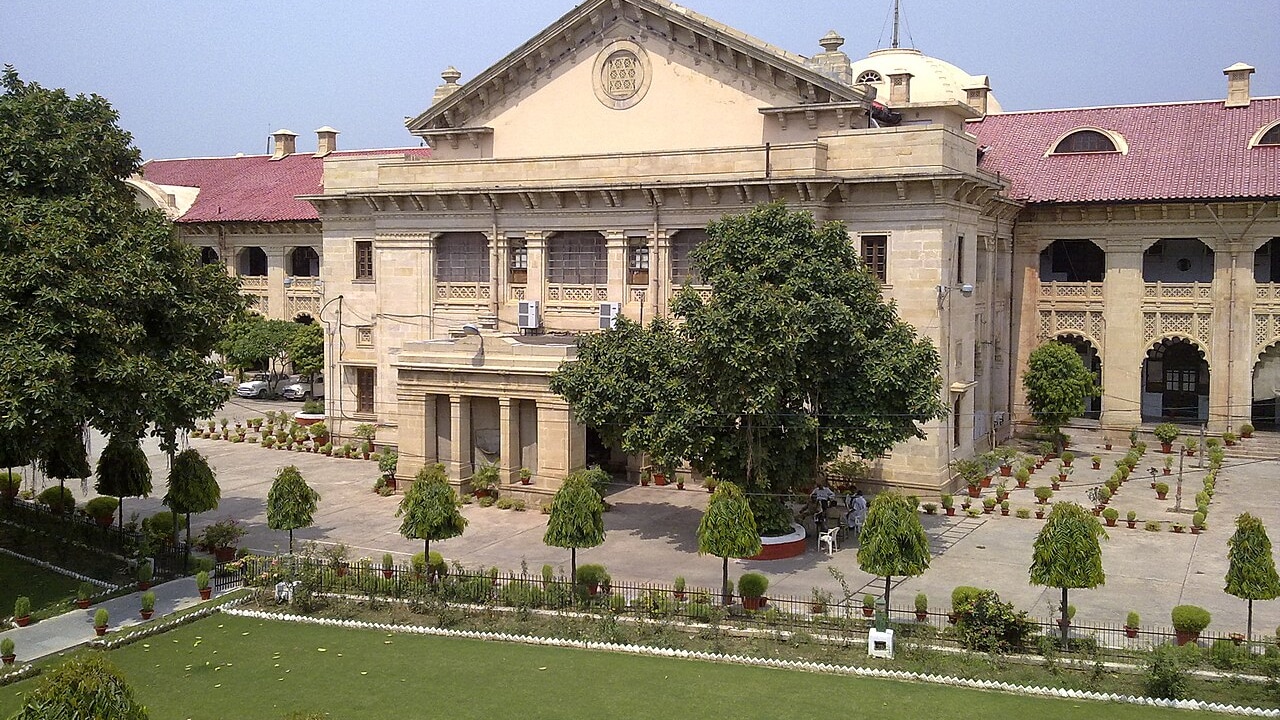
The Allahabad High Court has ruled that while the Governor's power to grant premature release under Article 161 of the Constitution is a sovereign executive power, it cannot be exercised arbitrarily. The power remains governed by applicable rules and the state's remission policy, the court emphasised.
A bench of Justices J J Munir and Tarun Saxena made the observation while setting aside an order that refused premature release to a convict sentenced to seven years' rigorous imprisonment. The court found that the decision suffered from a patent error on the face of the record, as it had incorrectly recorded the period of incarceration undergone by the petitioner.
The petitioner, Ram Pratap Singh, was convicted in an attempt-to-murder case by the Additional Sessions Judge of Fatehpur district in Uttar Pradesh in 2002 and sentenced to seven years' rigorous imprisonment. His criminal appeal before the High Court was dismissed in 2019, and the Supreme Court later dismissed his special leave petition.
In September 2022, a proposal for his premature release was forwarded to the jail authorities and the Fatehpur District Magistrate, but it remained pending. In February 2025, the petitioner applied for a decision on the proposal, pointing out that he had served more than half of his sentence.
The jail report recorded that he had served four years, six months and six days in prison without remission, and five years and four months with remission, against the seven-year sentence. His conduct in jail was recorded as satisfactory.
However, in June 2025, the authorities communicated a decision refusing his premature release on the ground that he had served only two years and six days without remission and two years, one month and 27 days with remission. The petitioner's counsel argued before the High Court that the decision had ignored the jail report and wrongly calculated his incarceration period. It was also contended that the order did not disclose any adverse material against him and failed to consider his satisfactory conduct.
Agreeing with these arguments, the High Court noted that under Rule 4(iii) of the Uttar Pradesh Prisoners' Release on Probation Rules, 1938, a convict in the applicable category becomes eligible for premature release after serving one-third of the sentence without remission. Since the petitioner had actually served four years, six months and six days without remission, he had completed more than half of his sentence.
“There is absolutely no basis to this finding, except that it is borne on an error apparent and also betrays a case of non-application of mind to the record,” the bench observed. It termed the misreading of the incarceration period a manifest illegality.
On the nature of the Governor's power under Article 161, the court observed that it cannot be exercised arbitrarily. “Even though the power under Article 161 is a constitutional power, as distinguished from the statutory power of the state government under Section 432 of the Code of Criminal Procedure (CrPC), the decision cannot be arbitrary or borne on an error apparent, as important as the period of incarceration suffered by the convict,” the bench said.
The court noted that had the correct period of detention been communicated to the respondents, the conclusion might have been different. It consequently allowed the writ petition and quashed the June 26, 2025, order denying premature release. The matter was remitted to the government for a fresh decision on the petitioner's plea, to be taken within a month from the receipt of the High Court's order.