After 40 Years at Tata, N Chandrasekaran Won't Seek Reappointment as Chairman
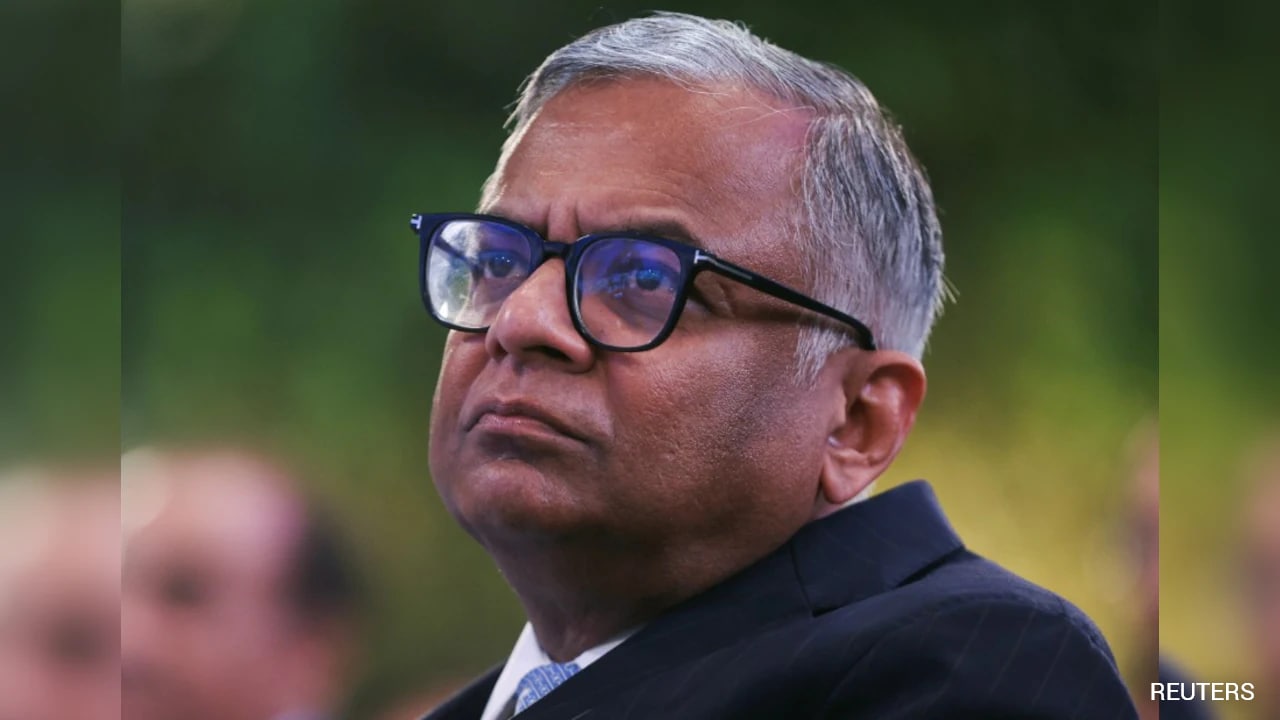
Natarajan Chandrasekaran, chairman of Tata Sons, announced on Wednesday that he will not seek reappointment when his current term ends on February 20, 2027, bringing to a close a four-decade career with the Tata Group. The decision comes a week before a scheduled shareholder vote on his reappointment, which had been deferred in February after board members disagreed on several issues, including losses at some group companies.
In a statement, Chandrasekaran, 63, said: "It has been six months since the matter of my reappointment was first discussed by the Board and no resolution has been reached till date. Under these circumstances... I have decided not to offer myself for reappointment when my term ends on Feb 20, 2027. I have asked the Board to decide on the succession soon to ensure a proper transition."
He added that he has completed 40 years of professional life at the Tata Group, and that clarity on leadership is important for employees, investors, partners and other stakeholders, as several major projects are at critical stages.
Chandrasekaran, a long-time Tata executive, joined Tata Consultancy Services (TCS) in 1987 and rose to become its chief executive officer in 2009. He was appointed chairman of Tata Sons in 2017, following a boardroom battle that led to the removal of Cyrus Mistry. Under his leadership, TCS consolidated its position as India's largest private sector employer and the country's most valuable company.
During his tenure as chairman, the Tata Group expanded into technology, automobile, aviation, electronics and manufacturing, with significant investments in semiconductors and other strategic sectors. The group now comprises 31 companies operating across more than 100 countries.
TCS, the group's biggest profit generator, has faced headwinds from a slowdown in global technology spending and concerns over the impact of generative artificial intelligence. Its shares have fallen more than 20 percent in the past year. Speaking at TCS's annual general meeting last month, Chandrasekaran addressed these concerns, saying: "Far from being a mortal threat, AI is the most significant opportunity yet for enterprise IT." He predicted that within three years, TCS would have as many AI agents as human employees, and noted that the company is investing extensively in AI across its operations.
He also reported that TCS continues to see strong business momentum, with margins holding, revenues up, and a stronger-than-ever deal pipeline.
However, the group's efforts to revive Air India, acquired from the government in 2022, have faced operational setbacks. In June 2025, an Air India flight from Ahmedabad to London crashed shortly after take-off, killing 241 passengers and crew on board and 19 people on the ground. More recently, the pilot of an Air India flight from Phuket to Delhi, in which several passengers were injured after a sudden loss of altitude, failed a second drug test, according to sources.
Chandrasekaran's decision to step down underscores the governance challenges facing the Tata Group. The board must now work on a succession plan to ensure a smooth transition. He has asked the board to decide on the succession soon.