7.1 Magnitude Earthquake Damages Historic Kumamoto Castle Walls in Japan
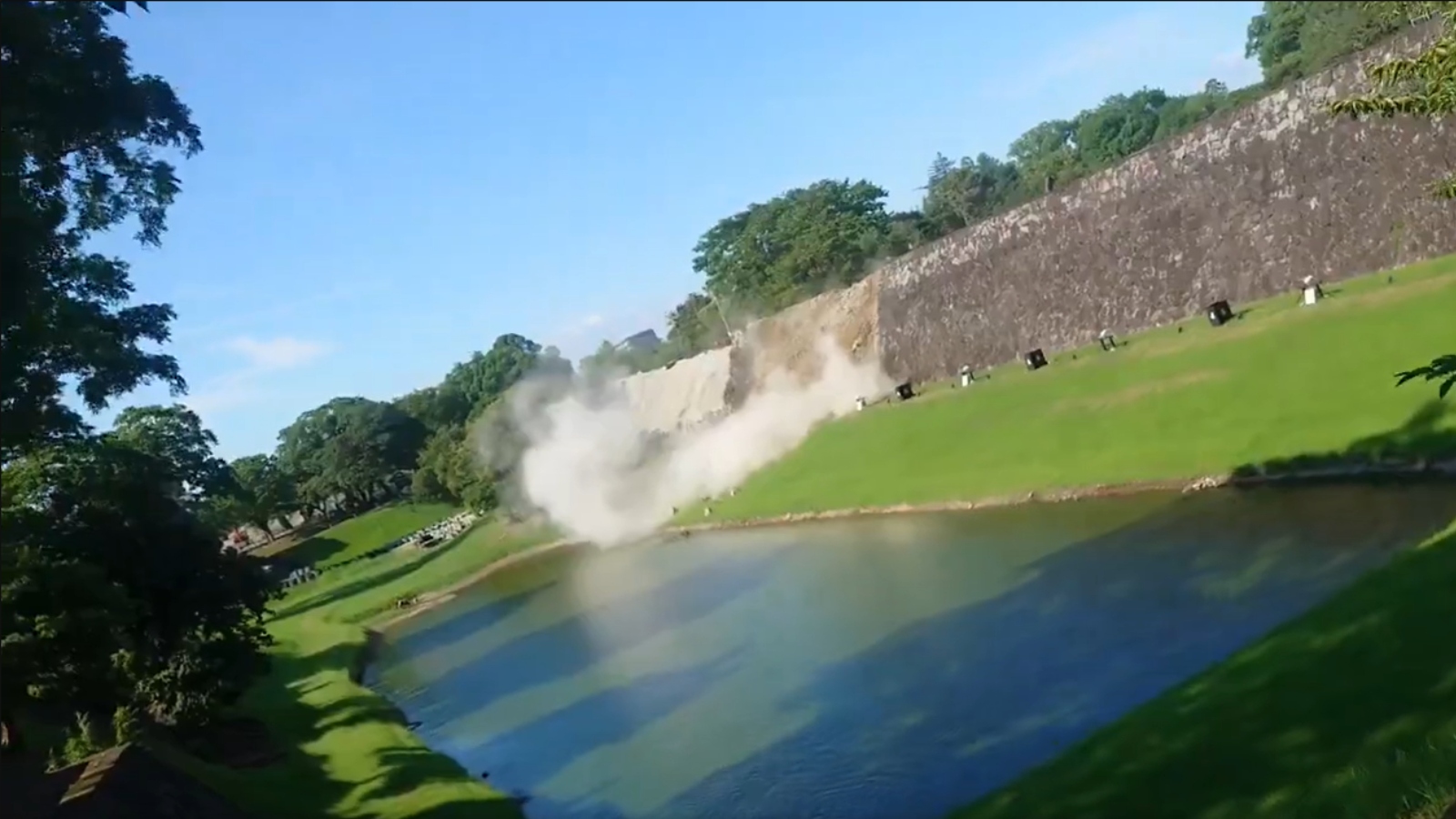
A powerful 7.1-magnitude earthquake struck the southern Kyushu region of Japan on Tuesday, causing sections of the stone walls of the historic Kumamoto Castle to collapse. The earthquake occurred at approximately 12:57 pm local time in Kumamoto Prefecture, according to the Japan Meteorological Agency (JMA).
Video footage widely shared on social media showed clouds of dust rising as parts of the castle’s defensive walls gave way during the tremors. The clips captured the moment when sections of the centuries-old landmark appeared to crumble.
Kumamoto Castle, completed in 1607 by feudal lord Kato Kiyomasa, is considered one of Japan's most significant historic sites. It has withstood numerous events over 400 years, including the Satsuma Rebellion and World War II, but the recent earthquake caused notable damage to its stone ramparts.
Following the quake, JMA issued a tsunami warning for waves up to one metre along the coastal areas. Tsunami advisories were also released for the Ariake Sea and Yatsushiro Sea, including Ariake Bay on the western coast of Kumamoto, about 900 kilometres southwest of Tokyo. The US Pacific Tsunami Warning Center stated that no tsunami threat existed beyond local coastlines.
Japanese Prime Minister Sanae Takaichi announced the establishment of a government task force to monitor the situation and coordinate emergency response. In a post on social media platform X, Takaichi said, “We are putting people’s lives as the top priority,” urging residents in affected areas to stay away from the coastline and remain alert for potential aftershocks.
Public concern was widely expressed online, with many users hoping for the safety of those in Kumamoto. The incident draws attention to the vulnerability of cultural heritage sites to natural disasters, even in a country like Japan that is well-prepared for earthquakes.