Yashwant Varma case: Parliament's panel finds charges proved; impeachment push continues
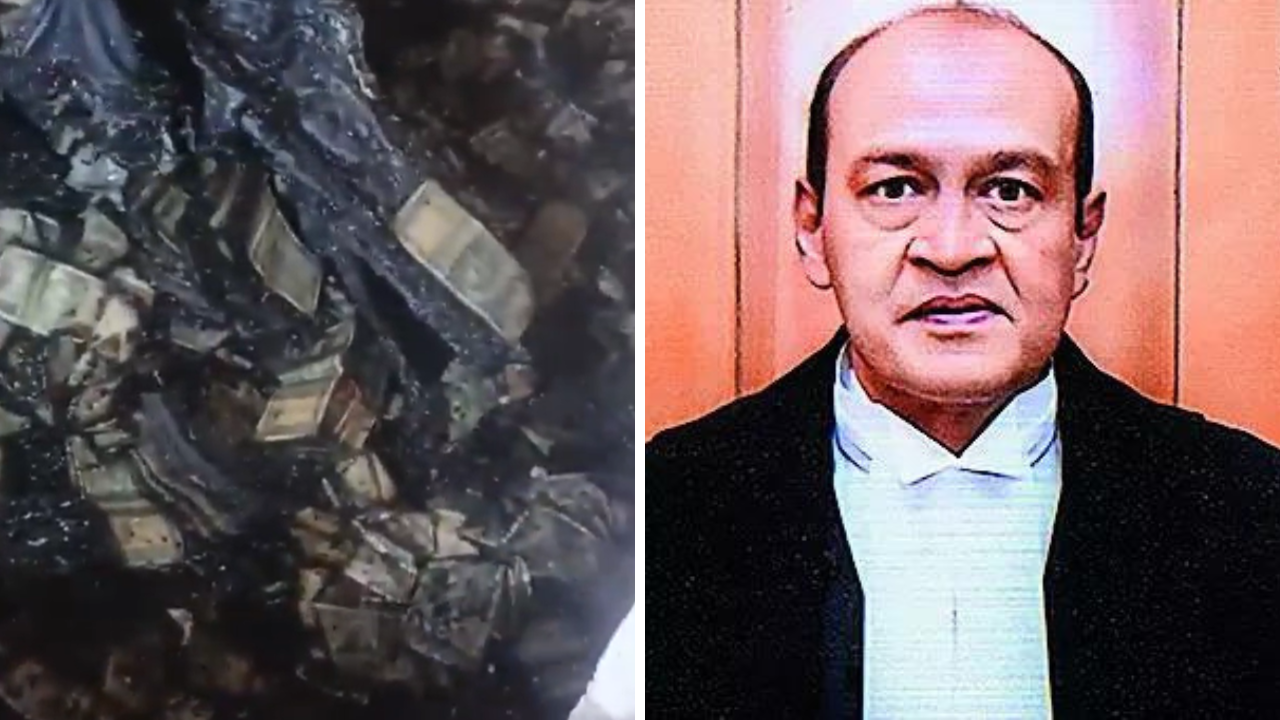
The discovery of burnt currency at the official residence of a Delhi High Court judge in March 2025 has culminated in a parliamentary committee finding charges against him proved. The case, involving former judge Yashwant Varma, has raised constitutional questions about why Parliament is pursuing impeachment of a judge who has already resigned.
The saga began on the night of March 14-15, 2025, when firefighters responding to a blaze at Justice Varma's residence found a large quantity of burnt currency notes in a storeroom. The discovery was recorded, and the news reached then Chief Justice of India Sanjiv Khanna, who convened an urgent meeting of the Supreme Court collegium. The collegium unanimously decided to transfer Varma to his parent court, the Allahabad High Court.
Khanna also appointed a three-member in-house committee comprising Punjab and Haryana High Court Chief Justice Sheel Nagu, Himachal Pradesh High Court Chief Justice G S Sandhawalia, and Karnataka High Court Justice Anu Sivaraman. After a detailed inquiry, the committee concluded that the storeroom was under the control of Varma and his family and recommended steps for his removal.
Varma denied the allegations, stating in his response: "I state unequivocally that no cash was ever placed in that storeroom either by me or any of my family members and strongly denounce the suggestion that the alleged cash belonged to us." He claimed he had been framed.
Despite the in-house inquiry, Parliament took its own course. Lok Sabha Speaker Om Birla received a motion signed by 146 members from both ruling and opposition parties seeking Varma's removal. Under the Judges (Inquiry) Act, 1968, Birla constituted a three-member committee chaired by Supreme Court Judge Justice Aravind Kumar. The other members were Madras High Court Chief Justice Manindra Mohan Shrivastava, later replaced by Bombay High Court Chief Justice Shree Chandrashekhar, and senior advocate B V Acharya.
Varma fought the parliamentary inquiry, filing 11 interim applications through a team of senior lawyers. He examined records and challenged the proceedings. However, the committee has now found the charges against him proved, paving the way for the Centre to pursue his impeachment even though he has already resigned from the judiciary.
The central question is why Parliament continues to pursue removal of a judge who is no longer in office. Legal experts suggest that impeachment serves a larger purpose: it establishes accountability and sends a clear message that judges are not above the law. Even after resignation, an impeachment proceeding can formally record a finding of misconduct, which has historical and institutional significance.
The Constitution provides for the removal of judges under Article 124(4) for proved misbehaviour or incapacity. The process requires a motion in either house of Parliament, supported by a special majority. The Judges (Inquiry) Act lays down the procedure, including the formation of an inquiry committee to investigate the grounds for removal.
No judge has ever been impeached in Indian history. If the process against Varma is completed despite his resignation, it would be the first such case. This makes the ongoing parliamentary action a potential landmark in Indian judicial accountability.
The case also highlights the broader relationship between the judiciary and Parliament. While the in-house procedure of the Supreme Court was designed to handle allegations against judges internally, the parliamentary route provides an independent check. The parallel proceedings in this case demonstrate that both institutions can act when serious charges emerge.
Varma's resignation does not end the matter. The parliamentary committee's findings could still lead to a formal motion for impeachment in the Lok Sabha. Even though Varma is no longer a judge, a successful impeachment would carry symbolic and legal weight, affirming that the highest judicial office is subject to the same constitutional scrutiny as any other public office.
The case now moves to the next stage, where the government and Parliament will decide on further action. For the public, it underscores the importance of transparency and integrity in the judiciary. The final outcome will be watched closely, not only for its impact on Varma but for the precedents it sets in the constitutional framework.







