Why Assam's Plan to Reduce Kaziranga's Eco-Sensitive Zone to 1 km Matters
The Assam government has said it will ask the Centre to reduce the Eco-Sensitive Zone (ESZ) around Kaziranga National Park and Tiger Reserve from the default 10 km to a minimum of 1 km. Chief Minister Himanta Biswa Sarma has argued that a 10-km buffer would restrict civic and urban growth in nearby towns. The move has drawn sharp reactions from environmentalists, who see it as a potential threat to one of India's most celebrated wildlife habitats.
An Eco-Sensitive Zone, also known as an Ecologically Fragile Area, is a legally protected buffer strip around national parks and wildlife sanctuaries. It is meant to reduce the impact of human activities on fragile ecosystems, prevent human-animal conflict, and strengthen conservation efforts. The concept was set in motion when the National Board for Wildlife adopted a resolution in 2002 under the Environment (Protection) Act, 1986.
In 2011, the Ministry of Environment, Forest and Climate Change instructed state governments to prepare site-specific ESZ proposals, keeping in mind a general guideline of a 10-km buffer from the boundary of a protected area. The guideline also allowed for larger zones where ecologically important corridors or landscape linkages exist.
ESZs are designed to act as shock absorbers — transition zones between areas with high protection and areas with lower restrictions. They do not stop daily life for local communities but regulate certain activities. The rules divide activities into three categories: prohibited, regulated, and permitted. Prohibited activities include commercial mining, polluting industries, large hydroelectric projects, and the discharge of effluents. Regulated activities include felling trees, setting up hotels and resorts, commercial use of water, and widening of roads. Permitted activities include traditional farming, rainwater harvesting, renewable energy projects, and green technology adoption.
Under existing rules, the default 10-km ESZ remains in force unless a state submits a site-specific proposal and receives final approval from the central government. Several protected areas in Assam, including national parks and sanctuaries, have draft or final site-specific notifications. Kaziranga, however, still operates under the default 10-km rule.
Mr. Sarma has pointed to Deepor Beel, a Ramsar site on the edge of Guwahati, as an example. A draft notification issued in July 2025 for Deepor Beel Bird Sanctuary proposes an ESZ ranging from 25.294 metres to 5 km due to "immense biotic pressure" from urban settlements, industrial units, and waste discharge. The Chief Minister argues that towns such as Bokakhat and Kaliabor, located near Kaziranga, would suffer if a similar 10-km zone were enforced there, and has proposed a 1-km limit for the park.
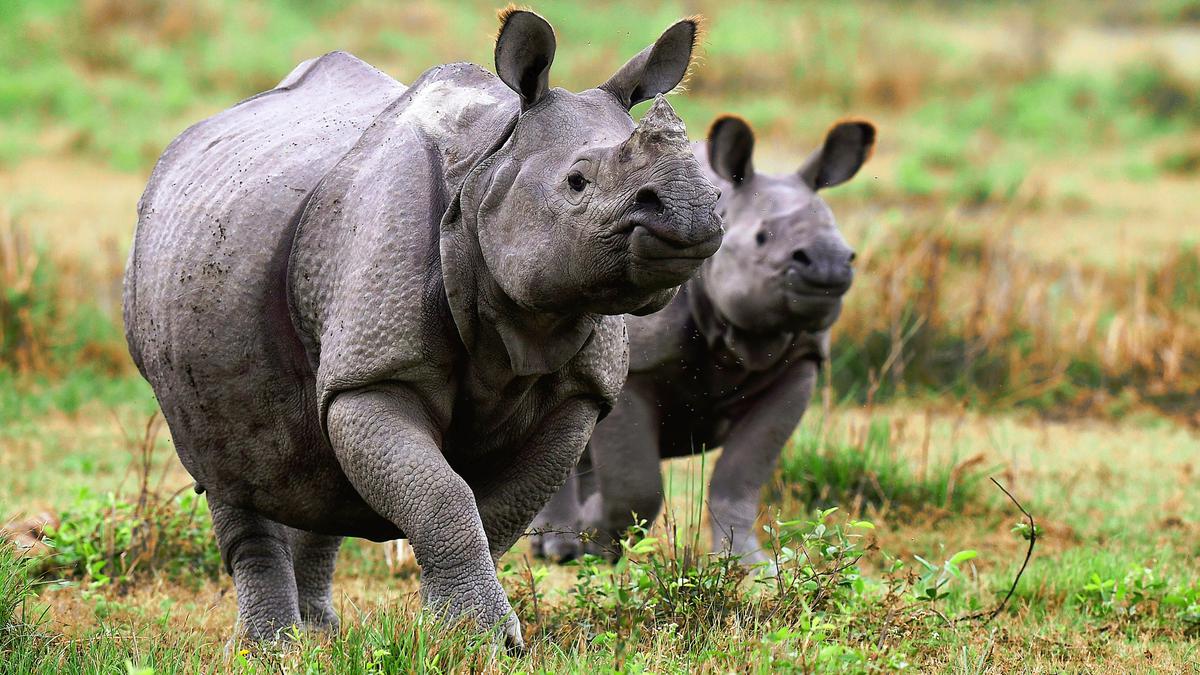
Kaziranga is home to the world's largest population of one-horned rhinoceroses, along with tigers, elephants, and numerous bird species. The park's grassland and wetland ecosystems depend on connected corridors for wildlife movement. Conservationists warn that shrinking the ESZ to 1 km could increase habitat fragmentation, disturb animal migration routes, and expose wildlife to noise, pollution, and unregulated development.
The debate over the ESZ is not unique to Assam. Across India, conflicts have emerged between environmental safeguards and infrastructure or industrial demands. The National Wildlife Action Plan (2002–2016) had emphasised the need for buffer zones to ensure long-term conservation. Any reduction in their extent must be based on scientific assessment of ecological sensitivity, rather than development needs alone.
The final decision now rests with the Union government, which must examine Assam's proposal and weigh the state's development aspirations against the ecological importance of Kaziranga. The outcome will set a precedent for how India balances growth with conservation in its most biodiverse regions.