Vande Mataram row: Amit Shah calls Congress's two-stanza stand 'anti-national'
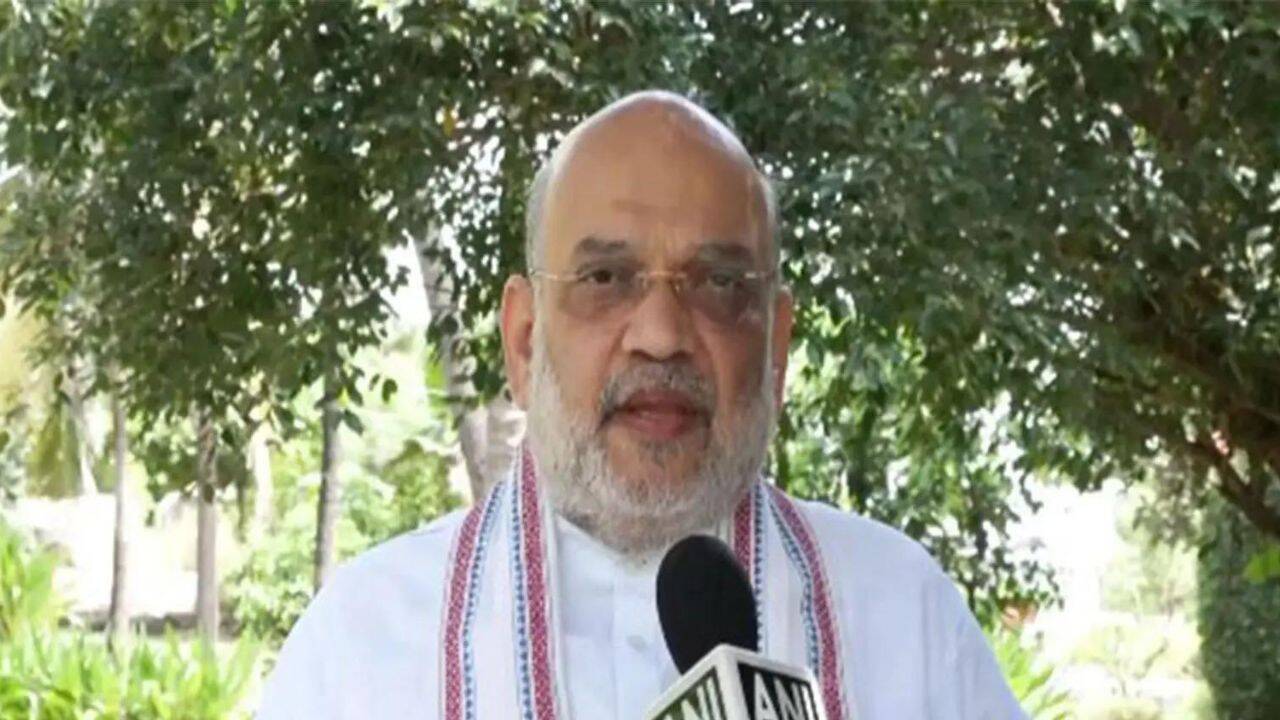
Union Home Minister Amit Shah on Saturday attacked the Congress party for its decision to stick to only the first two stanzas of Vande Mataram, describing the move as an "anti-national decision." Speaking at a public event, Shah said the Congress had repeatedly shown disrespect to the country's national symbols and its cultural heritage.
The controversy surrounding Vande Mataram dates back to the freedom struggle, when the song, composed by Bankim Chandra Chattopadhyay in the 1870s, became a rallying cry for Indian nationalists. The first two stanzas, which are often sung together, are generally regarded as the national song. However, the full composition includes later verses that invoke Hindu deities, a feature that has historically sparked debate over its place in a secular republic.
The Congress has maintained that its choice to sing only the first two stanzas is consistent with practice adopted by the Constituent Assembly, which recommended that the first two stanzas be given equal status with the national anthem Jana Gana Mana. Party leaders have argued that these verses are inclusive and do not carry sectarian overtones, unlike the later parts of the poem.
According to reports, Shah's remarks were made while addressing a gathering in a state where elections are due later this year. He accused the Congress of "appeasement" and claimed that the party was "running away from its cultural roots." The Home Minister also sought to link the issue to the Congress's historical stance on other matters of national identity, including its opposition to the construction of the Ram temple in Ayodhya.
The Congress has not yet issued an official response to Shah's latest statement. However, in the past, party spokespersons have dismissed such criticisms as a deliberate attempt by the Bharatiya Janata Party (BJP) to polarise voters on religious lines. They have pointed out that Vande Mataram is sung at official Congress functions in the first two-stanza form, a practice followed by many other institutions in the country.
The debate over Vande Mataram has resurfaced several times in Indian politics, often during election cycles. In 2022, a similar controversy erupted when a state education board decided to include the full version of the song in school textbooks. That move was challenged in court, with petitioners arguing that it was discriminatory towards minority communities.
Political analysts say the current exchange is part of a broader pattern of the BJP and the Congress sparring over nationalism and secularism. While the BJP aims to position itself as the custodian of India's cultural identity, the Congress seeks to project itself as a champion of pluralism and inclusivity. The Vande Mataram issue, therefore, becomes a flashpoint for these competing visions.
The Congress's decision to limit itself to the first two stanzas is not new; it has been the party's standard practice for decades. Its leaders have often cited the Constituent Assembly's intervention to justify the practice. In 1948, when the national anthem was adopted, the Speaker of the Constituent Assembly noted that the first two stanzas of Vande Mataram would be played on certain occasions, but the full song was not elevated to that status.
Shah's invocation of the term "anti-national" is significant, as it carries strong connotations in the current political discourse. The phrase has been used by the BJP and its allies to criticise opponents on a range of issues, from opposition to the Citizenship Amendment Act to protests over the abrogation of Article 370. Critics of the BJP argue that such language is intended to stifle legitimate dissent and to portray any disagreement as treasonous.
In his address, Shah also reportedly urged Congress leaders to "apologise to the nation" for what he described as an insult to the memory of the freedom fighters who sang Vande Mataram during the struggle for independence. He said that the Congress's position was "unacceptable" and that the party was "ignorant of the song's significance."
The political timing of the controversy is notable. With assembly elections approaching in several states, the BJP is expected to continue hammering the Congress on issues of national pride and cultural identity. The Congress, for its part, is likely to reiterate its commitment to secularism and unity in diversity, framing the debate as a distraction from real issues such as unemployment and inflation.
As the war of words escalates, the broader public discourse will once again grapple with questions about the role of religious symbolism in public life and the meaning of nationalism in a multicultural society. The Vande Mataram controversy, while rooted in a specific historical text, reflects deep divisions in contemporary Indian politics that are unlikely to be resolved soon.







